
Erhu at a Glance
| Topic | Orientation |
|---|---|
| Chinese | 二胡 |
| Family | Huqin (bowed) family |
| Common settings | Solo, ensemble, teaching, sometimes opera/concert |
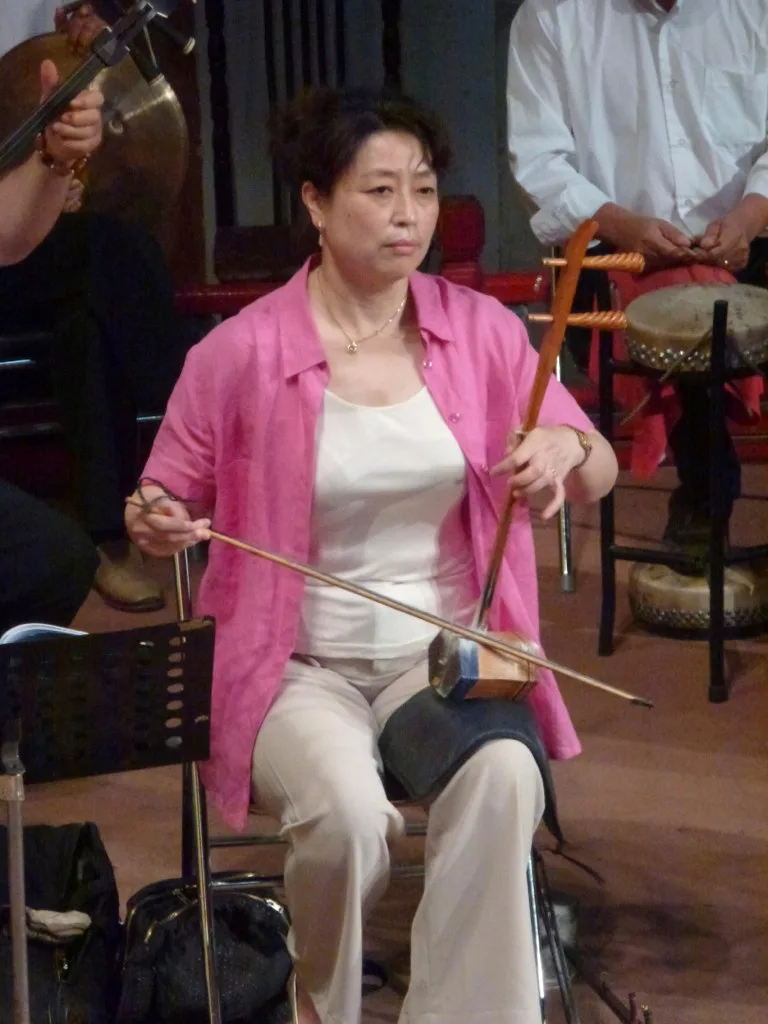
*Erhu players in a Peking-opera musical context. CC BY-SA 2.0. Native size; not upscaled.*
What It Is
Erhu is explained here as a named instrument tradition—not as a synonym for all Chinese music.
Construction and Sound
The erhu’s bow passes between the two strings. The snakeskin (or alternative) membrane on the resonator shapes its vocal, singing timbre. It appears as solo instrument, in Chinese orchestras and in opera pits.
History (Short)
Instrument histories are long and regionally complex. Prefer museum and institutional descriptions over tourism slogans about “thousands of years unchanged.”
How Travelers Hear It
Concerts, conservatory students, teahouse programs and tourist shows. Quality varies widely.
Common Misunderstandings
- One photo proves mastery level — false.
- Western instrument analogies are exact — they are only rough aids.
FAQ
What is an erhu?
Erhu (二胡) — see the definition above.
Related guides
Instruments hub · Chinese Music
Last reviewed: September 2026. Volatile venue, schedule and ticket details change—confirm with official operators before travel.