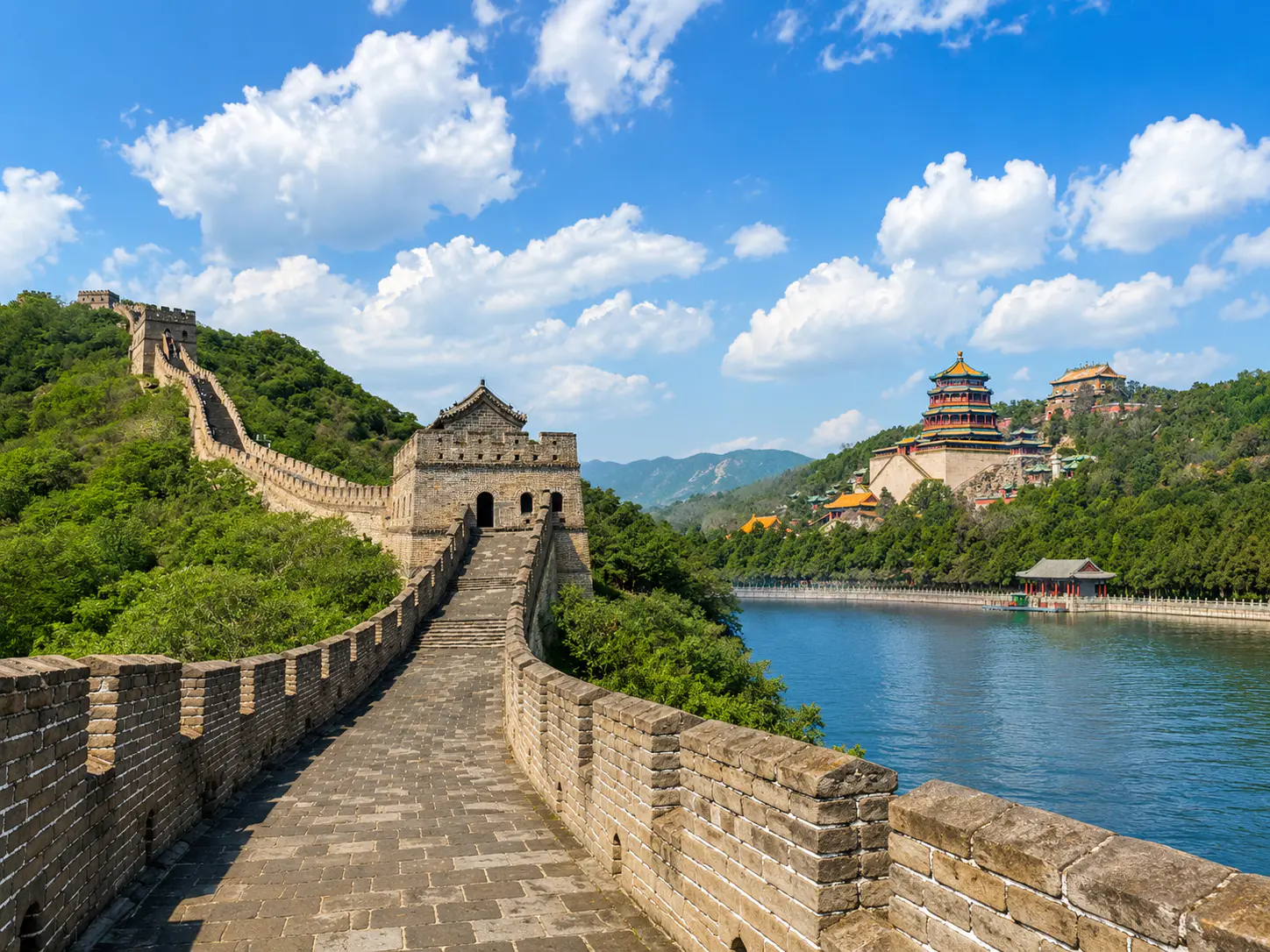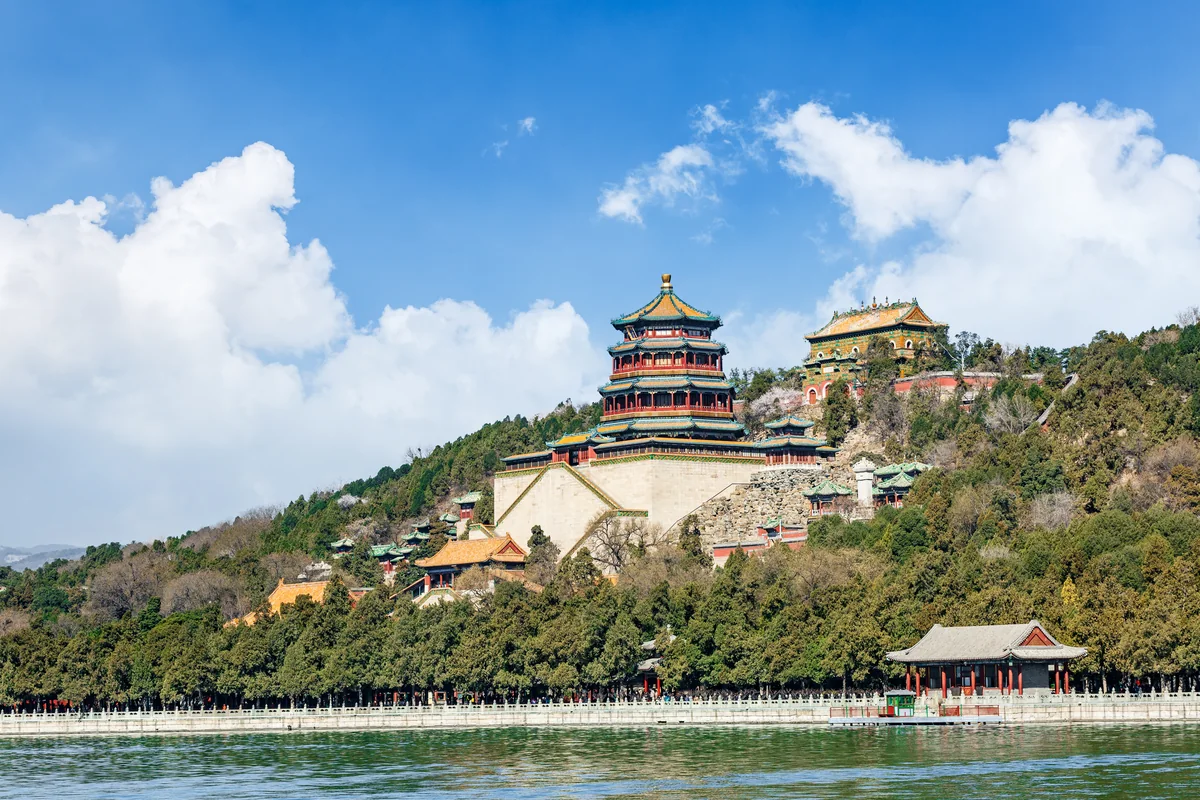
Qianlong-era centerpiece
Three motives
| Motive | Evidence |
|---|---|
| Filial piety - mother's 60th birthday | Garden gifted to Empress Dowager Chongqing in 1751 |
| Southern landscape obsession | West Causeway mirrors Hangzhou's Su Causeway; Suzhou Street recreates southern canal town |
| Imperial estate expansion | Added to existing Yuanmingyuan / Changchunyuan / Wanchunyuan complex |
| Summer escape from heat | Northwest Beijing hills + lake cooler than Forbidden City summer |
Southern landscape obsession
Qianlong made six tours of southern China during his reign (the 'Southern Inspection Tours', 1751-1784) and loved the canal towns of Suzhou, Hangzhou, and the Jiangnan region. The Summer Palace was his way of bringing southern landscape to Beijing. The clearest evidence: (1) the West Causeway on Kunming Lake with six bridges deliberately mirrors Hangzhou's Su Causeway with its six bridges (same bridge count, same general layout). (2) Suzhou Street on the north side recreates a southern canal shopping street, mock-up. (3) The hill-and-water composition itself follows southern garden tradition rather than northern court geometry.
- Six Southern Inspection Tours (1751-1784).
- Loved Suzhou, Hangzhou, Jiangnan canal towns.
- West Causeway = Hangzhou Su Causeway quote.
- Suzhou Street = southern canal town recreation.
- Hill-water composition follows southern tradition.
Imperial estate expansion
By 1750, three imperial gardens already existed in northwest Beijing: Yuanmingyuan (built by Kangxi, expanded by Yongzheng and Qianlong), Changchunyuan, and Wanchunyuan - collectively called 'the Three Mountains and Five Gardens'. Qingyi Yuan (later Yiheyuan) was the fourth and final addition. The court used these gardens as summer escape from the Forbidden City's heat - which is why the English-language name 'Summer Palace' eventually stuck. Together they formed the largest concentration of imperial gardens in the world.
- Three existing imperial gardens by 1750.
- Yuanmingyuan + Changchunyuan + Wanchunyuan.
- Qingyi Yuan = fourth and final addition.
- Court summer escape from FC heat.
- World's largest imperial garden concentration.
Why 'Garden of Clear Ripples' / 'Garden of Nurtured Harmony'
The original name Qingyi Yuan (Garden of Clear Ripples) was chosen for the lake's clear water and peaceful retirement feel - appropriate for an imperial mother's residence. After the Cixi rebuild in 1888 the garden was renamed Yiheyuan (Garden of Nurtured Harmony) - a name that emphasises imperial restoration and Confucian harmony. The two names track the political shift from Qianlong-era confident expansion to Cixi-era post-trauma rebuild.
- Qingyi Yuan = Garden of Clear Ripples (1750).
- Yiheyuan = Garden of Nurtured Harmony (1888).
- Name shift = Qianlong expansion → Cixi rebuild.
- Both names emphasise tranquility / restoration.
Why 'Garden of Clear Ripples' / 'Garden of Nurtured Harmony'
The original name Qingyi Yuan (Garden of Clear Ripples) was chosen for the lake's clear water and peaceful retirement feel - appropriate for an imperial mother's residence. After the Cixi rebuild in 1888 the garden was renamed Yiheyuan (Garden of Nurtured Harmony) - a name that emphasises imperial restoration and Confucian harmony. The two names track the political shift from Qianlong-era confident expansion to Cixi-era post-trauma rebuild.
- Qingyi Yuan = Garden of Clear Ripples (1750).
- Yiheyuan = Garden of Nurtured Harmony (1888).
- Name shift = Qianlong expansion → Cixi rebuild.
- Both names emphasise tranquility / restoration.
Common 'why built' misunderstandings
Thinking it was 'just a vanity project'
Filial piety + southern cultural quotation + summer-escape function. All three matter.
Skipping the Southern Inspection Tours context
Six tours over 30 years shaped Qianlong's garden aesthetics - this is why the SP echoes Hangzhou.
Treating it as separate from the Old Summer Palace
Originally part of the same four-garden imperial estate. Two separate sites today only because Yuanmingyuan was never rebuilt.
Why was the Summer Palace built FAQ
- Three reasons. Filial piety: 60th birthday gift to Qianlong's mother (1750). Southern landscape obsession: he loved Suzhou and Hangzhou and modelled the lake on Hangzhou's West Lake. Imperial estate expansion: added to the existing three-garden complex in northwest Beijing.
- Commissioned 1750; major work completed 1764. Renamed Yiheyuan after Cixi's rebuild in 1888.
- Originally for Qianlong's mother, Empress Dowager Chongqing, as her 60th birthday gift.
- Qianlong made six Southern Inspection Tours and loved Hangzhou's landscape. The West Causeway with six bridges deliberately mirrors Hangzhou's Su Causeway.
- It was used by the court as a summer escape from the Forbidden City's heat - hence the English-language name. The Chinese name doesn't include 'summer'.
- No - it was the fourth in a four-garden imperial estate (Yuanmingyuan, Changchunyuan, Wanchunyuan, Qingyi Yuan), collectively 'Three Mountains and Five Gardens'.
Walk the founding context
A guide makes Qianlong's southern obsession visible - West Causeway as Hangzhou quotation, Suzhou Street as canal-town recreation. Our private day pairs the route with this cultural decode.
For the full history including the Cixi rebuild and Sino-Japanese War link, the history page covers the timeline.