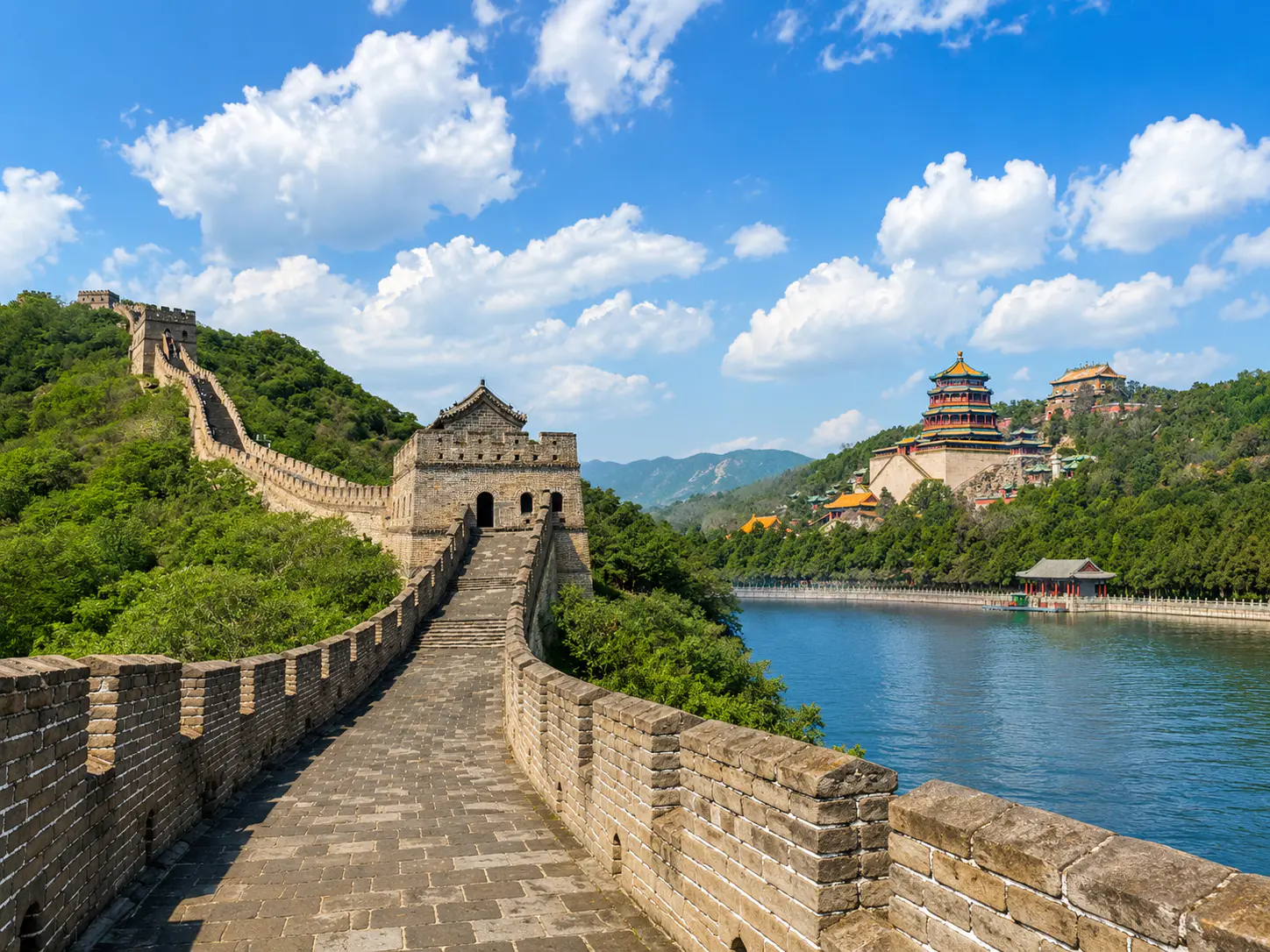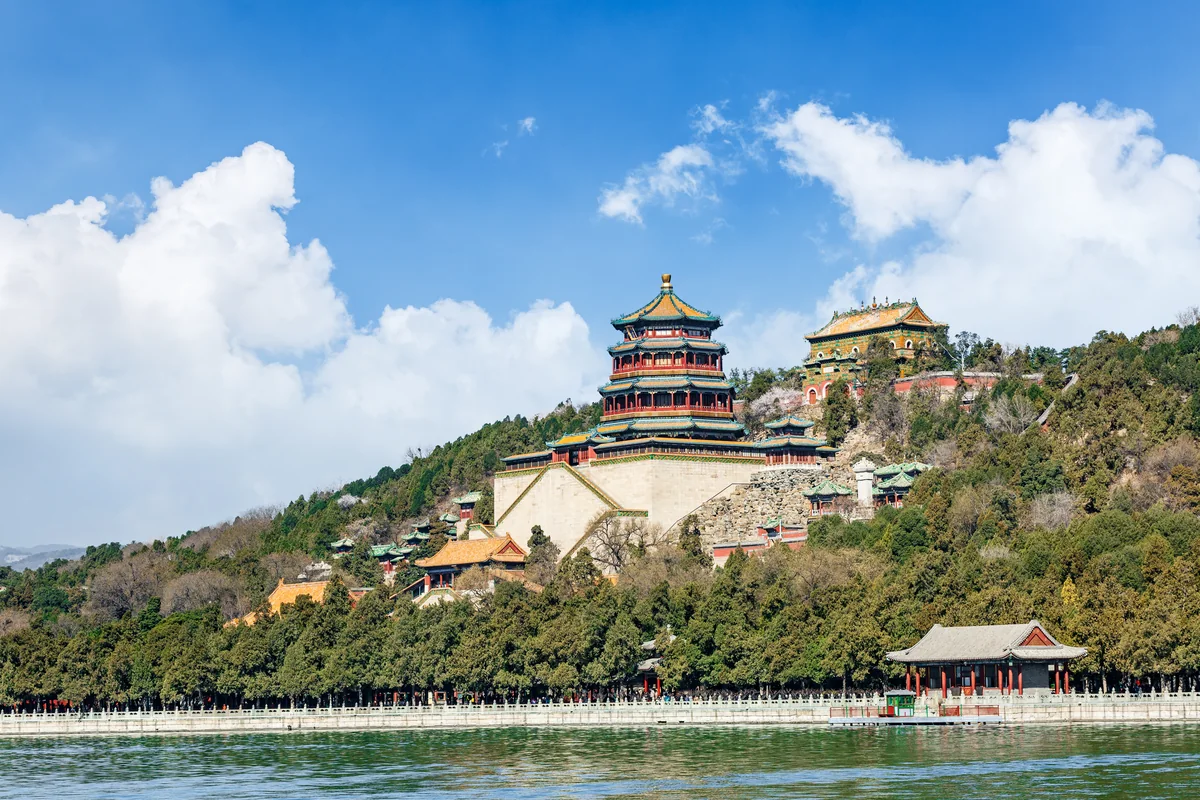
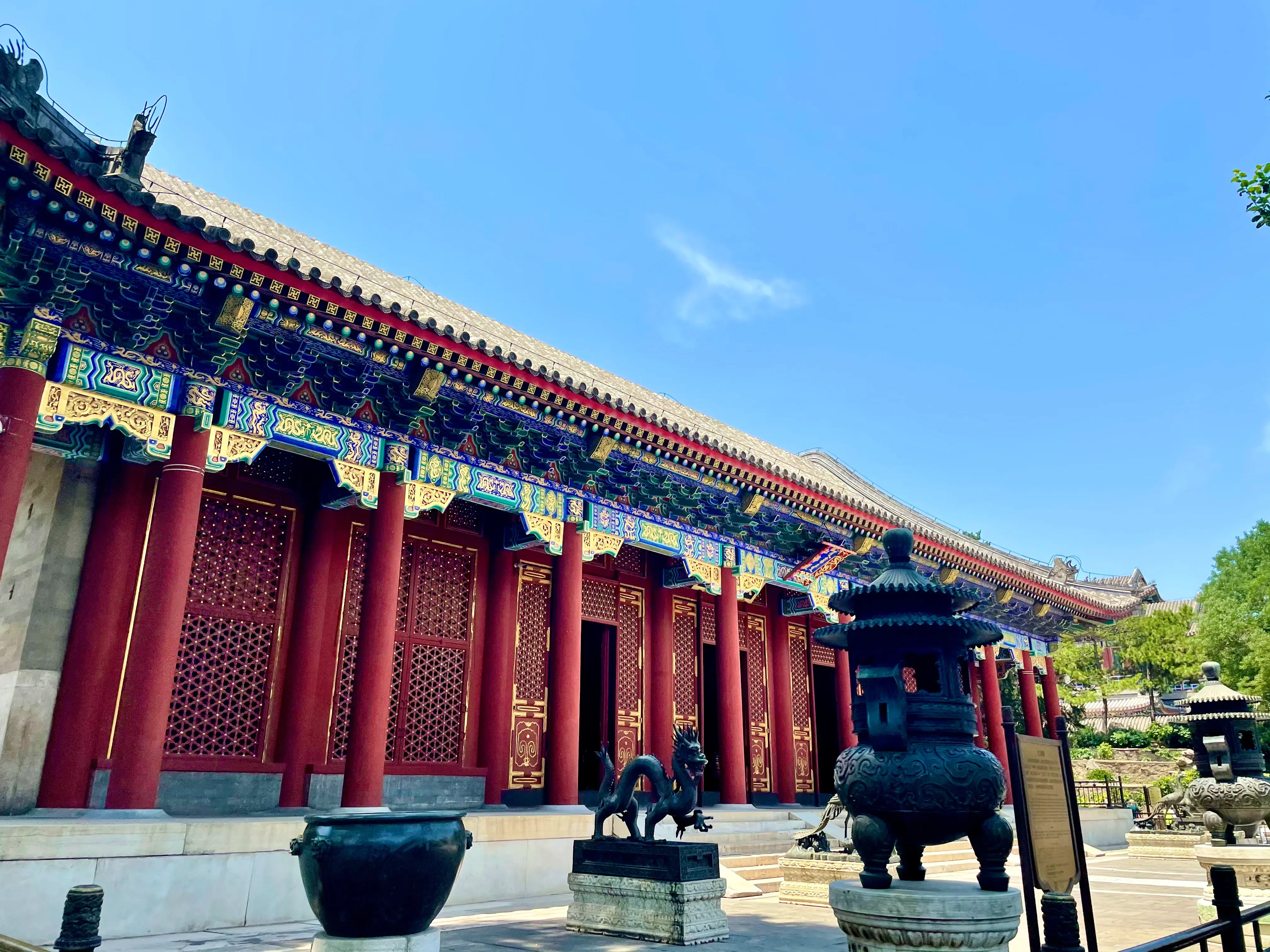
Hall of Benevolence and Longevity
Timeline at a glance
| Era | Year | Event |
|---|---|---|
| Jin / Yuan / Ming antecedents | 1153- | Imperial garden site; various names |
| Qianlong build (Qingyi Yuan) | 1750 | Mother's 60th birthday; Kunming Lake expanded, Longevity Hill raised |
| Anglo-French destruction | 1860 | Second Opium War; burnt by British and French troops |
| Ruins / disrepair | 1860-1886 | 26 years of partial abandonment |
| Cixi rebuild (Yiheyuan) | 1886-1895 | Renamed 1888; Qing navy funds diverted |
| Sino-Japanese War defeat | 1894-95 | Linked to diverted navy funds |
| Eight-Nation Alliance damage | 1900 | Boxer Rebellion aftermath |
| Repaired + opened public | 1902, 1914 | Republic era access |
| UNESCO World Heritage | 1998 | Inscribed |
1860 Anglo-French destruction
During the Second Opium War (1856-1860), British and French troops occupied Beijing in October 1860 and burnt both the Old Summer Palace (Yuanmingyuan) and the Garden of Clear Ripples. The order was given by British High Commissioner Lord Elgin in retaliation for the killing of British envoys. Most wooden structures burnt; stone foundations, walls, and Long Corridor's lower sections survived. The destruction is one of the most contentious episodes in modern Chinese-Western history; the looted artefacts dispute continues to this day.
- October 1860, Second Opium War.
- British and French troops burnt the site.
- Lord Elgin's order.
- Wooden structures burnt; stone foundations survived.
- Looted artefact dispute continues today.
1888 Cixi rebuild + navy funds controversy
Empress Dowager Cixi began rebuilding 1886, renamed the site 'Yiheyuan' (Garden of Nurtured Harmony) in 1888, and completed the major work by 1895. To fund the rebuild, she controversially diverted 30 million taels of silver (approximately) from the Qing navy modernisation budget. Chinese historians link this directly to the Qing navy's defeat in the 1894-95 Sino-Japanese War - lost ships meant a lost empire. The Marble Boat at the north-west corner of Kunming Lake is sometimes interpreted as Cixi's bitter joke about her diverted naval funds.
- 1886 rebuild began; 1888 renamed.
- 30 million taels of silver from navy funds.
- Linked to 1894-95 Sino-Japanese War defeat.
- Marble Boat as bitter naval joke.
- One of late Qing's most controversial decisions.
1900 Eight-Nation Alliance damage + repair
During the Boxer Rebellion (1899-1901), the Eight-Nation Alliance (UK, France, Germany, USA, Italy, Japan, Russia, Austria-Hungary) occupied Beijing in August 1900 and damaged the rebuilt Summer Palace - second major damage in 40 years. Cixi fled to Xi'an; on her return in 1902, she ordered the gardens repaired. By the time the Qing fell in 1912, the Summer Palace was again functional. It opened to the public in 1914 under the Republic of China.
- 1900 Eight-Nation Alliance occupation.
- Second major damage in 40 years.
- Cixi fled to Xi'an; returned 1902.
- Repairs by 1912.
- Public opening 1914.
Modern era - PRC + UNESCO
After 1949 the PRC managed the Summer Palace as a public park and continued restoration. UNESCO inscribed it as World Heritage in 1998 under criteria covering 'masterpiece of Chinese landscape garden design' and 'outstanding expression of the principles underlying landscape garden design'. The Marble Boat was restored in the early 2000s; Long Corridor's paintings have been periodically retouched. Today the site is one of Beijing's three most-visited imperial attractions (FC, GW, Summer Palace).
- 1949 PRC management.
- Continued restoration.
- UNESCO 1998 - garden design criteria.
- Marble Boat restored 2000s.
- Top-3 Beijing imperial attraction today.
Common history misunderstandings
Confusing Yiheyuan with Yuanmingyuan
Two different sites near each other. Yiheyuan (current Summer Palace) was rebuilt; Yuanmingyuan (Old Summer Palace) is still mainly ruins.
Skipping the Cixi navy funds story
Central to understanding the political weight of the garden - and why Chinese visitors view it with mixed feelings.
Crediting Qianlong alone
Qianlong built 1750; Cixi rebuilt 1886-1895. Most of what visitors see today is the Cixi-era rebuild.
Treating it as 'just a garden'
It's a layered political artefact spanning 270+ years of imperial and modern Chinese history.
Summer Palace history FAQ
- The site has been an imperial garden since 1153. The modern complex was built 1750 (Qianlong), rebuilt 1886-1895 (Cixi). UNESCO 1998.
- Qianlong Emperor 1750; rebuilt by Empress Dowager Cixi 1886-1895 after the Anglo-French destruction.
- During the Second Opium War, British and French troops burnt the garden in October 1860 in retaliation for the killing of British envoys. The Old Summer Palace was burnt the same week.
- She diverted ~30 million taels of silver from the Qing navy modernisation budget. Chinese historians link this to the empire's defeat in the 1894-95 Sino-Japanese War.
- 1914 under the Republic of China, two years after the fall of the Qing.
- 1998, under criteria covering Chinese landscape garden design.
Walk the history with context
Our private SP day includes a history-focused guide explaining Qianlong's mother's birthday gift, the 1860 destruction story, and Cixi's navy-fund controversy - the layered politics behind the beauty.
If you want to compare with the still-ruined Old Summer Palace, the comparison page covers the visitor decision.