Two different sites - here's the difference
The Summer Palace (Yiheyuan, 'Garden of Nurtured Harmony') and the Old Summer Palace (Yuanmingyuan, 'Garden of Perfect Brightness') are two different sites in northwest Beijing, near each other but distinct. Both were burnt by Anglo-French forces in 1860 during the Second Opium War. Cixi rebuilt the Summer Palace in 1888 using Qing navy funds; the Old Summer Palace was never fully rebuilt and remains mainly evocative ruins. Most international visitors visit only the Summer Palace (rebuilt, functional, UNESCO-listed); the Old Summer Palace appeals to history-curious visitors and Chinese visitors with a strong patriotic reaction to the 1860 destruction. The two sites are 2 subway stops apart on Line 4.
- Getting there: Yuanmingyuan: Line 4 from Beigongmen south 2 stops
- Reading time: 5 min; Yuanmingyuan visit if added: 2-3 hours
- Guide type: Cultural background
- Crowds: Old Summer Palace less crowded than Summer Palace
- Best for: Visitors confused by the two names; History-curious travellers comparing the sites
- Less ideal for: Visitors already clear on the difference
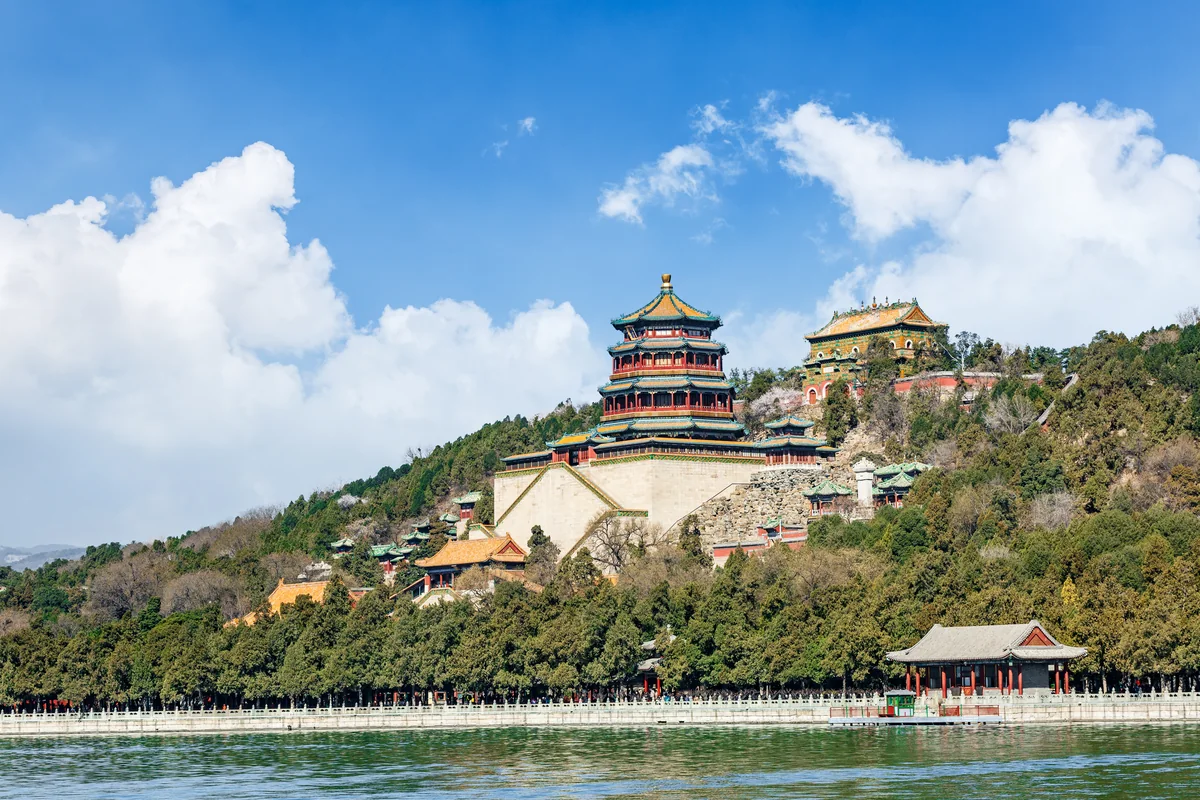
Rebuilt Yiheyuan (Summer Palace)
Yiheyuan vs Yuanmingyuan side by side
| Attribute | Summer Palace (Yiheyuan) | Old Summer Palace (Yuanmingyuan) |
|---|---|---|
| Chinese name | Yiheyuan (颐和园) | Yuanmingyuan (圆明园) |
| English name | Summer Palace | Old Summer Palace |
| English meaning | Garden of Nurtured Harmony | Garden of Perfect Brightness |
| Built | 1750 (Qingyi Yuan) / rebuilt 1888 (Cixi) | 1707+ (Kangxi+); peaked under Qianlong |
| Destroyed | 1860 Anglo-French (rebuilt) | 1860 Anglo-French (not rebuilt) |
| State today | Rebuilt, functional, UNESCO 1998 | Mainly ruins + reconstructed pavilions |
| Area | 290 ha | 350 ha |
| Ticket | 30 RMB basic / 60 RMB through | 10 RMB basic / 25 RMB through |
| Visitor draw | Beautiful imperial garden + Cixi residence | Patriotic destruction memorial + ruins |
| Time on site | 3 hr standard | 2-3 hr standard |
| International visitors | High - top-3 Beijing imperial site | Low - mainly Chinese / history-focused visitors |
Yiheyuan - the current Summer Palace
Yiheyuan is the rebuilt, functional Summer Palace - the UNESCO World Heritage Site that 99% of international visitors mean when they say 'Summer Palace'. 290 hectares, ~75% lake (Kunming Lake), 60m artificial hill (Longevity Hill), Long Corridor, Tower of Buddhist Incense, 17-Arch Bridge, Suzhou Street. Cixi's primary residence 1888-1908. The visit takes 3 hours standard, with the dragon-boat ride and full Longevity Hill climb. Open every day including Mondays.
- Rebuilt 1888, functional today.
- UNESCO 1998.
- 290 ha, ~75% lake.
- Cixi's residence 1888-1908.
- 3 hr standard visit.
- Open every day.
Yuanmingyuan - the Old Summer Palace ruins
Yuanmingyuan was the larger and arguably more architecturally significant of the two gardens before 1860. Built by Kangxi (1707+) and expanded by Yongzheng and Qianlong. It included unique European-style structures (the 'Western Mansions') designed by Jesuit missionaries - the only major European architecture ever built for a Chinese emperor. All of this was burnt in 1860; the European structures were stone (some survived as ruins); the wooden Chinese structures burned completely. Today the site is mainly ruins, with the European stone fragments as the most famous photographs. It functions as a patriotic memorial more than a working garden. 350 hectares; tickets 10 RMB basic, 25 RMB through.
- Built 1707+ by Kangxi.
- European 'Western Mansions' by Jesuits.
- Burnt 1860, never rebuilt.
- Stone European fragments survive.
- Mainly ruins today.
- Patriotic memorial function.
Which should I visit?
Most international visitors should visit only the Summer Palace (Yiheyuan). It's the more beautiful, more complete, more universally appreciated imperial garden. The Old Summer Palace (Yuanmingyuan) appeals to: (1) history-curious visitors wanting to see the 1860 destruction's evidence; (2) photographers chasing the European stone ruins (a recognisable late-19th-century-photo subject); (3) Chinese visitors with a strong patriotic reaction to the site; (4) visitors with a full extra half-day to add. Most international travel itineraries treat Yuanmingyuan as optional, not core.
- Default: Summer Palace (Yiheyuan).
- More beautiful + complete + universal.
- Yuanmingyuan: optional history-curious add-on.
- Photographers + Chinese visitors + history nerds.
- Half-day extra if added.
Which should I visit?
Most international visitors should visit only the Summer Palace (Yiheyuan). It's the more beautiful, more complete, more universally appreciated imperial garden. The Old Summer Palace (Yuanmingyuan) appeals to: (1) history-curious visitors wanting to see the 1860 destruction's evidence; (2) photographers chasing the European stone ruins (a recognisable late-19th-century-photo subject); (3) Chinese visitors with a strong patriotic reaction to the site; (4) visitors with a full extra half-day to add. Most international travel itineraries treat Yuanmingyuan as optional, not core.
- Default: Summer Palace (Yiheyuan).
- More beautiful + complete + universal.
- Yuanmingyuan: optional history-curious add-on.
- Photographers + Chinese visitors + history nerds.
- Half-day extra if added.
Common confusion mistakes
Buying SP tickets at Yuanmingyuan
Two different sites with different tickets. Confirm where you are before buying.
Telling a taxi 'Yuanmingyuan' when you mean Yiheyuan
Two subway stops apart, but you'll arrive at the wrong garden.
Skipping Yuanmingyuan if you're a history nerd
The Jesuit-designed European ruins are unique in China. Worth the half-day if history is your thing.
Expecting Yuanmingyuan to be 'rebuilt like the Summer Palace'
Mainly ruins. Adjust expectations - the ruins are the experience.
SP vs Old Summer Palace FAQ
- Two different sites. Summer Palace (Yiheyuan) was rebuilt after the 1860 destruction and is functional + UNESCO-listed. Old Summer Palace (Yuanmingyuan) was not rebuilt and remains mainly ruins.
- Yes - 2 subway stops apart on Line 4 in northwest Beijing.
- Most international visitors visit only the Summer Palace. The Old Summer Palace is optional for history-curious visitors or photographers.
- Before 1860, yes - it was larger (350 ha vs 290) and architecturally more significant (including the only major European architecture in imperial China). After 1860 destruction, the Summer Palace became more important by virtue of being rebuilt.
- A unique set of European-style stone structures designed by Jesuit missionaries (Castiglione, Benoist) for the Qianlong Emperor 1747-1759. Burnt in 1860 but the stone fragments remain - the most famous Yuanmingyuan photographs.
- Yes - Yuanmingyuan is cheaper (10 RMB basic, 25 RMB through, including the European Mansions area).
Decide which to visit
If you're choosing one, choose the Summer Palace (Yiheyuan) - it's the universal pick. Our private SP day covers the highlights in 3 hours.
If you're a history or photography lover, add Yuanmingyuan as a half-day - we can include both in a longer Beijing itinerary.