The garden as Qing political artefact
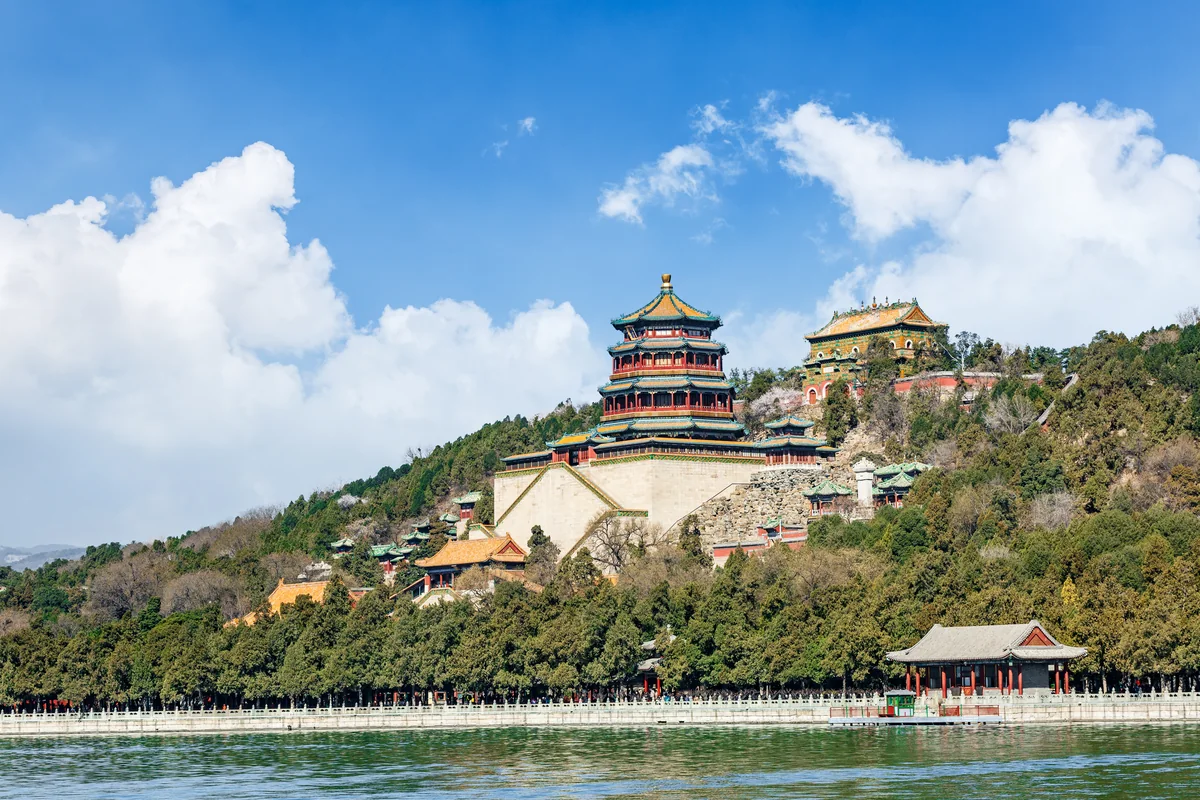
The Summer Palace tracks the political arc of the Qing dynasty in microcosm. Qianlong's 1750 build (Qingyi Yuan) reflects the high-Qing era of confidence and southern obsession; the 1860 Anglo-French destruction reflects the dynasty's military weakness against industrialised Western powers; Cixi's 1886-1895 rebuild reflects the late-Qing struggle to project power without modernising; the 1900 Eight-Nation Alliance damage reflects the final military collapse. Cixi made the Summer Palace her primary residence after the rebuild, using it as a political stage to receive foreign envoys and govern the empire from 1888 until her death in 1908. The diversion of navy funds for the rebuild is one of the most controversial decisions of the late Qing.
- From central Beijing: Northwest Beijing — about 30–45 minutes from central Beijing (subway or taxi)
- Reading time: 6-7 min
- Guide type: Cultural background
- Best for: History-curious visitors; Travellers wanting political context
- Less ideal for: Practical-planning visitors
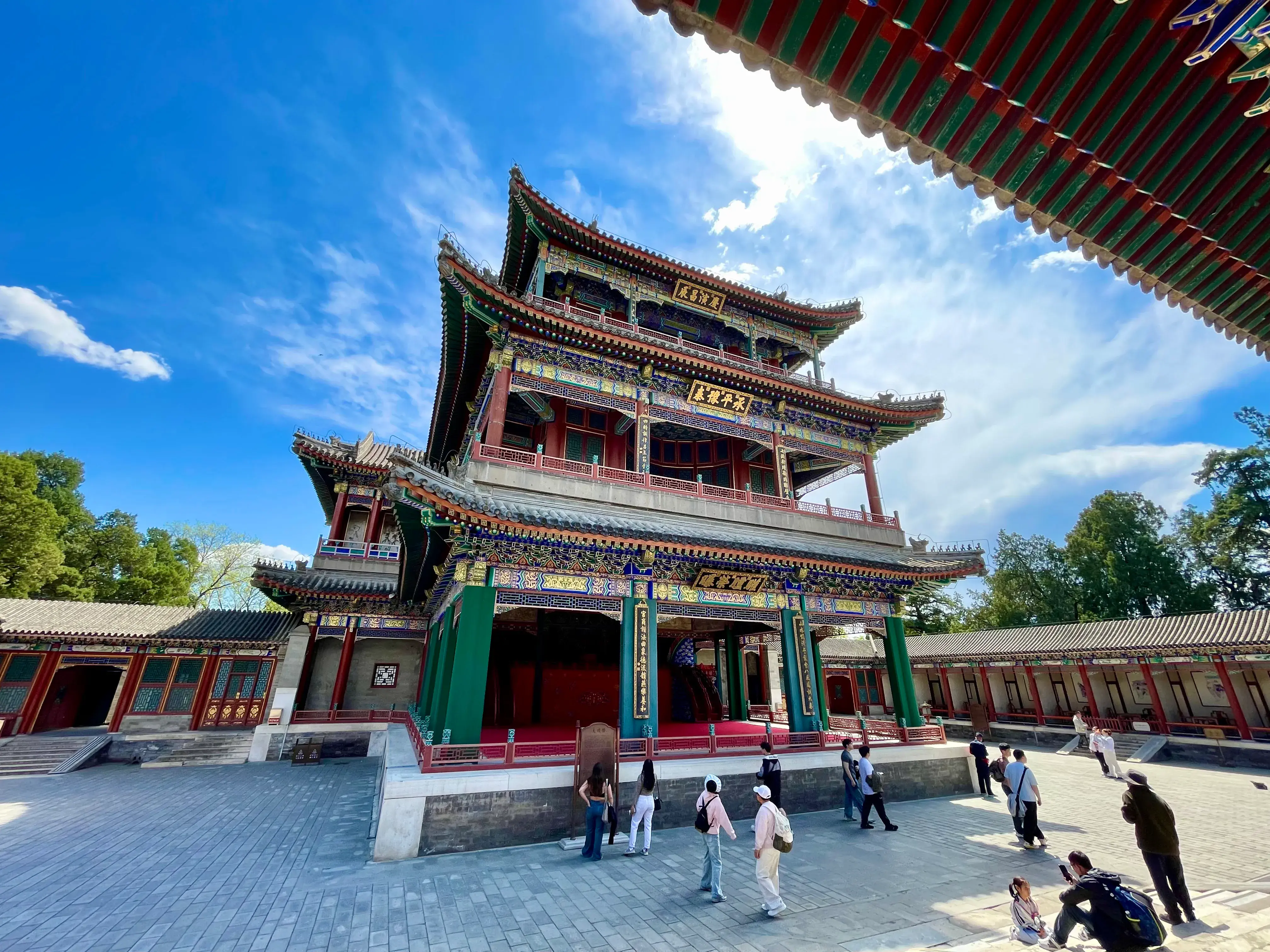
Dehe Garden opera hall
Qing era checkpoints at the Summer Palace
| Qing era | Year | Summer Palace event |
|---|---|---|
| Kangxi prosperity | 1700s | Predecessor garden Changchunyuan + Yuanmingyuan in NW Beijing |
| Qianlong high-Qing | 1750 | Qingyi Yuan commissioned for mother's birthday |
| Late Qianlong + Jiaqing | 1764-1820 | Garden in steady imperial use |
| Daoguang opium era | 1839-1842 | First Opium War; garden untouched yet |
| Xianfeng Second Opium War | 1860 | Anglo-French troops burn the garden |
| Tongzhi / Guangxu reign | 1862-1908 | Cixi rule via regency |
| Cixi rebuild + rename | 1886-1895 | Yiheyuan; navy funds diverted |
| 1894-95 war | 1894-1895 | Sino-Japanese War defeat; treaty of Shimonoseki |
| Boxer + Eight-Nation Alliance | 1900 | Garden damaged again |
| Cixi's death | 1908 | Final use of garden by her court |
| Qing collapse | 1912 | Republican revolution |
1860 destruction and dynastic crisis
The Second Opium War (1856-1860) and the destruction of the Summer Palace and Old Summer Palace are the turning points where Western military superiority became undeniable to the Qing court. October 1860: Beijing falls; the gardens burn; Emperor Xianfeng flees north to Chengde and dies there in 1861 of grief and dysentery. The court returns to Beijing under his five-year-old son's regency - which became Cixi's regency. The dynasty would never recover its self-confidence. The Summer Palace ruins sat untouched for 26 years as a monument to that defeat.
- 1860 Beijing falls to Anglo-French.
- Gardens burn October 1860.
- Xianfeng dies in Chengde 1861.
- Cixi rules through child-emperor regency.
- Dynasty never recovers confidence.
Cixi's residence and political stage 1888-1908
Empress Dowager Cixi made the rebuilt Summer Palace her primary residence after 1888. From here she controlled the empire through her nephew Emperor Guangxu (whom she imprisoned in the South Lake Island after his failed 1898 Hundred Days Reform). The Hall of Joyful Longevity (her residence) and the Hall of Dispelling Clouds (her ceremonial centre) are the key Cixi-era buildings. She received foreign envoys here, hosted her famous 60th and 70th birthday celebrations, and governed until her death in 1908. The Summer Palace is the Cixi-era political stage.
- Cixi's primary residence 1888-1908.
- Controlled empire through Guangxu.
- Guangxu imprisoned on South Lake Island after 1898.
- Foreign envoys received here.
- 60th and 70th birthdays at Hall of Dispelling Clouds.
Navy funds controversy and the 1894-95 defeat
Cixi's rebuild diverted approximately 30 million taels of silver (estimates vary) from the Qing navy modernisation budget under the Self-Strengthening Movement (1861-1895). The fleet that should have been modernised in the 1880s instead saw the Summer Palace rebuilt. When the First Sino-Japanese War broke out in 1894, the Qing Beiyang Fleet was crushed by the modernised Japanese navy in two key battles - leading to the Treaty of Shimonoseki (1895), the loss of Taiwan and the cession of influence in Korea. Chinese historians treat the navy-funds diversion as one of the worst strategic decisions in modern Chinese history. The Marble Boat on Kunming Lake is sometimes interpreted as Cixi's bitter joke about her diverted naval funds.
- ~30 million taels of silver diverted from navy.
- Self-Strengthening Movement funding cut.
- 1894-95 Sino-Japanese War defeat.
- Treaty of Shimonoseki: Taiwan + Korea lost.
- Marble Boat as bitter naval joke.
Twilight and collapse 1900-1912
The 1900 Boxer Rebellion and Eight-Nation Alliance occupation damaged the rebuilt Summer Palace again - second major damage in 40 years. Cixi fled to Xi'an, returned in 1902, and ordered repairs. She died in 1908; the dynasty fell in 1912 to the Republican revolution. The Summer Palace opened to the public in 1914 as a museum-park - the same garden that had been Qianlong's confidence projection, Cixi's political stage, and the Qing's beautiful failure. Today the garden carries all these layers, visible to visitors who know the history.
- 1900 Eight-Nation damage.
- Cixi flees to Xi'an, returns 1902.
- Dies 1908; Qing falls 1912.
- Public opening 1914.
- Garden carries all dynastic layers visible today.
Twilight and collapse 1900-1912
The 1900 Boxer Rebellion and Eight-Nation Alliance occupation damaged the rebuilt Summer Palace again - second major damage in 40 years. Cixi fled to Xi'an, returned in 1902, and ordered repairs. She died in 1908; the dynasty fell in 1912 to the Republican revolution. The Summer Palace opened to the public in 1914 as a museum-park - the same garden that had been Qianlong's confidence projection, Cixi's political stage, and the Qing's beautiful failure. Today the garden carries all these layers, visible to visitors who know the history.
- 1900 Eight-Nation damage.
- Cixi flees to Xi'an, returns 1902.
- Dies 1908; Qing falls 1912.
- Public opening 1914.
- Garden carries all dynastic layers visible today.
Common Qing-context misunderstandings
Reading the SP as pure Qianlong
Most of what visitors see today is Cixi-era rebuild (1886-1895). Qianlong's garden was burnt in 1860.
Skipping the navy funds story
Central to understanding both the Summer Palace's political weight and the late Qing's strategic failure.
Treating Cixi as villain or hero
Reality is messier - a powerful Qing regent navigating a dynasty in terminal decline. The Summer Palace shows both her ambition and her constraints.
Forgetting the 1900 second destruction
Eight-Nation Alliance damaged it again - the dynasty took two major blows here in 40 years.
Summer Palace + Qing dynasty FAQ
- The garden tracks the dynasty's arc: Qianlong's high-Qing build 1750, Anglo-French destruction 1860, Cixi's late-Qing rebuild 1888, Eight-Nation Alliance damage 1900, Cixi's death 1908, dynasty collapse 1912.
- Yes - she diverted ~30 million taels of silver from the Qing navy modernisation budget. Chinese historians link this to the empire's defeat in the 1894-95 Sino-Japanese War.
- Hall of Joyful Longevity (Leshou Tang) was her primary residence; Hall of Dispelling Clouds (Pai-yun Dian) was her ceremonial centre for state audiences and birthday celebrations.
- Yes - after his failed 1898 Hundred Days Reform, Cixi imprisoned him on South Lake Island for his last 10 years of life.
- Built by Qianlong as a folly, expanded by Cixi using diverted navy funds. Widely interpreted as her bitter joke about the Qing navy modernisation budget that built her marble boat instead of real warships.
- 1908 in Beijing. The dynasty collapsed four years later in 1912.
Walk the Qing dynasty story
Our private SP day with a history-focused guide tells the Qing dynasty story through the garden - Qianlong's confidence, Cixi's struggles, the navy funds controversy, the 1900 damage. The Marble Boat is the centrepiece of the political tour.
For the full history timeline, the history page is the longer-form read.