
The Intellectual Heart of Imperial Beijing
- Chinese names: 北京孔庙 (Běijīng Kǒngmiào) and 国子监 (Guózǐjiàn)
- Location: Guozijian Street, Dongcheng District, Beijing
- Admission: RMB 30 per adult, covering both sites
- Opening hours: 09:00–17:00, closed Mondays except applicable holidays
- Suggested visit: 1.5–2 hours
- Best for: Chinese history, philosophy, education, architecture, photography, and cultural walks
Just a short walk from the Lama Temple, behind red walls and beneath centuries-old cypress trees, stands one of Beijing's most important historical complexes.
The Confucius Temple and Imperial College occupy adjoining compounds along Guozijian Street, a traditional lane distinguished by decorative archways and historic architecture.
For centuries, these two institutions represented the intellectual and moral foundations of imperial government.
The Confucius Temple was where emperors and officials performed ceremonies honoring Confucius, the philosopher whose teachings profoundly influenced Chinese political thought, education, and social values.
Next door, the Imperial College served as the highest state educational institution during the Yuan, Ming, and Qing dynasties.
One honored the intellectual tradition. The other trained and educated people within the imperial system.
Together, they reveal how learning became closely connected with government, social status, and political authority in traditional China.
Today, the complex is preserved as a museum, offering visitors an unusually concentrated experience of Chinese educational history.
Its highlights include monumental ceremonial halls, ancient trees, rows of examination steles, a richly decorated glazed archway, and the extraordinary Biyong Hall surrounded by water.
Unlike Beijing's grand imperial palaces, this is a place where architecture expresses the authority of knowledge.
1. Confucius and the Foundations of Imperial Education
Confucius (孔子, Kǒngzǐ), who lived from 551 to 479 BCE, was one of the most influential thinkers in Chinese history.
His teachings emphasized moral cultivation, ethical government, proper conduct, learning, and the importance of relationships within society.
Although Confucius lived long before the establishment of the imperial institutions preserved in Beijing, his ideas gradually became central to Chinese political and educational traditions.
Learning as a Path to Public Service
Confucian thought placed great importance on education.
Learning was understood not simply as the acquisition of information but as a process of moral and intellectual cultivation.
A well-educated person was expected to develop sound judgment, proper conduct, and a sense of responsibility toward society.
Over time, these ideas became closely associated with the recruitment and training of government officials.
The imperial civil-service examination system drew heavily on Confucian classical texts.
Success in these examinations could open the door to official careers and social advancement.
Philosophy and Political Authority
The relationship between Confucian thought and imperial government was complex.
Confucian ideals emphasized the moral responsibilities of rulers, while imperial institutions used Confucian ceremonies and educational standards to reinforce political legitimacy.
The Confucius Temple and Imperial College illustrate both dimensions.
They were places where learning was honored, but also where the state defined and institutionalized the knowledge expected of its governing elite.
This relationship between education and authority is essential to understanding the complex.
2. The Confucius Temple: Seven Centuries of Ceremonial History
Beijing's Confucius Temple was founded in 1302 during the Yuan dynasty.
It served as an important ceremonial institution through the Yuan, Ming, and Qing dynasties.
The temple was dedicated to honoring Confucius through state-sponsored rituals.
Unlike Buddhist or Daoist temples, its principal historical function was not monastic worship.
Instead, it provided a ceremonial setting for commemorating the philosopher and affirming the importance of Confucian learning.
A Temple Built for State Ritual
The complex follows a traditional north–south architectural axis.
Its principal structures include Xianshi Gate, Dacheng Gate, Dacheng Hall, and Chongsheng Shrine.
Successive courtyards create a gradual progression toward the main ceremonial hall.
The arrangement reflects the formal architectural language of imperial institutions.
Red walls, timber halls, tiled roofs, and symmetrical courtyards communicate dignity and order.
Why the Temple Matters
The Beijing Confucius Temple is one of China's most important surviving Confucian ceremonial complexes.
Its significance lies not only in its architecture but also in its role within the political and educational life of the imperial capital.
For centuries, ceremonies held here symbolically connected the emperor, the governing bureaucracy, and the intellectual tradition associated with Confucius.
3. Dacheng Hall: The Hall of Great Accomplishment
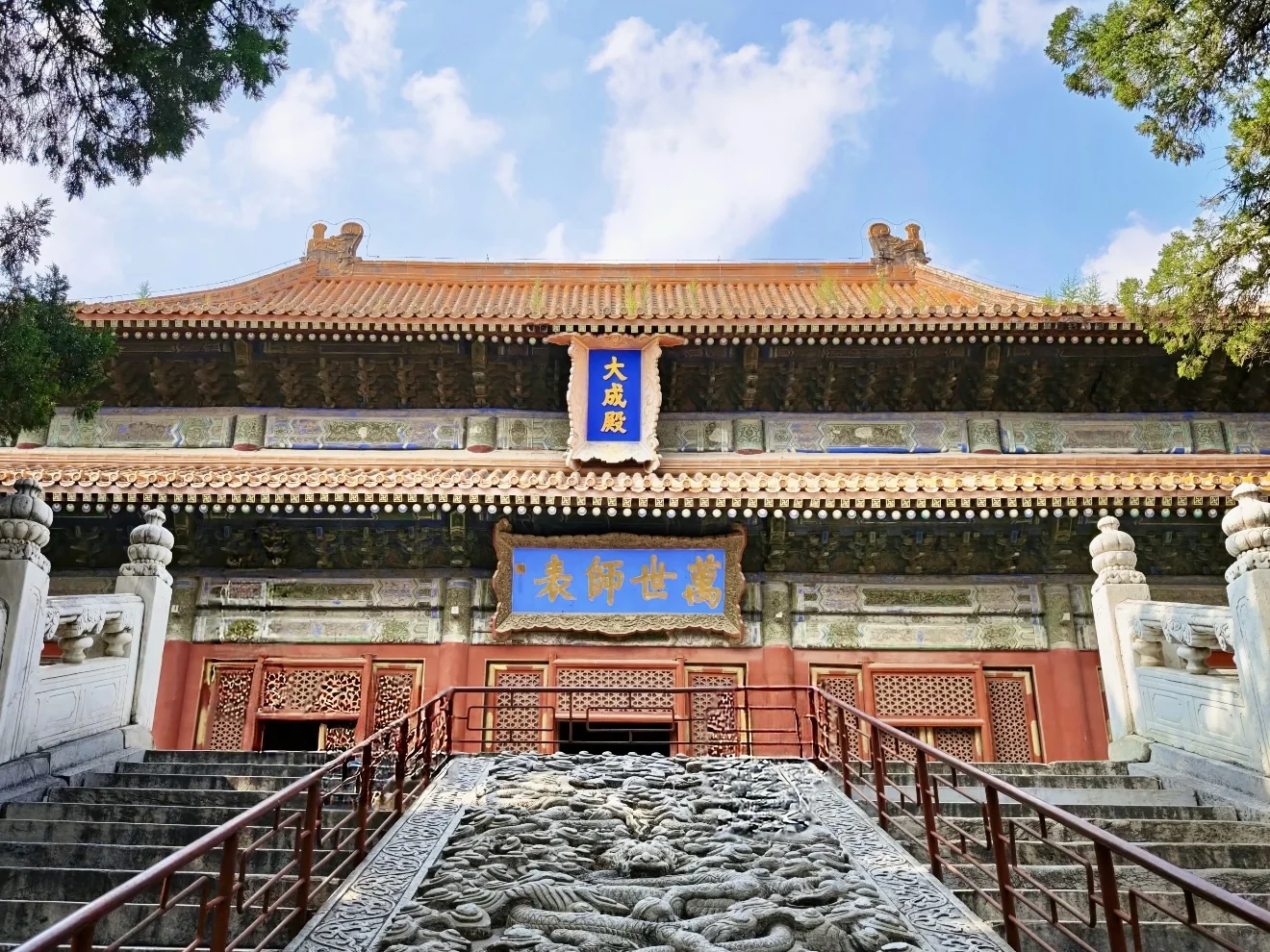
Dacheng Hall (大成殿) is the principal ceremonial building of the Confucius Temple.
Its name refers to the great accomplishments associated with Confucius.
The hall occupies a prominent position within the temple's central axis.
Architecture of Respect
The building's formal proportions, elevated platform, and richly decorated roof reflect its importance.
Like other major ceremonial halls in imperial China, its architecture was intended to communicate dignity and authority.
The courtyard in front of Dacheng Hall provided space for ritual activities.
During the imperial period, ceremonies honoring Confucius were conducted according to established traditions.
These rituals involved music, formal movements, offerings, and prescribed ceremonial procedures.
A Different Kind of Imperial Monument
Visitors familiar with the Forbidden City may recognize similarities in architectural organization.
Both employ axial planning, monumental halls, and carefully controlled ceremonial space.
However, their purposes differed.
The Forbidden City represented the emperor's political and residential authority.
Dacheng Hall represented the state's public reverence for Confucian learning and moral tradition.
This distinction gives the building its historical meaning.
4. The 198 Jinshi Steles: A Record of China's Scholar-Officials
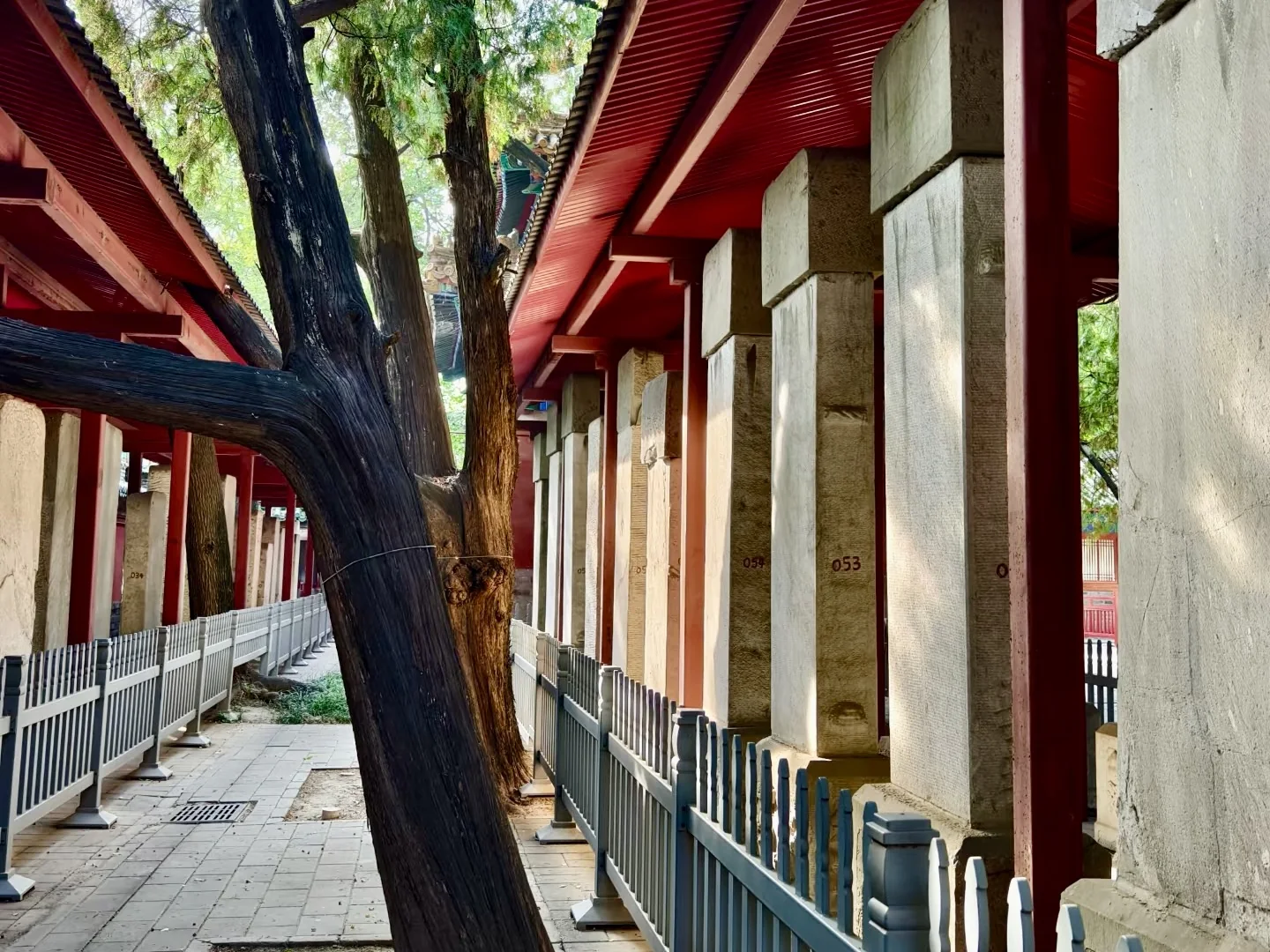
One of the Confucius Temple's most remarkable features is its collection of imperial examination stone inscriptions.
The temple preserves 198 steles recording successful *jinshi* (进士) examination candidates from the Yuan, Ming, and Qing dynasties.
Together, these inscriptions contain the names of 51,624 successful scholars.
What Was a Jinshi?
The *jinshi* degree represented success at the highest level of the imperial civil-service examination system.
Candidates generally spent years studying Confucian classics, literary composition, and prescribed forms of scholarly knowledge.
Competition was intense.
Success could lead to appointments within the imperial bureaucracy and provide considerable prestige to the candidate's family.
Names Carved Into History
The examination steles record the names, places of origin, and examination rankings of successful candidates.
They are more than decorative monuments.
They preserve a remarkable historical record of the individuals who entered the highest levels of the imperial examination system over several centuries.
Each name represents an educational journey shaped by family resources, personal ambition, intellectual training, and institutional selection.
What the Steles Reveal
The inscriptions offer insights into the geographical and social organization of the imperial state.
Successful candidates came from different regions of China.
Their names collectively illustrate how the examination system connected local communities with the central government.
For historians, the steles are valuable sources for studying education, bureaucracy, regional representation, and elite networks.
For visitors, they provide a tangible connection with generations of scholars who devoted much of their lives to examination success.
 Click to enlarge
5. Ancient Cypress Trees and the Temple Courtyards
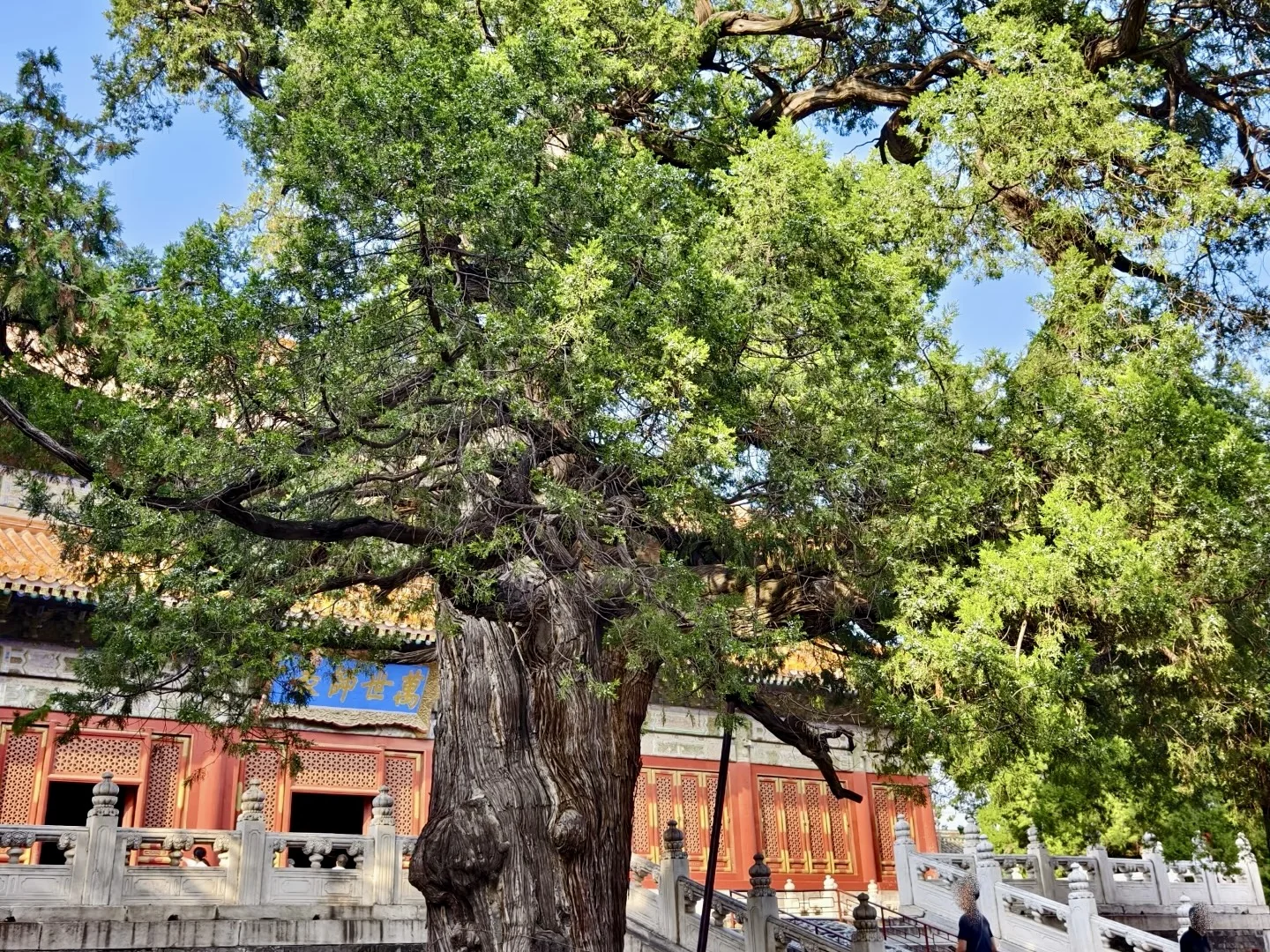
The Confucius Temple is also known for its ancient cypress trees.
Some of the oldest trees are associated with the Yuan-dynasty origins of the complex and are estimated to be around 700 years old.
Their massive trunks and irregular branches create a striking contrast with the formal geometry of the surrounding architecture.
Trees as Historical Witnesses
In traditional Chinese ceremonial landscapes, old trees often carry cultural and symbolic significance.
Their longevity can suggest continuity, endurance, and the passage of generations.
At the Confucius Temple, the cypresses have witnessed centuries of institutional change.
They survived the transition from Yuan to Ming, from Ming to Qing, and from imperial government to the modern city.
The Touch-Evil Cypress
One famous tree is traditionally known as the Touch-Evil Cypress, or Chujian Bai (触奸柏).
According to local legend, its branches once struck a corrupt official, giving rise to its association with moral judgment.
The story should be understood as traditional folklore rather than a verified historical event.
Nevertheless, it reflects a central theme of Confucian political culture: the expectation that officials should possess moral integrity.
The tree remains one of the temple's memorable features.
 Click to enlarge
6. The Thirteen Classics Stone Inscriptions
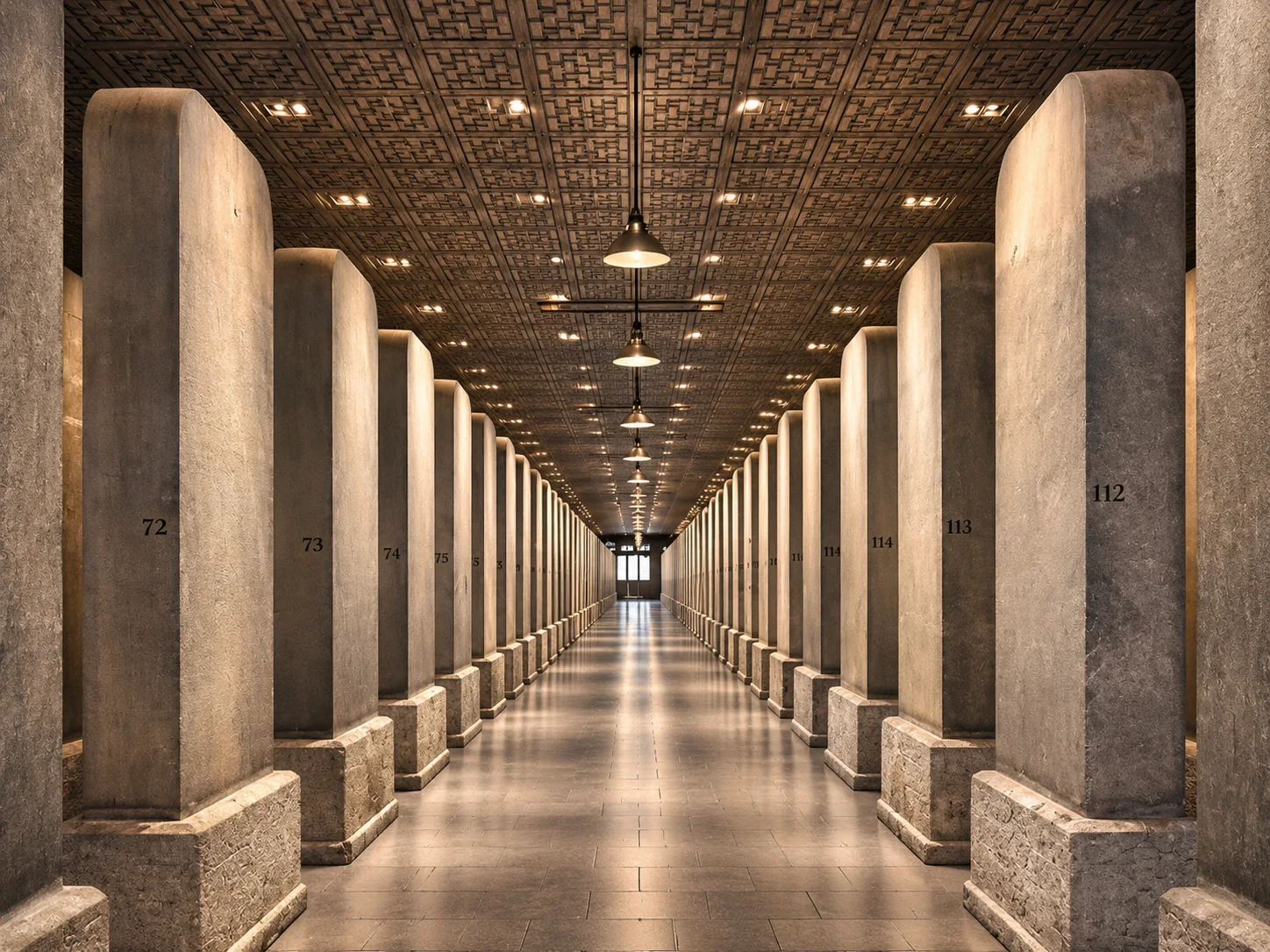
Another important attraction is the collection known as the Thirteen Classics Stone Inscriptions, also associated with the Qianlong Stone Classics.
These monumental inscriptions preserve texts central to the Confucian classical tradition.
Why Carve Books Into Stone?
Before modern printing and digital preservation, written texts could be transmitted through handwritten manuscripts, printed editions, and inscriptions.
Carving canonical works into stone provided a durable, authoritative reference.
The project also expressed the Qing court's commitment to preserving and defining the classical textual tradition.
The Scale of the Project
The collection comprises 189 stone tablets bearing more than 630,000 Chinese characters.
The inscriptions represent an extraordinary investment of scholarly labor, calligraphy, stone carving, and imperial patronage.
Their significance extends beyond the physical monuments.
They demonstrate how the imperial state sought to preserve, standardize, and publicly display the texts that shaped official education.
A Monument to Knowledge
The stone classics are particularly meaningful when considered alongside the examination steles.
One collection preserves the canonical texts that scholars studied.
The other records the people who succeeded within the examination system.
Together, they create a powerful architectural and documentary expression of imperial learning.
 Click to enlarge
7. The Imperial College: China's Highest State Academy
Beside the Confucius Temple stands the Imperial College, known in Chinese as Guozijian (国子监).
Its institutional history in Beijing dates to the Yuan dynasty, with official sources identifying its founding in 1287 and the construction of its surviving complex during the early fourteenth century.
It continued to serve important educational and administrative functions during the Ming and Qing dynasties.
What Was Guozijian?
Guozijian was the highest state educational institution and a central authority for educational administration.
It is sometimes described as China's imperial university.
That comparison is useful, but it should not be taken too literally.
Guozijian was not a modern research university.
Its purpose was closely connected with the training, supervision, and cultivation of scholars within the imperial political system.
Who Studied Here?
Students included individuals from different backgrounds and regions of the empire.
The institution also had connections with students from neighboring states and foreign tributary relationships.
Its educational role reflected the cultural reach of the imperial capital.
Studying at Guozijian carried prestige because of the institution's association with state authority and official learning.
Education and Government
The Imperial College illustrates a defining feature of imperial China: education was deeply intertwined with the organization of government.
Scholarly achievement could become a route toward administrative responsibility.
At the same time, the state influenced the curriculum, institutional hierarchy, and intellectual standards expected of its officials.
The college was therefore both an educational institution and part of the machinery of imperial governance.
8. The Glazed Archway: A Monument to Learning
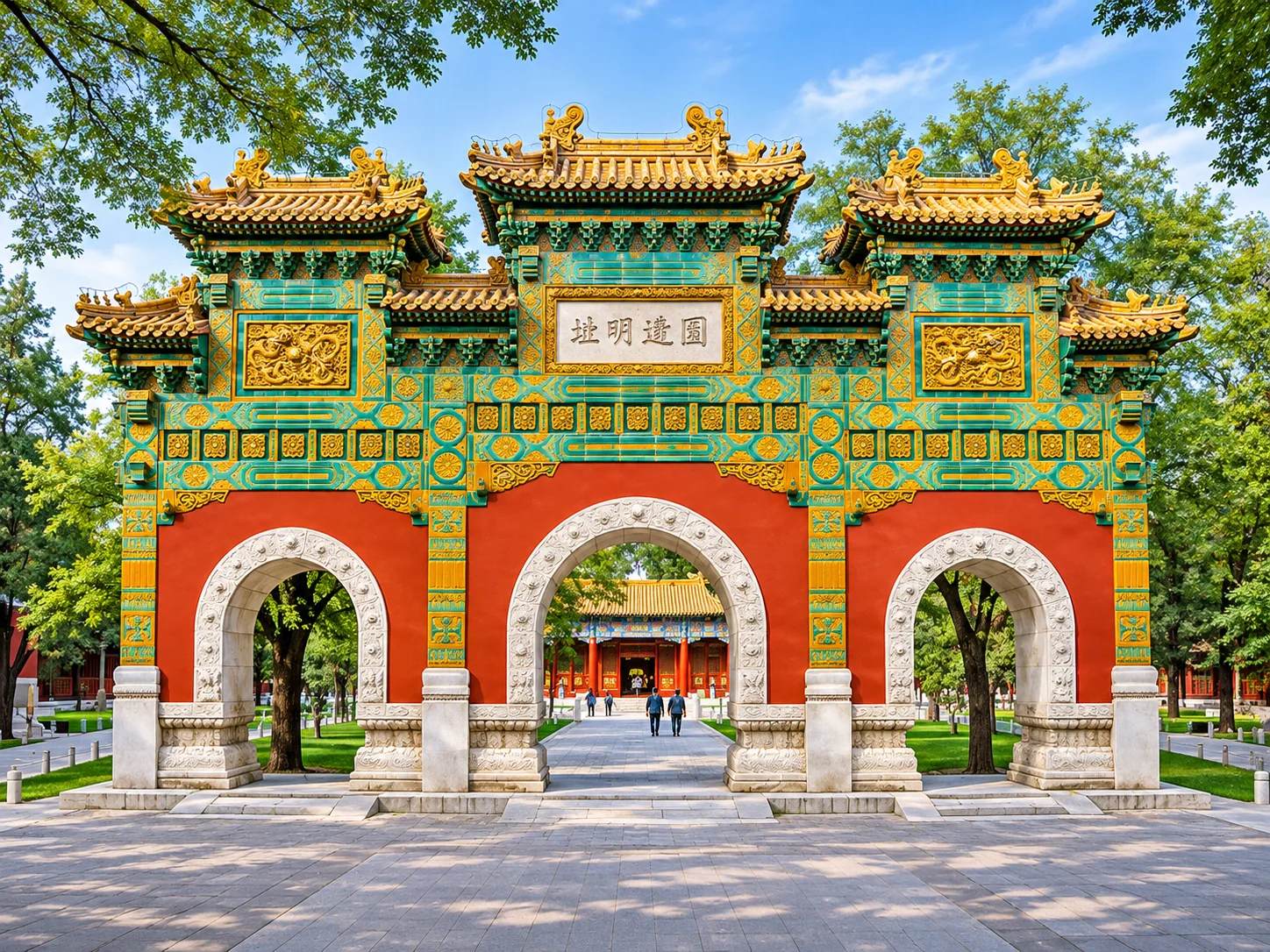
One of the Imperial College's most recognizable architectural features is its magnificent glazed archway.
Located along the central axis, the archway uses brightly colored glazed tiles and elaborate traditional ornamentation.
It stands in front of Biyong Hall.
More Than a Decorative Gateway
Traditional Chinese ceremonial archways, or *paifang*, often marked places of particular social, moral, or institutional significance.
At Guozijian, the glazed archway expresses the prestige of imperial education.
Its architectural richness distinguishes the site from an ordinary school compound.
A Symbol of Imperial Patronage
The archway is associated with the major architectural development of the college during the Qing dynasty.
Its glazed surfaces, formal composition, and inscriptions communicate the relationship between learning and imperial authority.
For visitors, it is one of the finest places to appreciate the decorative craftsmanship of the complex.
The archway is also among the site's most distinctive photography locations.
 Click to enlarge
9. Biyong Hall: Where the Emperor Lectured
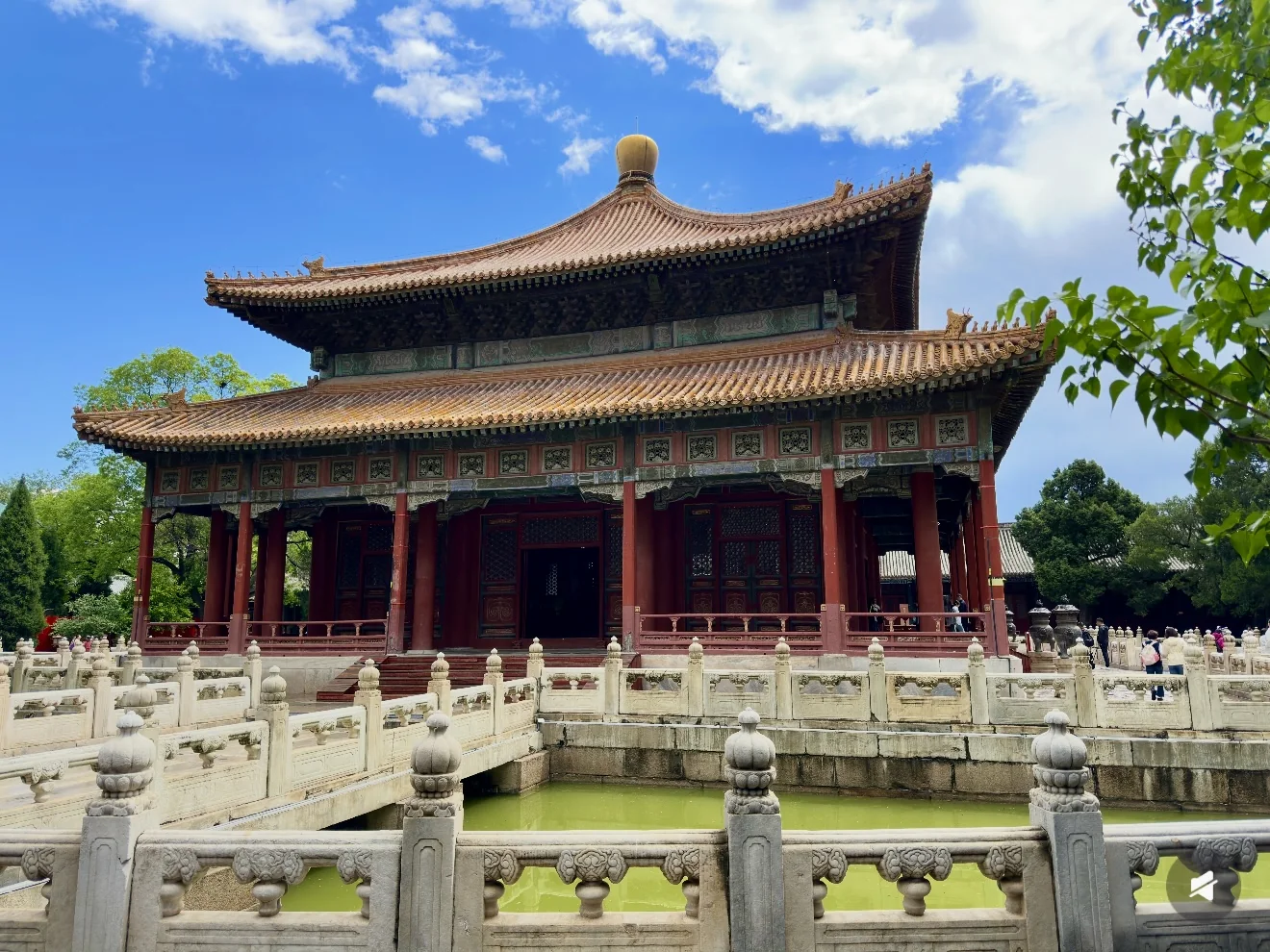
Biyong Hall (辟雍殿) is the architectural centerpiece of the Imperial College.
Constructed during the Qianlong Emperor's reign, it was designed as a ceremonial setting for imperial lectures.
The building stands on a square platform surrounded by a circular pool.
Stone bridges provide access across the water.
The Meaning of Biyong
The term *Biyong* has ancient associations with royal education and ceremonial learning.
Its use at Guozijian connected the Qing institution with a much older tradition of idealized royal scholarship.
The architectural composition was carefully designed to communicate the importance of education within the imperial order.
A Hall Surrounded by Water
The relationship between the square hall and surrounding circular water feature creates one of Beijing's most unusual ceremonial landscapes.
The building's yellow-glazed roof, red columns, white stone bridges, and reflective water produce a memorable visual composition.
The setting is formal yet unexpectedly serene.
Imperial Lectures
Biyong Hall was associated with occasions when the emperor delivered or presided over lectures on Confucian classical learning.
These events were highly ceremonial.
They expressed the emperor's role not only as a political ruler but also as a guardian and patron of the classical educational tradition.
The architecture transformed the act of teaching into a public demonstration of imperial legitimacy.
 Click to enlarge
10. Yilun Hall and the Organization of Imperial Learning
Behind Biyong Hall stands Yilun Hall (彝伦堂), another important building within the Imperial College.
The hall formed part of the institution's educational and ceremonial spaces.
Its position along the central axis reflects the structured organization of the college.
A Hierarchy of Learning
The sequence of gates, archways, halls, and courtyards at Guozijian is not accidental.
It reflects the formal hierarchy of an imperial institution.
Movement through the complex creates a progression from the public entrance toward increasingly important spaces.
This architectural organization resembles that of other major state institutions in Beijing.
Education as an Institution
The buildings also remind visitors that imperial education required more than individual teachers and students.
It depended on administrative structures, official standards, ceremonial practices, and a recognized body of classical knowledge.
Guozijian was a physical expression of that system.
11. Guozijian Street: Beijing's Historic Scholars' Quarter
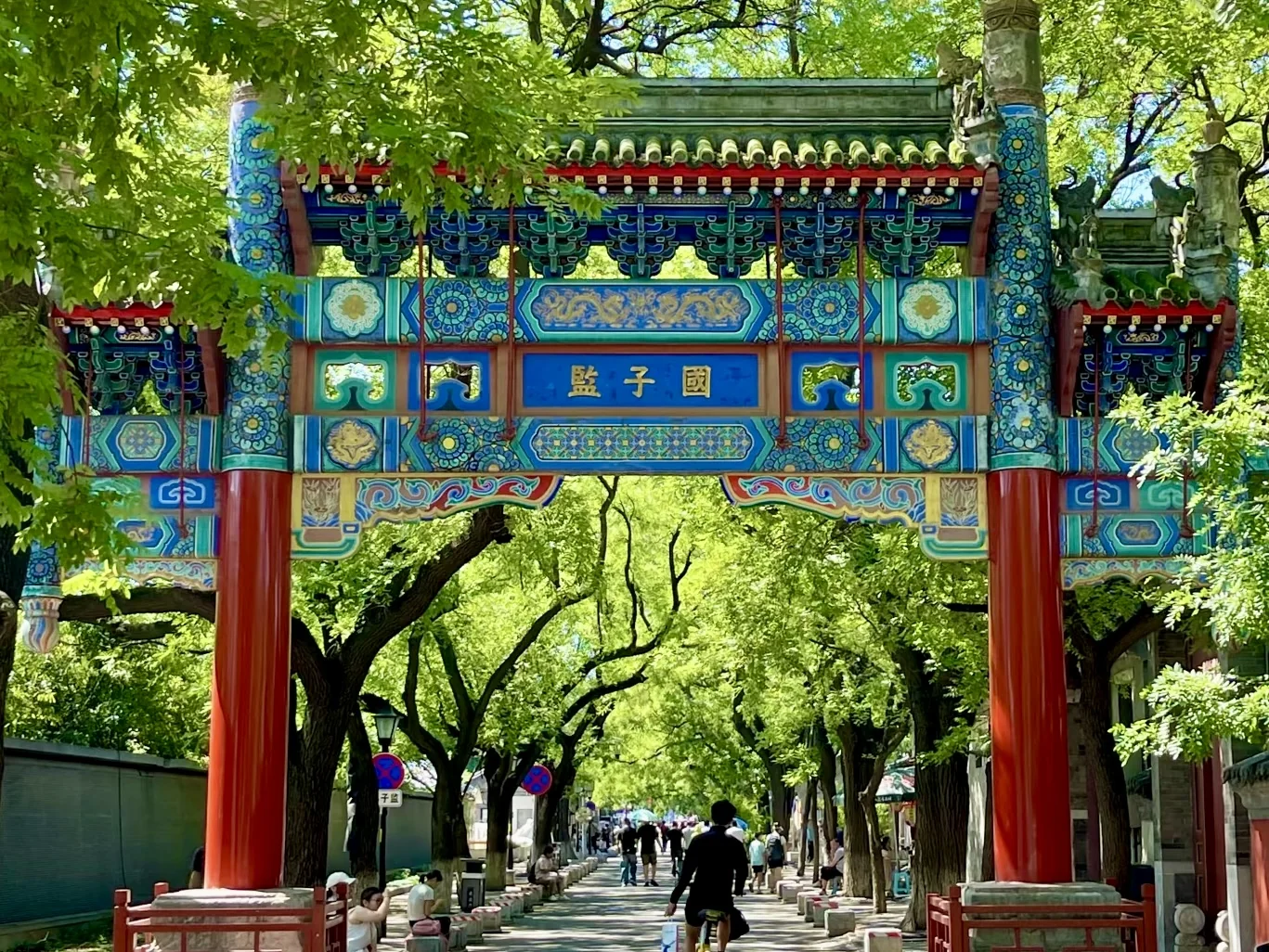
Outside the museum, Guozijian Street (国子监街) is an attraction in its own right.
The traditional lane is distinguished by historic archways, red walls, old trees, and courtyard architecture.
It provides a fitting setting for the Confucius Temple and Imperial College.
A Street Shaped by Education
For centuries, the street's identity was closely connected with the educational and ceremonial institutions beside it.
Its architecture reflects the prestige of the area.
Decorative archways mark the street, while the surrounding buildings preserve elements of traditional Beijing's urban character.
A Different Atmosphere From Commercial Hutongs
Unlike the busy shopping streets of Nanluoguxiang or Dashilar, Guozijian Street is especially associated with scholarly and institutional history.
The contrast is part of its appeal.
Visitors can move from monumental educational buildings into a quieter traditional neighborhood within a short walk.
 Click to enlarge
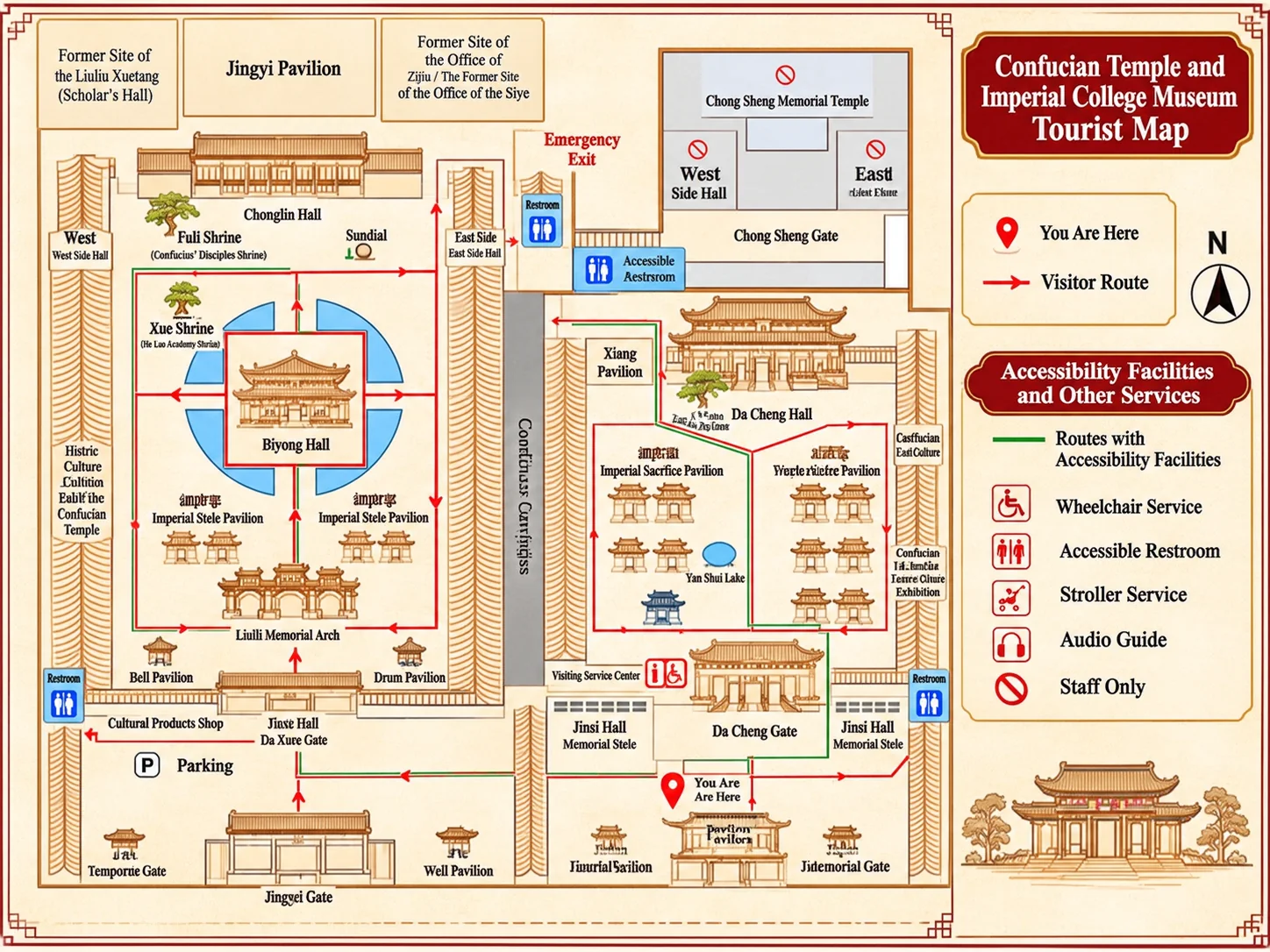
12. A Self-Guided Confucius Temple and Imperial College Route
Suggested duration: 1.5–2 hours Starting point: Confucius Temple entrance on Guozijian Street Route: Confucius Temple → Examination Steles → Dacheng Hall → Stone Classics → Imperial College → Biyong Hall
 Click to enlarge
Stop 1 — Xianshi Gate
*10 minutes*
Begin at the historic entrance to the Confucius Temple.
Observe the traditional gate architecture and the organization of the central courtyard.
Stop 2 — Imperial Examination Steles
*15–20 minutes*
Explore the rows of stone inscriptions recording successful jinshi candidates.
Consider the scale of the examination system and its role in selecting officials.
Stop 3 — Dacheng Hall and Ancient Cypress Trees
*20 minutes*
Visit the principal ceremonial hall and observe the ancient trees within the surrounding courtyards.
This is the heart of the temple's historical ritual function.
Stop 4 — Thirteen Classics Stone Inscriptions
*15–20 minutes*
Examine the monumental collection of carved classical texts.
These inscriptions reveal the importance of preserving authoritative scholarship.
Stop 5 — Imperial College Glazed Archway
*10–15 minutes*
Continue into the Imperial College through the designated museum connection.
Pause at the colorful glazed archway.
Stop 6 — Biyong Hall
*20–25 minutes*
Explore the ceremonial lecture hall and its surrounding water feature.
This is the architectural highlight of the college.
Stop 7 — Yilun Hall
*10–15 minutes*
Finish with the college's later ceremonial and educational buildings.
Follow the museum's current exit signs when leaving.
13. A Half-Day Cultural Walk: Lama Temple, Guozijian and Wudaoying
The Confucius Temple and Imperial College are ideally located for a broader cultural walk through northeastern central Beijing.
This itinerary combines two different religious and philosophical traditions with historic residential streets.
Suggested duration: 4–5 hours
9:00 AM — Lama Temple
Begin at Yonghegong, one of Beijing's most important Tibetan Buddhist monasteries.
Explore its former imperial architecture, ceremonial halls, and monumental Maitreya Buddha.
Allow approximately 90 minutes.
10:45 AM — Confucius Temple
Walk to the nearby Confucius Temple.
Explore Dacheng Hall, the ancient cypress trees, and imperial examination inscriptions.
11:30 AM — Imperial College
Continue into Guozijian.
Visit the glazed archway, Biyong Hall, and the former educational buildings.
12:30 PM — Guozijian Street
Walk along the historic street and admire its traditional archways and courtyard architecture.
1:00 PM — Wudaoying Hutong
Finish with lunch or a café visit in Wudaoying Hutong.
The street combines traditional Beijing architecture with contemporary restaurants and independent shops.
This route works well without a vehicle between individual stops.
14. Tickets, Opening Hours, and Visitor Information
The Confucius Temple and Imperial College are managed together as a museum complex.
Admission
Standard adult admission: RMB 30
Eligible concession admission: RMB 15
A standard museum ticket covers both the Confucius Temple and Imperial College.
Additional discounts or free admission may apply to specific visitor categories, subject to the museum's current policies.
Opening Hours
Tuesday–Sunday: 09:00–17:00
Last admission: 16:30
Closed: Mondays, except applicable public holidays.
The museum may also announce special closures during the Chinese New Year holiday or for conservation work.
How to Buy Tickets
Tickets can be purchased through the museum's official WeChat ticket service or at its ticket office.
Visitors should bring their original passport or other required identification.
During busy periods, purchasing tickets in advance may reduce uncertainty.
Official Information
See Beijing’s official visitor information for current prices and hours.
Because operating arrangements can change, check the museum's latest notices before visiting.
15. How to Get There
Address
Confucius Temple and Imperial College Museum Guozijian Street, Dongcheng District, Beijing
Chinese: 北京市东城区国子监街孔庙和国子监博物馆
Official listings use street numbers 13 and 15 for the museum complex.
By Subway
Yonghegong (Lama Temple) Station is served by Beijing Subway Lines 2 and 5.
From the station, follow signs toward Guozijian Street.
The museum is a short walk away.
By Taxi or DiDi
Search for:
孔庙和国子监博物馆
The surrounding streets are narrow and may have vehicle restrictions.
A nearby drop-off followed by a short walk is often the most practical arrangement.
By Private Vehicle
Private transportation is useful when combining the museum with attractions elsewhere in Beijing.
For the immediate Lama Temple–Guozijian–Wudaoying area, walking is generally more convenient than repeatedly using a vehicle.
16. Best Time to Visit
Spring
Spring brings comfortable temperatures and fresh greenery to the courtyards.
The ancient cypress trees and traditional architecture create a particularly pleasant setting.
Summer
Summer offers lush vegetation but can be hot and humid.
Morning visits are generally more comfortable.
Autumn
Autumn is especially attractive for photography.
The changing foliage contrasts with the red walls, glazed roofs, and stone monuments.
Winter
Winter provides a quieter atmosphere and clearer views of the architectural layout.
The absence of dense foliage makes the symmetry of the courtyards easier to appreciate.
Best Time of Day
Weekday mornings are generally a good choice for visitors interested in architecture and photography.
The site is often less crowded than the nearby Lama Temple, although visitor numbers can increase during school holidays and organized group visits.
17. Is the Confucius Temple and Imperial College Worth Visiting?
Yes, especially for travelers interested in Chinese philosophy, education, architecture, and imperial history.
The complex offers something different from Beijing's better-known attractions.
The Forbidden City illustrates imperial political authority.
The Lama Temple reveals Qing patronage of Tibetan Buddhism.
The Confucius Temple and Imperial College show how the imperial state honored learning and organized the education of its governing elite.
The most memorable features are the 198 examination steles, the ancient cypress trees, the monumental classical inscriptions, the glazed archway, and Biyong Hall.
Even visitors without a specialist interest in Confucianism can appreciate the architecture and peaceful courtyards.
Its convenient location beside the Lama Temple also makes it one of Beijing's easiest historic attractions to incorporate into a half-day cultural walk.
18. Why This Place Matters
The Confucius Temple and Imperial College preserve an important dimension of Chinese civilization: the relationship between knowledge and government.
For centuries, education shaped the selection, training, and social identity of the scholar-official class.
Confucian classical learning provided a shared intellectual framework.
The examination system created a formal route into public service, even though access to education and success remained deeply unequal.
The temple honored the intellectual tradition.
The college institutionalized it.
The examination steles preserved the names of those who succeeded.
And the ceremonial halls expressed the state's authority over learning.
Together, these buildings reveal how education became part of the political structure of imperial China.
They also invite a broader question: how do societies define knowledge, select their governing elites, and connect education with public responsibility?
That question gives the complex significance far beyond its architectural beauty.
19. Explore Beijing's Cultural Heritage With DragonTrail
The Confucius Temple and Imperial College are straightforward to visit independently, especially when combined with the Lama Temple and Wudaoying Hutong.
For visitors planning a broader Beijing itinerary, DragonTrail can help arrange private sightseeing days that connect these historic sites with the Forbidden City, Temple of Heaven, Shichahai, and other cultural landmarks.
The complex can also be included in a two- to five-day Beijing itinerary covering imperial history, traditional neighborhoods, and the Great Wall.
Explore private Beijing day tours and multi-day itineraries: https://dragontrail.cc/tours/beijing/private-tour-quote
Explore private multi-city China tours: https://dragontrail.cc/tours/private-china-tours
Frequently Asked Questions
- The Confucius Temple was a ceremonial institution where emperors and officials honored Confucius. The Imperial College was the highest state educational institution and an administrative center for education during the Yuan, Ming, and Qing dynasties.
- No. It is a Confucian ceremonial complex dedicated to honoring Confucius and the intellectual tradition associated with his teachings.
- Guozijian was the highest state educational institution in imperial China. Its Beijing complex served important educational and administrative functions during the Yuan, Ming, and Qing dynasties.
- It is often compared with an imperial university, but it was not a modern university. The institution belonged to a much older system of state education, and similar national academies existed before the surviving Beijing complex.
- The temple was founded in 1302 during the Yuan dynasty.
- Standard adult admission is RMB 30, covering both the Confucius Temple and Imperial College.
- The museum normally opens from 09:00 to 17:00, Tuesday through Sunday, with last admission at 16:30. It is generally closed on Mondays except applicable holidays.
- Allow approximately 1.5–2 hours for both complexes. A half-day visit can include the nearby Lama Temple, Guozijian Street, and Wudaoying Hutong.
- They are imperial examination inscriptions recording the names and other details of 51,624 successful jinshi scholars from the Yuan, Ming, and Qing dynasties.
- Biyong Hall is a ceremonial lecture hall within the Imperial College. It was built during the Qing dynasty for imperial lectures and is surrounded by a circular pool crossed by stone bridges.
- They are monumental stone inscriptions preserving Confucian classical texts. The collection contains 189 stone tablets with more than 630,000 Chinese characters.
- Yes. The two sites are within easy walking distance and make an excellent half-day cultural itinerary.
- Yes. Its traditional archways, red walls, old trees, and historic buildings make it one of Beijing's most distinctive cultural streets.
- Yes. The courtyards, ancient trees, and architectural features can be engaging for families, particularly when the visit includes explanations of imperial education and examinations.