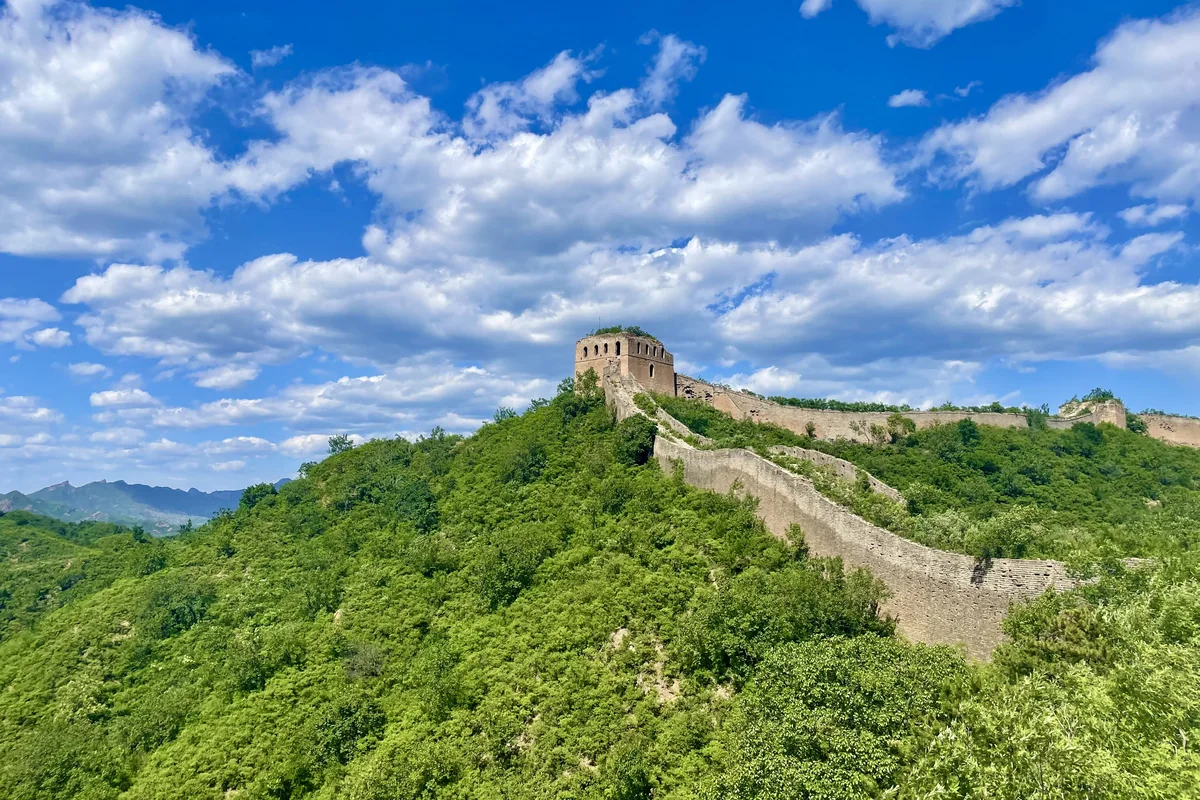
- From central Beijing: Often about 2 to 3+ hours each way from central Beijing by car depending on routing and traffic
- Typical visit style: Plan as a full hiking day from Beijing including commute, conservative pacing, and buffer
- Difficulty: Hard for most visitors: uneven and exposed, limited facilities, weather swings
- Crowds: Usually self-selecting and lighter than Badaling, but weekends and holidays still bring groups to trailheads
- Best for: Experienced day hikers with good balance and footwear; Travelers who want wild wall character more than handrails and cable cars; Visitors willing to hire a qualified guide for navigation and safety margin
- Less ideal for: First-time hikers, young children, or anyone with mobility or vertigo concerns; Travelers who want maximum facilities and uplift convenience, Mutianyu fits better; Tight layover clocks, use layover guides instead
Gubeikou and Panlongshan map
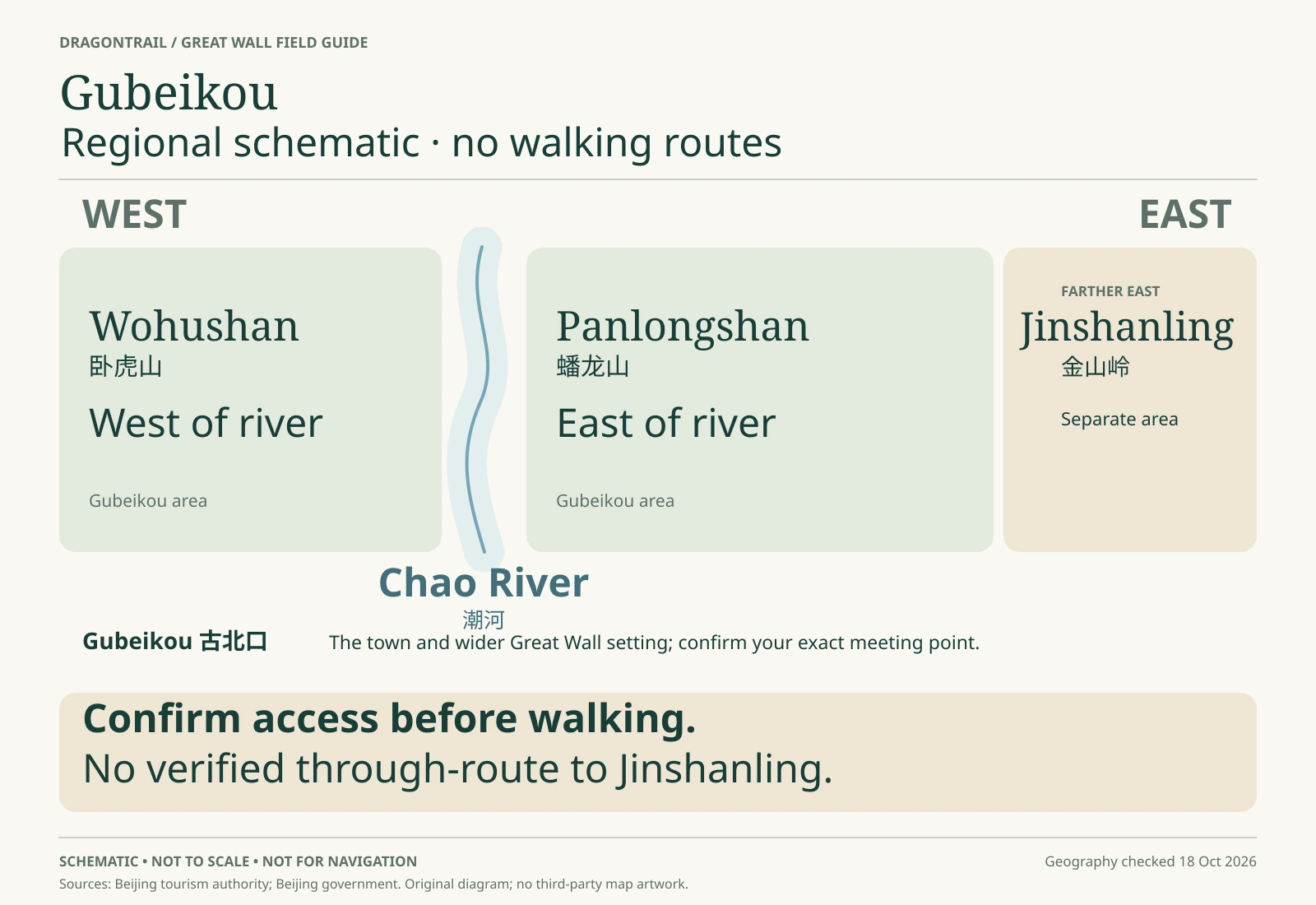 Click to enlarge
Is Gubeikou right for you?
Choose Gubeikou if you want:
- unrestored wall with rugged footing and strong mountain atmosphere
- a hiking-led day where terrain is part of the point
- honest physical challenge within a planned, guided context
- to trade polish for wilderness character
It may not be the best fit if you want:
- a gentle first Great Wall visit or family stroll
- cable cars, wide stairs, and dense visitor services
- to minimize decision-making on-site without a guide
- any doubt about fitness after a long travel week
Jinshanling is often the next step down in roughness while still feeling like a real hike. Mutianyu is the smoother, facilities-forward default for most first visits.
Ways to hike Gubeikou responsibly
There is no single official “theme park loop.” What you do on the ground should match weather, regulations, group fitness, and the guide’s risk judgment for that day.
Option A: Guided wild-wall day with conservative depth
- On-wall time
- about 3 to 5 hours of hiking depending on group and conditions
- Effort
- Hard
- Best for
- Fit hikers on a first Gubeikou visit; Travelers who want wild wall with explicit safety leadership; Groups that value clear turn-back rules
This is the pattern we recommend for most visitors: a qualified guide, a defined scope for the day, and pacing that assumes uneven stone and exposure. The goal is a strong wild-wall experience without turning the day into an unmanaged endurance test.
Why choose it
- best balance of wild character and controlled risk for many hikers
- clearer navigation and rule awareness than self-guided guessing
Not ideal for
- travelers who resist guide direction on unsafe moves
- anyone treating the wall like a photo set without hiking readiness
Option B: Longer traverse for very strong hikers
- On-wall time
- 5+ hours only when conditions and energy truly support it
- Effort
- Very hard
- Best for
- Very fit hikers with recent trail experience; Travelers who have already done shorter Gubeikou segments successfully; Groups with guide agreement on a longer scope
Longer traverses amplify every Gubeikou risk: fatigue, weather shifts, and small footing mistakes. This option belongs only when the day, the forecast, and the group are all aligned. If any one of those is marginal, depth should shrink, not grow.
Why choose it
- maximum wilderness immersion when the plan is honestly supported
Not ideal for
- first-time wild wall visitors
- late starts or hot weather without water discipline
- travelers who confuse ambition with preparation
Option C: Why a rushed short visit usually fails here
- On-wall time
- under 2 hours on the wall is rarely worth the commute risk
- Effort
- Still hard for the minutes you are on stone
- Best for
- Almost nobody: use this framing as a warning, not a product
Some itineraries try to “tick” Gubeikou between other stops. Wild wall does not reward that mindset. You still pay drive time, entry friction, and exposure, but you skip the pacing that makes the hike coherent. If your calendar cannot hold a real hiking day, choose a different section.
Why choose it
- clarifies when to say no and pick Mutianyu or Jinshanling instead
Not ideal for
- stacked city days with no buffer
- travelers who need certainty without weather flexibility
How to choose the right route
Choose by fitness and humility, not by how dramatic the photos looked online.
- Choose the guided conservative wild-wall day when Gubeikou is new to you or when the group mixes experience levels.
- Choose a longer traverse only with a guide, strong recent hiking proof, and weather that still looks boringly safe.
- Choose a different section when time is tight, legs are tired, or anyone is unsure about exposure.
Most accidents and bad stories trace back to the same error: treating unrestored wall like a scenic walkway instead of like backcountry terrain.
Example day structure from Beijing
Gubeikou should be planned as a deliberate hiking day from Beijing, not as a filler stop.
Focused half-day structure
- Early departure from Beijing with buffer
- Arrival and safety brief with your guide
- Focused wild-wall segment with conservative turnaround rules
- Return leg with time before evening plans
Even a shorter on-wall plan still needs a hiking-grade day around it. Traffic and fatigue do not shrink because the route label says half-day.
Full-day structure
- Early departure from Beijing
- Full hiking block on unrestored sections as conditions allow
- Planned breaks for food, water, and temperature shifts
- Return to Beijing with explicit buffer after hard effort
For most strong hikers, full-day structure matches Gubeikou better: it respects commute length and leaves margin when legs slow down on stone.
How we manage a Gubeikou hiking day
Gubeikou is where guide judgment, weather reads, and honest pacing matter more than narrative. The value of a guided setup is risk control on terrain that does not forgive casual mistakes.
Pacing control
We pace Gubeikou as backcountry hiking on historic stone, not as a city attraction. That means slower movement through technical sections, rest that matches exertion, and no pretending that everyone shares the same comfort with exposure. Turn-back decisions are normal, not failures.
Route control
Route depth is chosen for the group’s proven fitness and same-day conditions, not for a checklist of towers. If wind, wet stone, or fatigue shifts the risk profile, the route shortens early. We do not push for completion when safety margin is thinning.
Time buffer control
Return buffer matters twice: after hard hiking, and on Beijing traffic. A tired group and a rushed driver are a bad combination. We plan end-of-day windows so normal delays do not force risky rushing on the wall or on the highway.
Exit strategy
Good Gubeikou planning names exit triggers in advance: worsening weather, slower-than-expected group pace, or early signs of cramping or vertigo discomfort. Exiting under control preserves dignity and safety better than forcing one more ridgeline.
Getting there from Beijing
Most visitors use private transfer (from ¥1,200 sedan / ¥1,600 MPV) plus a booked guided hike. Self-driving without local experience adds unnecessary risk on a day that is already about footing and exposure.
Private driver + hiking guide
Complexity: Low in logistics
Best for: Anyone who wants the wild wall without route-finding risk
Vehicle from ¥1,200 / ¥1,600; guide quoted separately. The default for unrestored stretches.
Private driver only
Complexity: Medium–high on the wall
Best for: Repeat wild-wall hikers
Only for experienced hikers who already know permitted routes and conditions.
Self-drive / informal taxi
Complexity: High
Best for: Local residents with Chinese license and route knowledge
Usually a poor fit for first-time international visitors.
Gubeikou vs Jinshanling vs Mutianyu
A simple rule:
Gubeikou
Best when wild, unrestored wall and strong hiking tolerance are the goal. Highest self-selection and lowest forgiveness for poor gear or weather denial.
Jinshanling
Best when you want a serious ridge hike with a mix of restored and wilder character, usually with more structure than Gubeikou for many travelers.
Mutianyu
Best when you want restored wall, uplifts, and visitor services. The default easier first Great Wall day for most groups.
- choose Mutianyu when comfort and access are priorities
- choose Jinshanling when you want a strong hike without maximum wilderness risk
- choose Gubeikou only when wild unrestored terrain is explicitly what you want
| Gubeikou | Jinshanling | Mutianyu | |
|---|---|---|---|
| Terrain | Unrestored, uneven, exposed | Mixed restored and wilder | Restored, serviced ridges |
| Typical visitor | Experienced hikers | Active hikers, photographers | First visits, families, broad ages |
| Risk profile | Highest self-selection | Moderate to hard hiking | Moderate, uplift-assisted |
Common mistakes at Gubeikou
Treating it like Badaling or Mutianyu
Crowd energy and footing are not comparable. If your only wall reference is a restored section, reset expectations before you step onto loose stone.
Wrong shoes
Fashion sneakers and smooth soles fail here. You need hiking shoes with grip and ankle stability suited to broken surfaces.
Ignoring weather
Wind, rain, and temperature swings change friction and comfort fast. Layers, gloves in cold months, and a willingness to shorten the route beat stubbornness.
Skipping guide value
Self-guiding sounds independent until navigation, rule changes, and risk calls pile up on tired legs. Most visitors are safer with qualified local leadership.
Tickets, weather & gear
Tickets / access: Gubeikou / Panlongshan admission ticket ¥30. Private driver from Beijing: from ¥1,200 sedan / ¥1,600 MPV. Optional hiking guide is quoted separately based on route length and group size — ask when you inquire.
Weather: Assume mountain conditions: stronger wind, faster changes, and colder feel than central Beijing.
What to bring
- hiking boots or trail shoes with aggressive grip
- layers and a wind shell
- more water than you think for summer
- gloves and hat in cold months
- snacks that match a long exertion day
- a small first-aid mindset: blisters and scrapes happen on stone
FAQ
- Generally no. You need hiking conditioning, solid footwear, and comfort with exposure. Beginners are usually happier and safer starting at Mutianyu.
- Strongly recommended for most people. A guide adds navigation, pacing, safety framing, and up-to-date awareness of what is permitted on a given date.
- Both reward hikers, but Gubeikou is rougher and less forgiving. Jinshanling often delivers big ridge drama with somewhat more predictable visitor structure for many active travelers.
- Grip-focused shoes, layers, water, sun or cold protection as season demands, and humility about shortening the hike if conditions shift. Leave smooth-soled city shoes at the hotel.
Plan a Gubeikou hiking day
If you already know you want wild unrestored wall and you are honest about fitness, Gubeikou is one of the most authentic hiking experiences near Beijing.
If you are still comparing sections, start here: