
Shichahai Guide overview
Plan your visit with a clear geographic model of Shichahai and choose which lake area to prioritise.
- Area: Qianhai · Houhai · Xihai
- Visit style: Lakes, hutongs and heritage sites
- Access: Open district with paid optional attractions
Shichahai at a glance
Shichahai is not one lake or one hutong. It is a wider historic district centred on three connected water areas—Qianhai, Houhai and Xihai—and the streets, hutongs, bridges, residences and public cultural sites surrounding them.
| Question | Answer |
|---|---|
| Chinese name | 什刹海 |
| Pinyin | Shíchàhǎi |
| Main water areas | Qianhai, Houhai and Xihai |
| District | Primarily Xicheng District, beside the old-city Central Axis |
| Basic access | Public streets and waterfront areas |
| General admission | No district-wide admission ticket |
| Paid optional sites | Towers, museums, former residences and mansion sites |
| Main transport | Line 8 Shichahai Station; other approaches depend on the chosen area |
| Typical uses | Walking, public heritage visits, lakeside leisure, dining and nightlife |
| Suitable duration | Depends on the selected lake, route and optional sites |
| Private courtyard access | Not included through ordinary public access |
The name Shichahai may be used for the lakes themselves, the scenic area or the broader surrounding historic district. In this guide, “Shichahai” refers to the wider three-lake historic district unless a specific lake is named.
Understanding the Shichahai area
Official Beijing sources identify Qianhai, Houhai and Xihai as the principal water areas of Shichahai and describe the district as a historic block adjoining the Central Axis. The Shichahai district includes more than the lakeside paths. It contains residential streets, historic hutongs, public bridges, former residences, princely mansion sites, temples, museums, cultural venues, restaurants, cafés, bars and transport corridors.
What the area includes
The Shichahai district includes more than the lakeside paths. It contains residential streets, historic hutongs, public bridges, former residences, princely mansion sites, temples, museums, cultural venues, restaurants, cafés, bars and transport corridors.
What is outside the core district
The Drum and Bell Towers are immediately east or northeast of the lake district and are natural combinations. Nanluoguxiang is a separate adjacent historic district. Beihai Park is a separate ticketed park south of Shichahai. The Forbidden City is further south and not part of Shichahai. The Lama Temple is farther east and requires a separate transfer rather than functioning as a nearby walking extension.
Orientation map
Use the orientation map below to understand where Qianhai, Houhai, Xihai, the bridges and adjacent landmarks sit relative to Shichahai. Distinguish Shichahai from adjacent districts before planning walking routes.
Qianhai, Houhai and Xihai
Qianhai
Qianhai is best for southern and central orientation, public waterfront activity, the Lotus Market area, and access toward Wanning Bridge and nearby cultural sites. It pairs naturally with Prince Gong’s Mansion-area sightseeing.
Houhai
Houhai is a larger lakeside area with differences between the northern and southern shores. It includes former residences such as the Former Residence of Soong Ching-ling (north bank) and mixes dining and hospitality activity concentrated in particular sections. Different times of day change the feel, and the whole lake is not one single “bar belt”.
Xihai
Xihai is the western water area with wetland context where current access supports it, plus water-management history connected to Guo Shoujing. It tends to feel less landmark-dense for first-time visitors, so use it when your priority is the water-system story rather than a single major photo stop.
| Lake area | General character | Stronger fit | Main consideration |
|---|---|---|---|
| Qianhai | Public waterfront, Lotus Market area and access to nearby cultural sites | First orientation, public activity and southern approaches | Visitor activity and businesses vary by segment |
| Houhai | Larger lakeside area with residential edges, former residences, dining and nightlife | Longer lakeside exploration and evening activity | The entire lake is not one continuous bar street |
| Xihai | Western water area with wetland and historical-water-system context | Quieter landscape and water-management history | Less convenient for visitors focused only on major landmarks |
The three lakes differ by shoreline segment as well as by lake. Avoid assigning one permanent atmosphere to an entire water area.
Bridges, towers and Shichahai’s urban context
Wanning Bridge
Wanning Bridge stands on the eastern edge of Shichahai and forms part of the Beijing Central Axis heritage context. It provides an important connection between the historic water system, Di’anmenwai Street and the wider planned structure of the old city. Free exterior public access is available, but crossing conditions depend on current traffic and control measures. For ordered directions, use the self-guided walking-route page.
Yinding Bridge
Yinding Bridge connects Yandai Xiejie with the central lake area. It is a useful orientation point and can become congested depending on visitor pressure and weather. Views depend on season and current conditions; a specific photograph is not guaranteed.
Bell and Drum Towers
The Bell and Drum Towers stand at the northern end of Beijing’s Central Axis, with the Drum Tower south of the Bell Tower. They are adjacent to, rather than physically inside, the lake system and form one of the most natural heritage combinations with Shichahai. Exterior viewing is available; paid entry is optional and involves stairs and current operating conditions. For practical, up-to-date information, check official current postings before visiting.
Hutongs and neighbourhood character around Shichahai
Shichahai contains residential, mixed-use, heritage, hospitality and strongly visitor-oriented streets. These uses often occur close together, so the district should not be divided into a simple “real hutong” and “tourist area” binary.
Residential streets
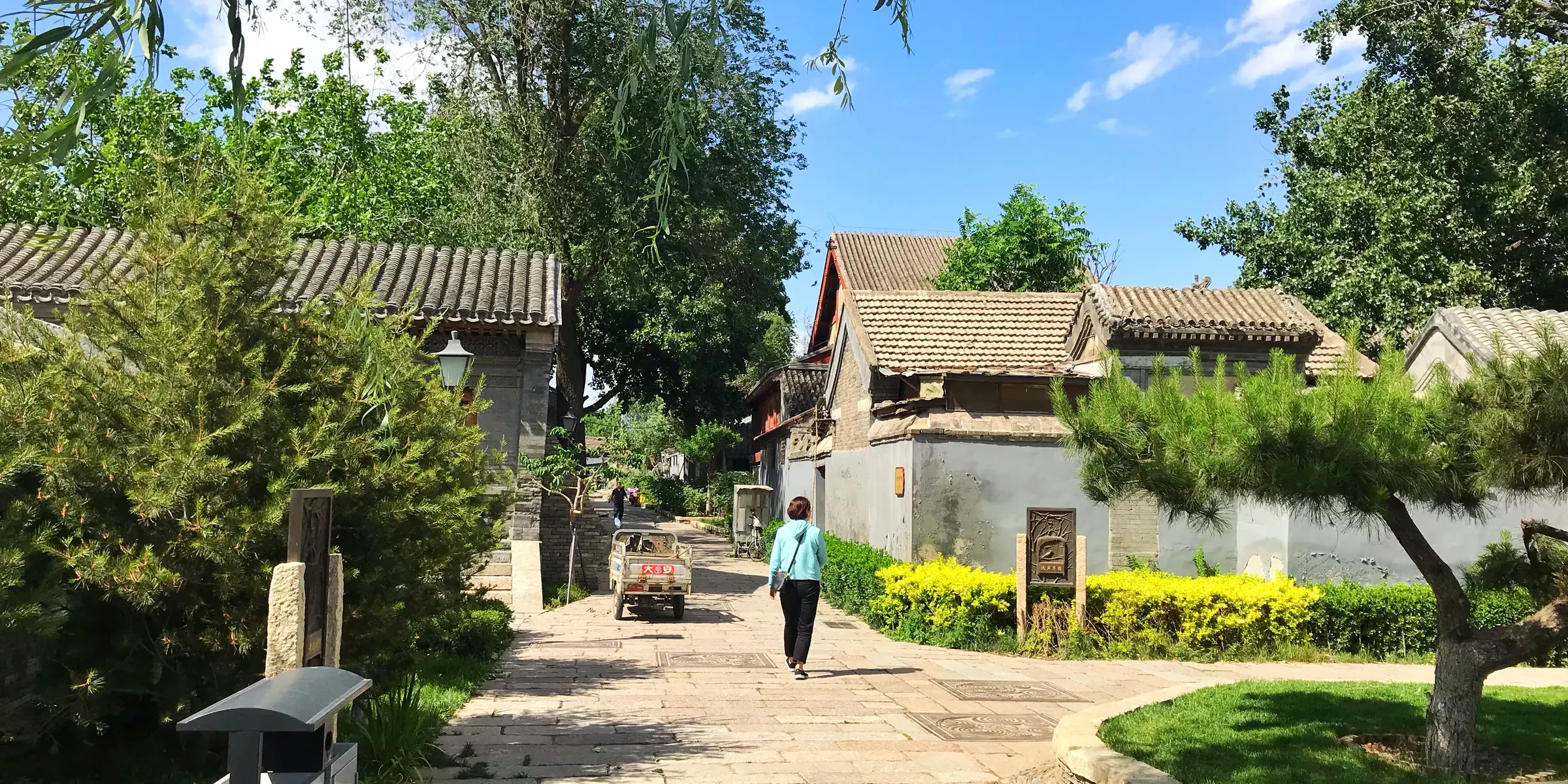
Many public lanes still provide access to homes. Public street access does not include courtyard access, and a residential appearance does not reliably indicate building age, ownership, or household composition. Visitors should remain in public space and follow signs and temporary restrictions.
Mixed-use streets
Homes, local services, cafés, guest accommodation and cultural uses may coexist. Commercial use does not automatically erase historical urban form, and different times of day can change activity levels.
Public sites and places to visit around Shichahai
| Site | What it adds | Access type | Planning consideration |
|---|---|---|---|
| Bell and Drum Towers | Central Axis and timekeeping history | Optional paid entry; exterior public space | Stairs, hours and ticketing require current verification |
| Wanning Bridge | Water-system and Central Axis context | Public exterior | Traffic and crossings depend on current control measures |
| Yinding Bridge | Lake orientation and connection to Yandai Xiejie | Public | Possible congestion depending on visitor pressure |
| Prince Gong’s Mansion | Qing princely residential and garden complex | Ticketed public site | Requires separate visit time and current reservation check |
| Former Residence of Soong Ching-ling | Twentieth-century history and former princely garden context | Ticketed or reserved public museum | Closed days and hours require current verification |
| Guo Shoujing Memorial Hall | Water management, astronomy and Grand Canal context | Public museum subject to current access | Located toward Xihai; verify access details |
| Shichahai Cultural Exhibition Center | Local history and district interpretation | Public venue subject to current status | Check current opening and access rules |
| Yandai Xiejie | Historic commercial street | Public street | Visitor congestion and commercial activity vary by time |
Practical details review date: 2026-07-16. Confirm current access, hours and ticketing rules for each site before setting out.
Choosing one paid site
Choose the Bell or Drum Tower when Central Axis views and timekeeping history are the priority. Choose Prince Gong’s Mansion for a substantial Qing mansion-and-garden visit. Choose the Former Residence of Soong Ching-ling for modern Chinese history and the site’s layered princely-residence context.
Planning your Shichahai visit
How long to allow
Useful duration depends on the part of the district selected and whether paid sites are included. A short lake-and-bridge orientation, a longer lakeside walk and a museum-plus-tower visit are different plans.
When to visit
Choose the time according to daylight, weather, optional-site hours, desired visitor activity and whether dining or evening hospitality is part of the plan. No single fixed time window is consistently best for every part of Shichahai.
Winter and lake activities
Winter lake activities depend on weather, ice thickness, official opening and safety management. Do not assume that skating or ice recreation will operate on fixed dates.
Accessibility and facilities
Accessibility varies significantly between public waterfront paths, narrow hutong streets and optional historic interiors. Plan for mixed paving, curbs and crossings, shared roads and narrow pedestrian sections. Tower stairs and museum accessibility may differ from the public street route. Toilets, seating and rest points are subject to temporary availability and may require verification.
Choosing an entry point
| Entry point | Better when | Important note |
|---|---|---|
| Shichahai Station | Beginning near Wanning Bridge, Yandai Xiejie or the Bell and Drum Towers | Confirm current exit and pedestrian access |
| Beihai North Station | Beginning near southern or western Qianhai-area approaches and nearby mansion sites | Not the closest starting point for every part of the district |
| Gulou Dajie Station | Starting with the Bell and Drum Towers and walking toward the lake district | Requires a walk from the Central Axis monuments to reach the lakes |
| Taxi or ride-hailing | Mobility, luggage, or a specific public venue determines the start | Use a precise drop-off point rather than “Shichahai” generally |
Official transport material confirms that Line 8 serves Shichahai and Drum Tower within the Central Axis corridor. Map and transport details last verified: 2026-07-16. Confirm current subway lines, station names and exits before travelling.
How long to allow
Useful duration depends on the part of the district selected and whether paid sites are included. A short lake-and-bridge orientation, a longer lakeside walk and a museum-plus-tower visit are different plans.
| Visit type | Scope |
|---|---|
| Short orientation | One lake segment, one bridge and surrounding public streets |
| Standard district visit | Selected lakefront plus one adjoining hutong or landmark area |
| Extended visit | Multiple lakes or one major ticketed site |
| Half-day cultural plan | District exploration plus one or two substantial public sites |
What to combine with Shichahai
| Nearby place | Stronger combination when | Main consideration |
|---|---|---|
| Bell and Drum Towers | Central Axis history and city views matter | Optional tower entry involves stairs |
| Prince Gong’s Mansion | A substantial historic residence is the priority | Requires separate ticketing and visit time |
| Beihai Park | Imperial landscape and lakeside walking are desired | Separate ticketed park with its own entrances |
| Nanluoguxiang | Shops, food and visitor-oriented streets are part of the plan | Separate district with high activity on its main lane |
| Jingshan Park | Central Axis views and Forbidden City context are desired | Not directly inside Shichahai |
| Guo Shoujing Memorial Hall and Xihai | Water-management and Grand Canal history matter | Located toward the western side of the district |
Use the route page for exact navigation
This location guide explains what the district contains. Use the dedicated walking-route page for an ordered map, measured segments and turn-by-turn directions: Follow the self-guided Gulou–Shichahai walking route.
Use the selection page for alternatives
Compare Shichahai with other Beijing hutong areas: Compare Shichahai with other Beijing hutong areas.
Common Shichahai planning mistakes
Treating Shichahai and Houhai as identical
Houhai is one of the three principal water areas. Shichahai refers to the wider district and lake system.
Trying to cover the entire district without choosing priorities
The area contains multiple lakes, bridges, museums, streets and nearby monuments. Select one geographic focus and any paid sites in advance.
Following a location guide as if it were a walking route
Use the dedicated route page for ordered directions and current pedestrian-access information.
Assuming every hutong lane is a public visitor route
Remain on public streets and do not enter residential gates or controlled passages.
Treating the entire lakeside as nightlife
Hospitality and bar activity are concentrated in particular sections rather than defining all three lakes.
Relying on permanent timing advice
Visitor levels, daylight, weather, ice conditions and attraction hours change.
Assuming courtyard access
Ordinary public access to Shichahai does not include entry into private siheyuan courtyards.
Combining too many distant additions
Check the actual route and transport time before adding places outside the district.
Shichahai FAQ
- Shichahai is a historic district in central Beijing centred on three connected water areas—Qianhai, Houhai and Xihai—and the surrounding hutongs, bridges, residences and public cultural sites.
- No. Houhai is one of Shichahai’s three principal water areas. The name Shichahai refers to the wider lake system and surrounding historic district.
- Choose Qianhai for southern access and nearby cultural sites, Houhai for a larger lakeside area with mixed residential and hospitality uses, and Xihai for water-management history and a less landmark-focused visit.
- Shichahai Station on Line 8 is useful for Wanning Bridge, Yandai Xiejie and the eastern side of the district. Beihai North and Gulou Dajie may suit other starting points. Confirm current station exits and choose according to the part of the district you plan to visit.
- The useful duration depends on the selected lake area, walking route and optional sites. A short waterfront orientation, a longer district walk and a museum-plus-tower visit require different amounts of time.
- They are immediately adjacent to the district and form a natural combination with Shichahai, but they are separate Central Axis monuments rather than part of the three-lake water system.
- Public streets, bridges and open waterfront areas do not require one district-wide admission ticket. Individual attractions such as towers, museums and mansion sites may require tickets or reservations.
- Not through ordinary public access. Enter only when a courtyard is a publicly open venue or an authorised host has provided explicit permission. Booking a guide does not automatically guarantee private courtyard access.
- It may suit visitors interested in lakeside lighting, dining or nightlife. Other visitors may prefer daylight for public sites, architectural observation and easier navigation. Activity levels vary by shoreline and day.
- Public paths and streets connect much of the district, but the complete route, distance and current access should be checked before setting out. Use the dedicated walking-route page for one maintained self-guided route.