The under-rated off-season
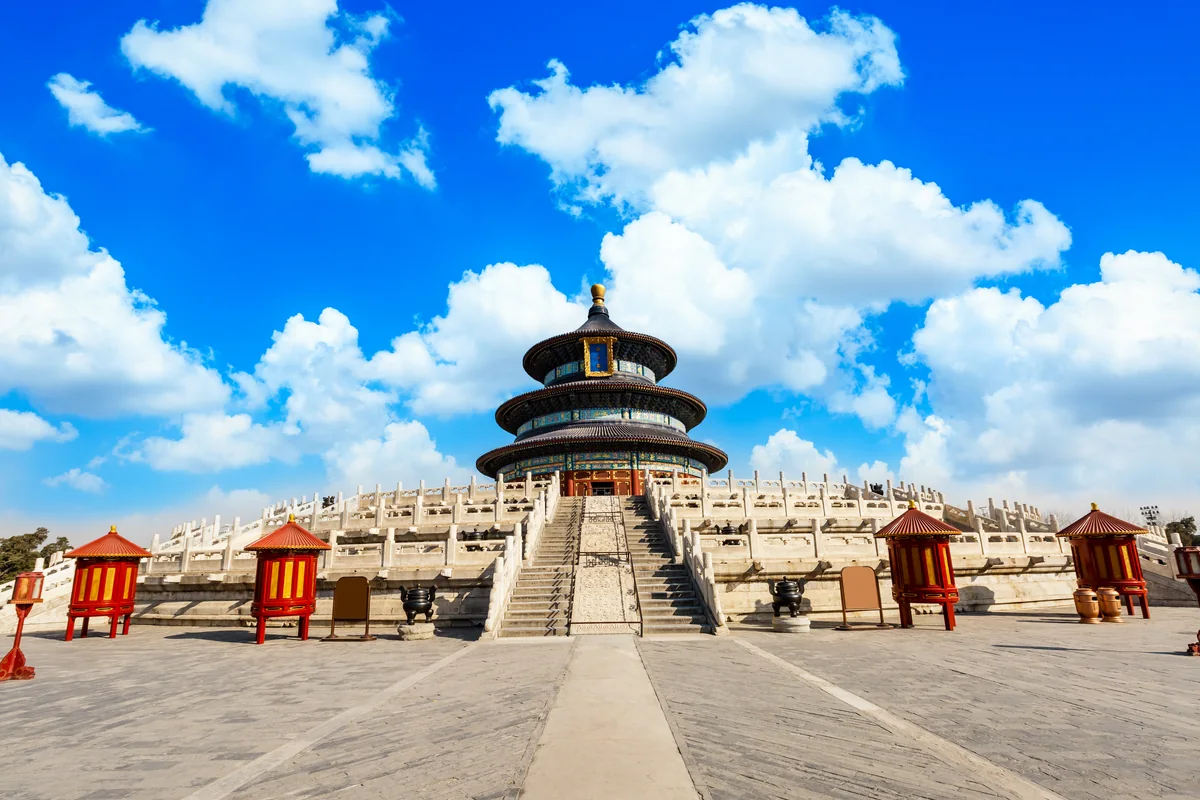
Winter (November-March) is the most photogenic season at the Temple of Heaven. Off-season tickets are cheaper (10 RMB park-only, 28 RMB through-ticket vs peak 15/34), winter is generally much quieter than summer, and the bare cypresses against the Hall of Prayer's blue triple-eaved roof make the iconic Beijing winter photograph. Occasional snow on the blue tiles is dramatic - blue-and-white pairing is rare in Chinese architecture and uniquely temple-of-heaven. Cold is the trade-off: Beijing winter averages -5C in January with occasional drops to -15C and dry windy days. Morning local-life scene continues year-round (tai chi practitioners come even in -10C cold), though smaller groups.
- From central Beijing: Subway works in winter; taxi 20-30 min
- Typical visit style: 90 min - 2 hr; cold limits standing time
- Difficulty: Easy walking but cold reduces tolerance
- Crowds: generally much quieter than summer
- Best for: Anti-crowd travellers; Photographers chasing winter Beijing landscapes; Budget travellers (off-season pricing); Cosmology-curious visitors (winter solstice month context)
- Less ideal for: Travellers very sensitive to cold; Families with very young kids
Winter vs summer at the Temple of Heaven
| Attribute | Winter (Nov-Mar) | Summer (Jun-Aug) |
|---|---|---|
| Crowds | 40-50% of summer | Peak |
| Ticket park / through | 10 / 28 RMB | 15 / 34 RMB |
| Park hours | 6 AM-9 PM | 6 AM-9 PM |
| Structures hours | 8:30 AM-5 PM | 8 AM-5:30 PM |
| Temperature | -5C to 5C | 25C to 35C |
| Photogenic moment | Bare cypresses + snow on blue tiles | Blue sky against blue roofs |
| Morning local life | Continues; smaller groups | Largest groups |
| Winter solstice ceremony | Cosmological context - the original ritual date | Not applicable |
Why winter is under-rated
Three reasons. (1) Winter is generally much quieter than summer - the Hall of Prayer plaza is photographable without a dense tourist crowd in the frame. (2) Bare deciduous cypresses + winter snow on the blue-tiled Hall of Prayer creates a unique blue-and-white scene rare in Chinese architecture - the iconic Beijing winter photograph that local photographers chase. (3) Cosmological context: visiting in December puts you near the winter solstice (the original imperial sacrifice date) - the experience is conceptually aligned with the temple's purpose. Trade-off: -5C average and dry winds.
- generally much quieter.
- Bare cypresses + snow on blue tiles: iconic photo.
- December = winter solstice context.
- Cosmologically aligned visit.
- Trade-off: -5C and dry winds.
What to wear
Layers. (1) Thermal base layer. (2) Warm mid-layer (fleece, wool, down vest). (3) Wind-proof outer shell (Beijing winter wind is the main difficulty). (4) Gloves, hat, scarf. (5) Insulated boots - stone paths and marble plinths radiate cold up. Optional: hand warmers, hot drinks thermos. Avoid: light shoes, single-layer parka. Cold-weather visitors who layer correctly do 2 hours comfortably; those who skimp on layers fade at 60 min. Echo Wall acoustic tests still work in cold (sound carries even in cold air).
- Thermal + fleece + windproof shell.
- Gloves + hat + scarf.
- Insulated boots.
- Hand warmers help.
- Skimping = 60 min fade.
- Echo Wall still works in cold.
Best winter day to visit
Three picks. (1) Mid-December: cold but the winter solstice cosmological context aligns with the temple's purpose; photograph the bare cypresses and the empty Hall of Prayer plaza. (2) After a snowfall in January or February: blue tiles dusted with snow is the iconic photograph. (3) Sunny afternoon in November or March: warmer with golden afternoon light on the blue roofs; not as cosmologically aligned but more comfortable. Avoid: Lunar New Year week (crowded despite winter; choirs and dance groups don't gather during the holiday); -15C with windchill days (skin freezes 10-15 min exposed). Check weather + air-quality forecasts morning of.
- Mid-December: cosmological alignment.
- Snowfall in Jan / Feb: iconic photo.
- Sunny November / March: comfortable golden hour.
- Avoid Lunar New Year week.
- Avoid -15C + windchill days.
- Check PM 2.5 + weather morning of.
Common winter visit mistakes
Visiting on -15C + windchill day
Skin freezes 10-15 min exposed. Check forecast; postpone if extreme.
Light shoes on frozen marble
Marble plinths get very cold. Insulated boots essential.
Lunar New Year week
Crowded despite winter. Avoid.
Skipping the morning local-life because it's cold
Cold-weather tai chi is a uniquely Beijing scene. Even 20 min observation is worth it.
Temple of Heaven in winter FAQ
- Yes - generally much quieter, lower ticket prices (10/28 RMB), and bare cypresses + snow on blue tiles is the iconic Beijing winter photograph. Cosmologically aligned with the temple's winter solstice purpose.
- Occasionally January-February in Beijing. Light snow on the blue tiles is dramatic and rare - a top winter Beijing photo.
- Park: 6 AM-9 PM year-round. Structures: 8:30 AM-5 PM in winter (off-season).
- Thermal + fleece + windproof shell. Gloves, hat, scarf, insulated boots.
- Yes - smaller groups (50% of summer attendance) but tai chi, water calligraphy, and choirs continue year-round. Cold-weather tai chi at 6:30 AM with visible breath is a uniquely Beijing winter scene.
- Lunar New Year week (crowded), -15C + windchill days (cold), heavy haze days (photos suffer).
Plan the winter visit
Our private Temple of Heaven winter day adapts pace and timing for cold weather - hotel pickup to avoid waiting in cold, 8 AM start for low crowds, indoor lunch break, optional morning local-life immersion with thermos hot drinks.
For broader season planning, the best-time page covers month-by-month strategy.