
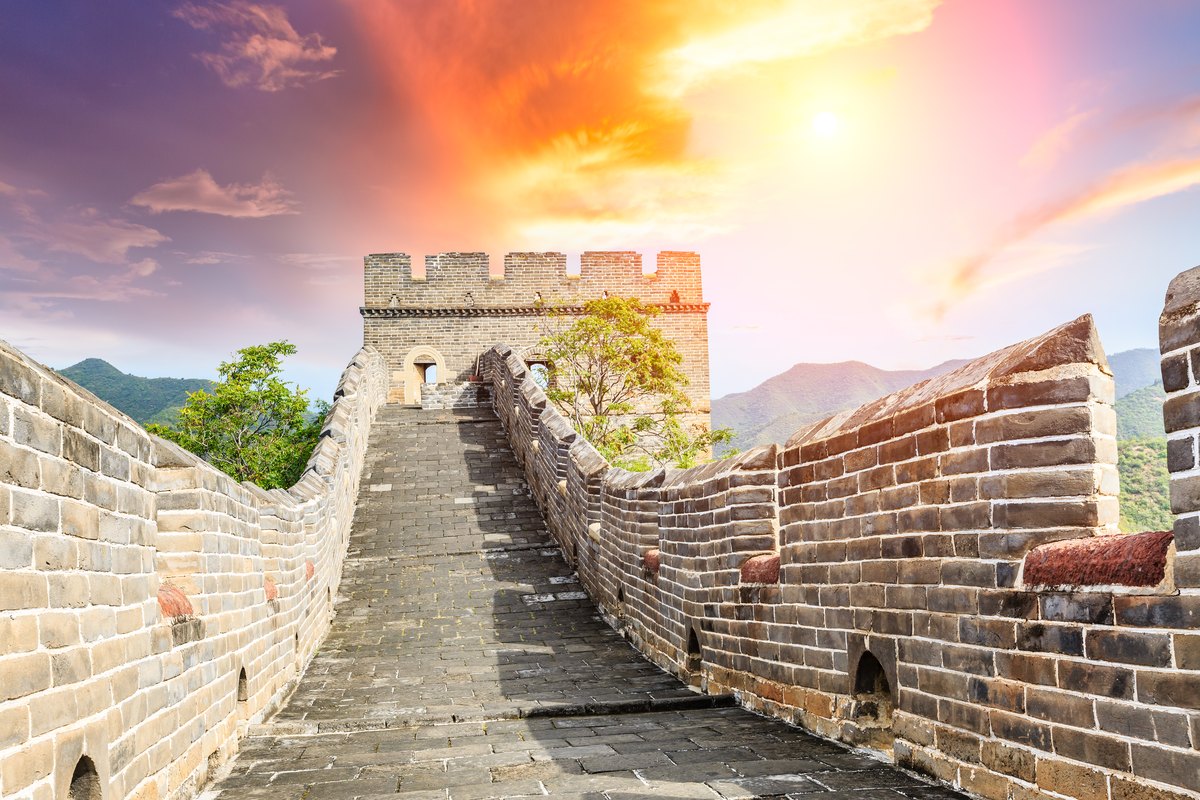
Why the wall was built, by dynasty
| Era | Main threat | Primary purpose | Other purposes |
|---|---|---|---|
| Pre-Qin states | Rival states and nomads | Local defence | Border marking |
| Qin | Xiongnu nomads | Defence of unified empire | Frontier consolidation |
| Han | Xiongnu nomads | Defence + Silk Road customs | Silk Road tax, troop movement |
| Jin | Mongols | Defence in depth | Buffer against steppe cavalry |
| Ming | Mongols, then Manchus | Defence of the Beijing region | Beacon-fire communication, symbolic power |
What threats did the wall defend against?
Northern nomadic and semi-nomadic confederations - principally the Xiongnu (Qin and Han), the Mongols (Jin and Ming), and the Manchus (late Ming). All three relied on mobile cavalry that the wall and watchtowers were designed to slow, redirect or surveil.
- Qin-Han era: Xiongnu confederation north of the wall.
- Tang-Song era: less wall building; Chinese armies fought further afield.
- Jin and Ming eras: Mongols, then Manchus, then Manchus succeed at piercing it in 1644.
How did beacon-fire signalling work?
Watchtowers were spaced 100-200 metres apart on restored sections and a few kilometres apart on longer beacon-only stretches. A signal lit at one tower could be read at the next and relayed across the empire in hours. Smoke by day; fire and lanterns by night; combinations indicated how many enemy were sighted.
- Standard Ming code: one beacon for ~100 enemy, more beacons for larger forces.
- Beacon-only ridges (e.g. parts of the Han wall in Gansu) had no continuous wall - just towers.
- A signal from Gansu could reach Beijing in 4-12 hours under good conditions.
What was the Silk Road customs role?
Han and Ming gates along the wall doubled as customs posts. Caravans coming from the west paid duty on goods, declared people and animals, and could be turned back. Jiayuguan, Yumenguan and Shanhaiguan are the famous gates - all functioned as a combined border check, fortress and tax office.
- Western gates (Jiayuguan, Yumenguan): Silk Road caravans.
- Eastern gates (Shanhaiguan, Juyongguan): trade between China and the steppe.
- Customs revenue helped fund the wall itself.
Did the Great Wall actually work?
Mixed verdict. The wall was effective as a slowing device and surveillance line - it forced nomadic armies to mass at predictable passes where Chinese cavalry could meet them. It rarely stopped a determined large force; the Manchus took Beijing in 1644 by being let through Shanhaiguan, not by breaching the wall. Best to think of it as one layer in a defensive system, not a force-field.
- Best at: slowing small raids and tracking large movements.
- Less effective at: stopping organised invasions that bribed gate commanders.
- Symbolic value persisted long after military relevance ended.
Common mistakes about why the wall was built
Picking one purpose
Defence was primary, but customs control and beacon-fire communication were equally state-funded purposes.
Calling it a failed wall
Failure to stop the Manchus in 1644 was a political-betrayal story, not a wall-strength story. Earlier centuries of slowing raids count.
Treating it as a single-dynasty motive
The Qin wall and the Ming wall existed for related but different reasons; threats and customs shifted over 1,800 years.
Why was the Great Wall built FAQ
- Primarily to defend northern Chinese states and dynasties from steppe nomads (Xiongnu, then Mongols, then Manchus). Also for Silk Road customs control, beacon-fire communication, and symbolic projection of imperial power.
- The Xiongnu confederation under the Qin and Han; later the Mongols under the Jin and early Ming; and the Manchus under the late Ming.
- It slowed small raids effectively and tracked larger movements via beacon fires. It did not stop the 1644 Manchu conquest - which came through a gate that was opened from within.
- Indirectly. Major gates like Jiayuguan and Shanhaiguan were customs posts on the Silk Road and other trade routes, collecting tax and controlling movement of people, animals and goods.
- Towers lit smoke by day and fire by night, with combinations of beacons indicating enemy size. Signals could relay across hundreds of kilometres in hours.
- Because the threat continued to evolve. Each dynasty rebuilt or extended the wall to face the nomadic confederation of its era. Construction effectively ended when the Manchus established the Qing dynasty in 1644 and absorbed the territories the wall defended against.
Stand at a real gate
If 'defence and customs' is more vivid when you stand at the actual gate, Juyongguan (just past Badaling) and Jinshanling's restored fortress give the strongest sense of a Ming defensive system in action.
We arrange private day trips that include hotel pickup and a knowledgeable driver-guide.