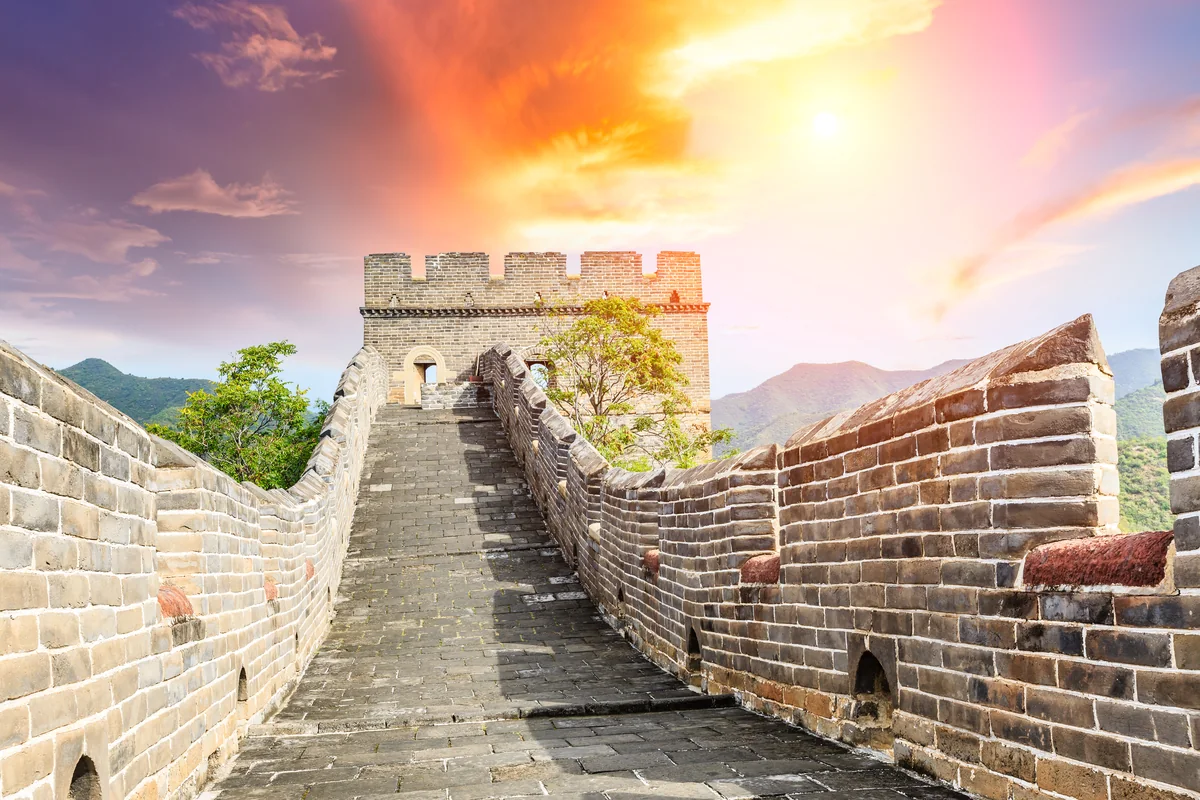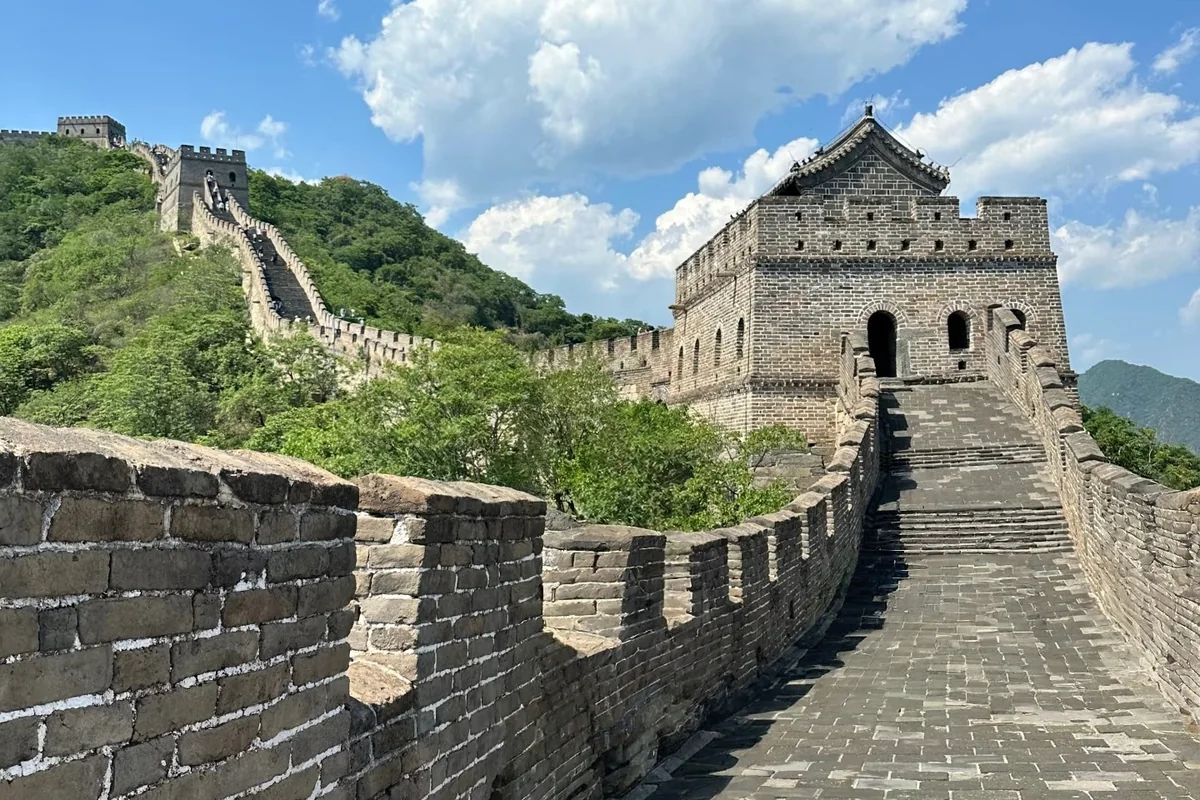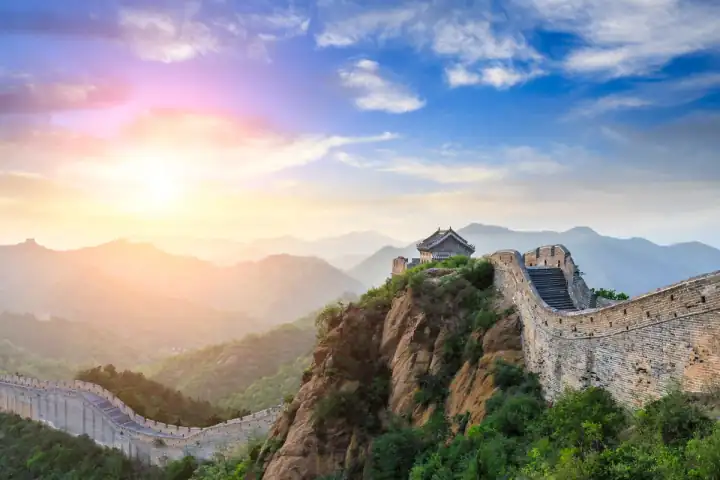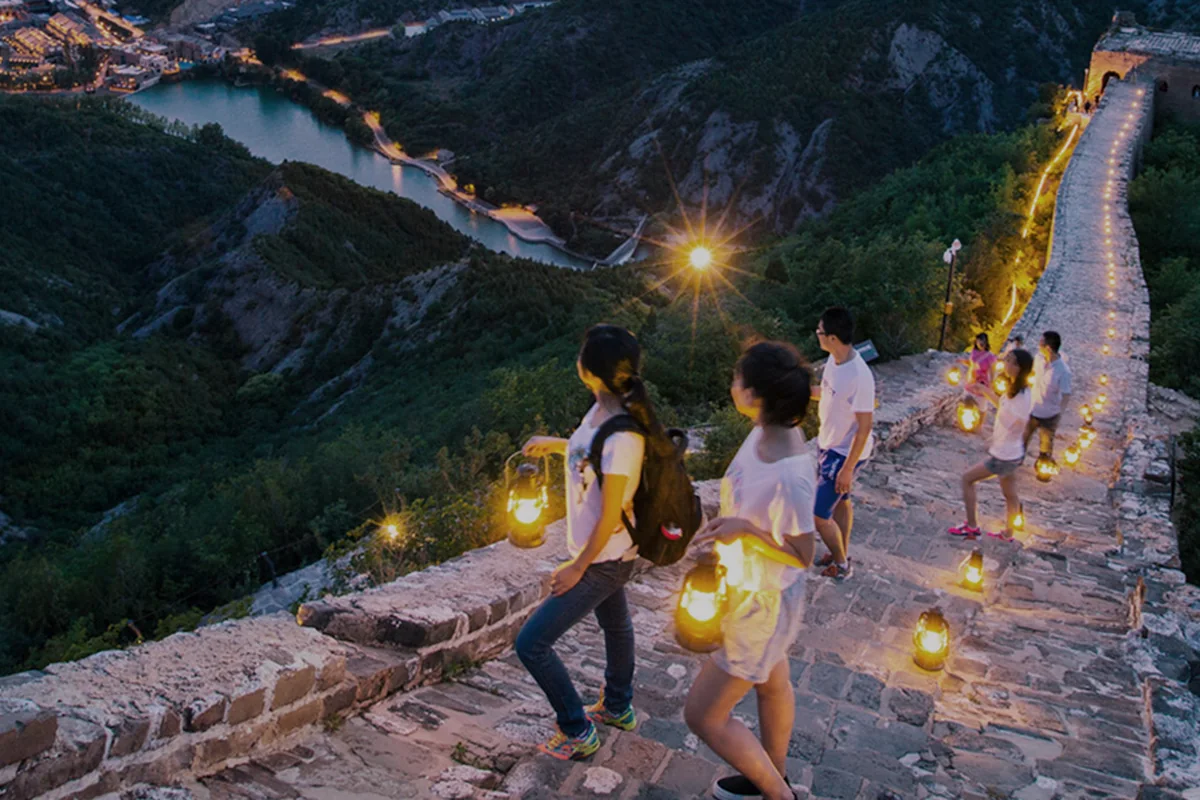
- From central Beijing: Often roughly 2 to 3+ hours each way from central Beijing by car, highly traffic dependent; evening return adds fatigue risk
- Typical visit style: Evening wall visit, or day plus evening split; overnight near Gubei is common for a calmer rhythm
- Difficulty: Moderate, with extra care at night for footing, light, and temperature swings
- Crowds: Weekends and holidays can be busy in town and at entry points; night slots still have peaks
- Best for: Travelers who want a lit wall atmosphere and photography; Couples and small groups comfortable with evening pacing; Visitors pairing wall time with Gubei Water Town; Trips where an overnight near the site is acceptable
- Less ideal for: Tight airport layovers or rigid same-day return with no buffer; Travelers who want a pure daylight ridge hike without town infrastructure; **Jinshanling** may fit better
Simatai Great Wall map
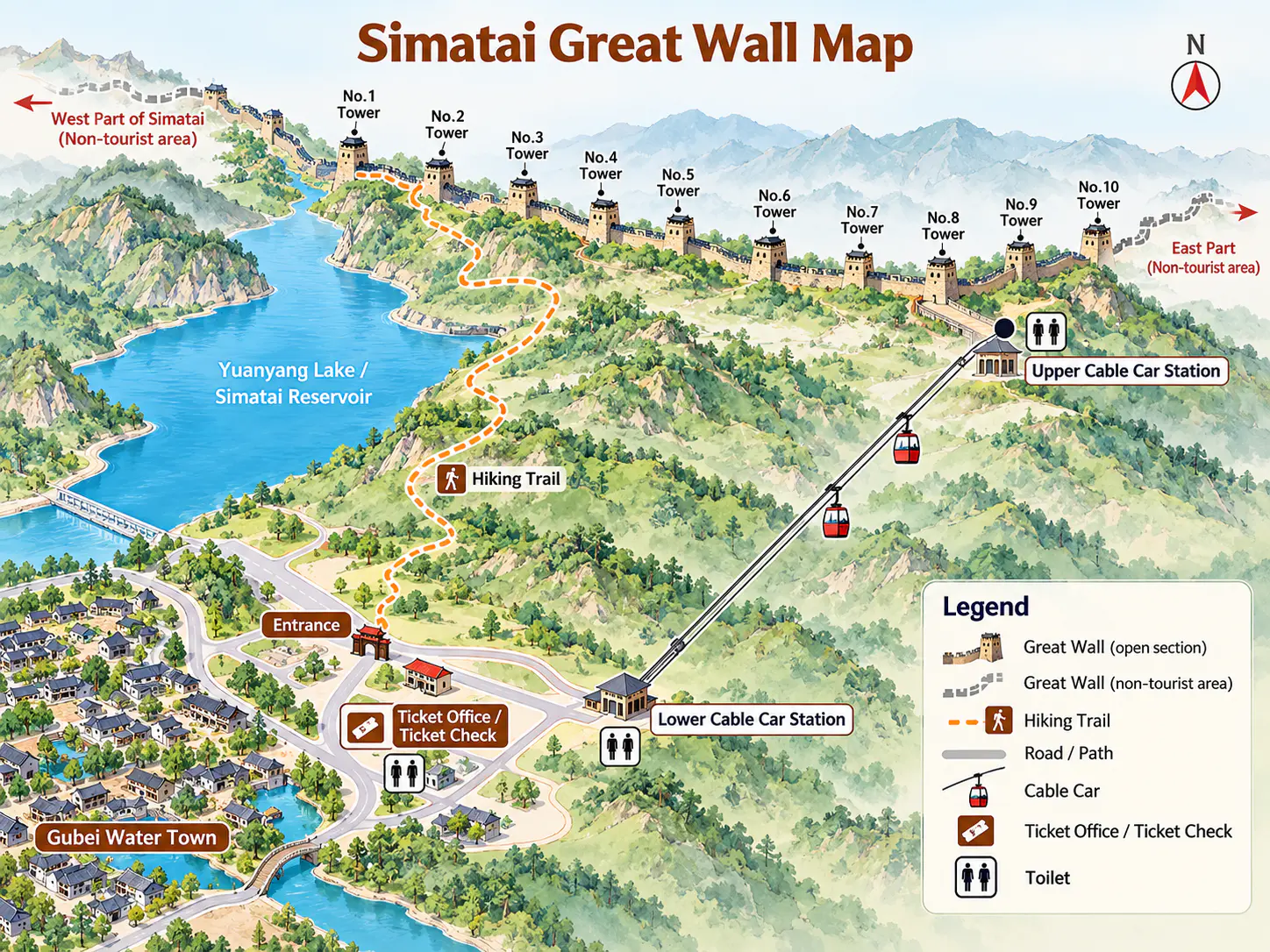 Click to enlarge
Is Simatai right for you?
Choose Simatai if you want:
- a night-lit Great Wall experience when operations allow
- time in Gubei Water Town before or after the wall
- a memorable evening atmosphere rather than only a daytime ridge walk
- flexibility to stay overnight and avoid a brutal late drive back to Beijing
It may not be the best fit if you want:
- the simplest possible first wall day with minimal variables
- strict same-day timing with no room for traffic or schedule drift
- to avoid bundled town and wall logistics entirely
- layover-style planning, use the layover guides instead
For a straightforward daylight wall day with strong visitor services, Mutianyu is often the easier default. For longer hiking ridges without the Simatai night story, Jinshanling is usually the next comparison.
Ways to structure a Simatai visit
Simatai planning is less about a single hiking traverse and more about how you combine wall time, Gubei Water Town, and whether you return to Beijing the same night.
Option A: Night wall as the centerpiece
- On-wall time
- about 1.5 to 2.5 hours on the wall depending on pace and operations
- Effort
- Moderate; night footing and temperature matter
- Best for
- Visitors who mainly want the lit wall experience; Photography-oriented trips with realistic tripod and crowd expectations; Groups that can accept evening schedules and layers
This pattern builds the day around confirmed night access. You still need buffer for entry, security, and walking between town and wall zones. The goal is a calm arc into the evening, not a rushed arrival five minutes before a slot.
Why choose it
- delivers the signature Simatai atmosphere
- clear focus if night access is the reason you came
Not ideal for
- travelers who dislike night walking on uneven stone
- same-day Beijing returns with no slack for traffic or late finishes
Option B: Gubei day plus night wall, often with overnight stay
- On-wall time
- split between daytime exploration and evening wall time as tickets allow
- Effort
- Moderate across a long span, rest matters
- Best for
- Travelers who want town time and wall time without forcing one mega-push; Groups that can book one night near Gubei; Anyone who wants to avoid a fatigued midnight highway return
This is the most relaxed structure for many people. You absorb distance from Beijing across two calendar segments, use daylight for town and logistics, and treat the night wall as a defined chapter rather than the tail of an exhausted day.
Why choose it
- better pacing and lower end-of-day risk
- room to recover before the return leg to Beijing
Not ideal for
- strict one-night-in-Beijing-only itineraries with no hotel change
- budgets that rule out an overnight entirely when overnight is the sane choice
Option C: Same-day round trip from Beijing
- On-wall time
- variable; often compressed if traffic eats the margins
- Effort
- Moderate to demanding because of total elapsed time
- Best for
- Travelers with one fixed Beijing hotel night who insist on Simatai; Groups with a private driver and explicit buffer built into the schedule
Same-day can work, but it is the easiest pattern to underestimate. You are stacking long drive legs, town movement, ticket checks, and possibly night timing into one continuous day. If anything slips, the last leg back to Beijing is where the plan breaks.
Why choose it
- possible when dates and energy really support it
- avoids an extra hotel change when that change is impossible
Not ideal for
- first-time China travelers with low tolerance for long car days
- itineraries with early next-day flights and no recovery margin
How to choose the right route
Start from how much calendar and energy you truly have, not only from the most photogenic option.
- Choose night-first when confirmed night access is the main reason you are coming and the rest of the day can stay flexible.
- Choose Gubei plus overnight when you want town and wall without a punishing late return to Beijing.
- Choose same-day from Beijing only when traffic buffer, ticket timing, and next-day plans all still look safe after an honest pass.
Many rough Simatai experiences come from treating a long Beijing round trip like a casual evening outing, then discovering that traffic, queues, and night chill consume the margin you needed.
Example day structure from Beijing
Simatai rewards plans that name the return leg explicitly, especially if you are on the wall at night.
Focused half-day structure
- Afternoon or early evening departure from Beijing with buffer
- Arrival and ticket or entry flow near Gubei and Simatai
- Night wall segment within the operating window
- Late return toward Beijing or check-in if staying overnight
Half-day labeling is misleading here because the wall segment is evening-biased and the drive still dominates. Treat this as a long block, not a short add-on.
Full-day structure
- Morning or midday departure from Beijing with realistic traffic assumption
- Time in Gubei Water Town for meals, rest, or light exploration
- Evening wall visit when operations allow
- Overnight near Gubei, or a very late return only if buffer still holds
For many visitors, overnight near Gubei is the version that still feels like a vacation on day two. Same-day return can work, but it should be a deliberate choice, not the default.
How we manage a Simatai day
Simatai is where ticket reality, town flow, and night pacing either line up or fight each other. A driver-plus-guide or packaged night tour reduces the number of variables you have to solve on-site under time pressure.
Pacing control
We pace Simatai as a long arc, not a single attraction slot. That means realistic gaps for entry, walking, temperature change after sunset, and breaks that do not assume everyone moves at daytime city speed. Night segments get more conservative footing assumptions, not fewer.
Route control
We align the plan to confirmed access windows and what the ticket actually covers. If night operations or weather shift the feasible window, we adjust early rather than stacking risk into the last hour. Town time and wall time are sequenced so one delay does not automatically erase the other.
Time buffer control
Return buffer matters for every Beijing wall day. At Simatai it matters twice: once for getting to the wall segment on time, and once for the drive back if you are not staying overnight. We plan pickup and departure assumptions so normal traffic variation does not turn into a panic finish.
Exit strategy
A good Simatai plan includes a clear stop rule for night walking: when to turn back, when cold or fatigue means shortening the segment, and when a late return to Beijing should be abandoned in favor of overnight recovery. That judgment call is often what separates a glowing memory from a drained one.
Getting there
Most visitors use private transfer (DragonTrail from ¥1,200 sedan / ¥1,600 MPV for the Jinshanling/Simatai band), a booked tour with transport, or a packaged night product. Public-style options exist but add coordination risk on a night-visit day.
Private driver
Complexity: Low
Best for: Night visits, luggage, families, tight return timing
From ¥1,200 sedan / ¥1,600 MPV. Best when you need a reliable return after a night visit or Gubei stay.
Packaged night / town product
Complexity: Low–medium
Best for: Visitors prioritizing night lighting and town atmosphere
Useful when wall lighting and Gubei entry are sold together — confirm what the ticket window includes.
Public / multi-leg
Complexity: Higher
Best for: Flexible daytime-only travelers
Possible by day; usually a poor fit for night return logistics.
Simatai vs Mutianyu vs Jinshanling
A simple rule:
Simatai
Best when night atmosphere, Gubei Water Town, and a lit wall experience are central to the trip. Expect longer logistics from Beijing and strong reason to consider overnight pacing.
Mutianyu
Best when you want a straightforward daylight wall day with uplifts and strong visitor services. Usually easier same-day structure from Beijing for many first-time visitors.
Jinshanling
Best when hiking depth and long ridge time matter more than night lighting or town pairing. Longer drive and more physical demand than Mutianyu for most people.
- choose Simatai when night wall and Gubei are the story you want
- choose Mutianyu for the smoothest classic daylight wall day for many travelers
- choose Jinshanling when hiking scale is the priority
| Simatai | Mutianyu | Jinshanling | |
|---|---|---|---|
| Signature | Night lighting, Gubei town pairing | Cable car, chairlift, toboggan options | Long ridge hiking, mixed restored and wilder wall |
| Typical pacing | Evening-biased or overnight friendly | Day trip friendly | Full hiking day from Beijing |
| Best for | Night experience seekers, town plus wall | First visits, families, facilities | Hikers, photographers, ridge focus |
Common mistakes at Simatai
Assuming same-day Beijing return is always easy
Distance, evening timing, and fatigue add up. Many groups are happier with one night near Gubei than with a heroic late drive back to the city.
Skipping ticket and bundle clarity
Town access, wall access, and night windows do not always mean the same product. Read what you bought before you stand in line.
Underdressing for night on the wall
Temperature and wind can shift fast after sunset. Layers, grip-friendly shoes, and a realistic plan for darkness beat improvising at the gate.
Treating it like a standard layover stop
Simatai is a poor fit for tight airport clocks. If you are on a layover, use the layover hub and purpose-built tours instead of forcing this destination into too few hours.
Tickets, weather & gear
Tickets / access: Bundled Gubei Water Town + Simatai wall products vary by season and operator — confirm gates, time windows, and night eligibility for your date. Private driver from Beijing (Jinshanling/Simatai band): from ¥1,200 sedan / ¥1,600 MPV.
Weather: Daytime sun and evening chill can both appear in one visit. Check wind and low-light conditions for night segments.
What to bring
- layers for temperature drop after sunset
- comfortable shoes with grip for stone steps
- small light or phone charge if allowed and useful for night walking
- water and snacks aligned with how long you will be on-site
- patience for entry lines on busy dates
FAQ
- Often yes when operations allow. Night access is the main draw for many visitors, but schedules and ticket types change. Confirm the date-specific plan and what time windows you are buying.
- It is a long drive northeast of central Beijing, often multiple hours each way depending on traffic. Same-day return is possible for some travelers, but overnight near Gubei is often calmer.
- Sometimes layers or bundles apply. Read your ticket carefully for town entry, wall entry, and any night-specific add-ons, and purchase through official or trusted channels.
- It can be excellent if night atmosphere and Gubei interest you. If you want the simplest first wall logistics from Beijing in daylight, Mutianyu is often the more forgiving introduction.
Plan a Simatai night visit
If you already know you want Simatai’s night wall story and are willing to plan around Gubei and timing, this is one of the most memorable Great Wall options near Beijing.
If you are still comparing sections, start here:
Pairing Simatai with Gubei Water Town
Simatai sits next to Gubei Water Town. Town time, Wall tickets and overnight stays are separate decisions — use the Gubei guide for day trips, evenings and stays, and this page for the Wall visit itself.