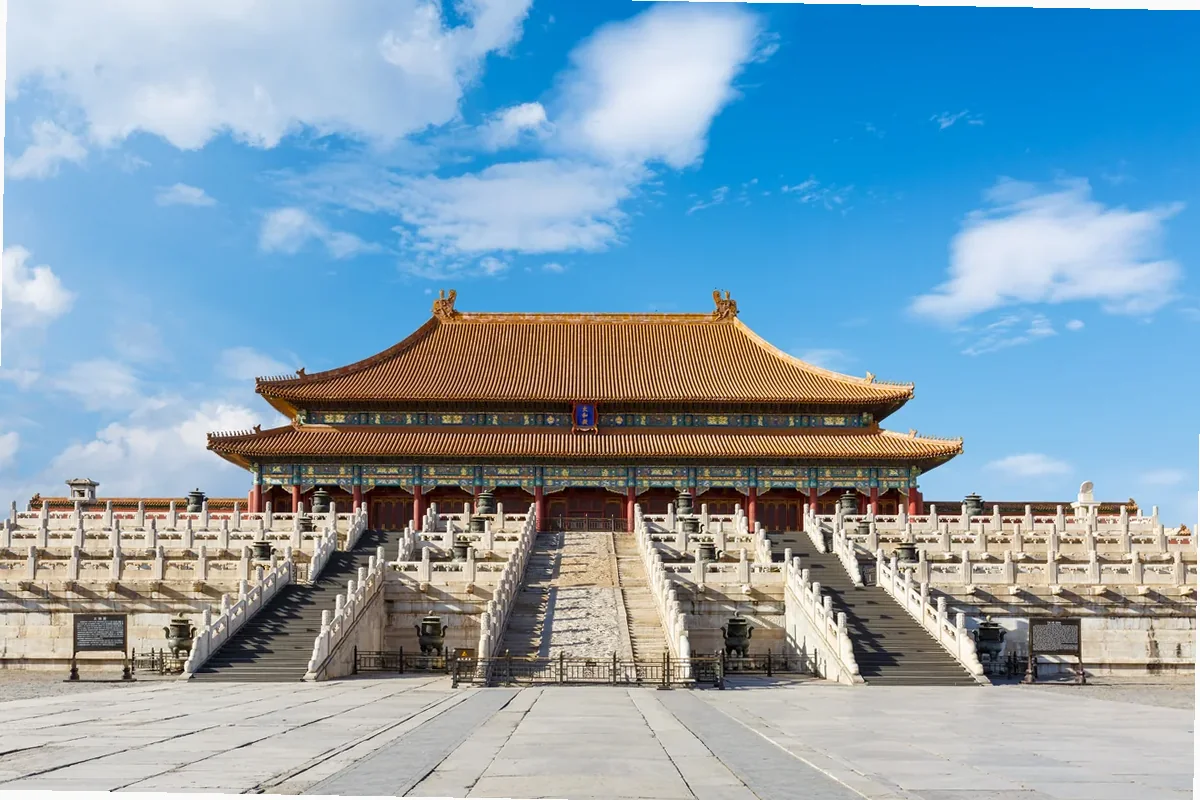
The Yongle commission, 1 million workers
The Forbidden City was commissioned by the Yongle Emperor in 1406 and completed in 1420. The chief architects were Cai Xin and Kuai Xiang; senior eunuch officials including Nguyen An (a Vietnamese-born official) oversaw construction. The workforce was approximately one million conscripted labourers - soldiers, peasants under corvée duty, prisoners, and skilled craftsmen including stonemasons, brick-kiln operators, lime burners, and timber carpenters. Materials came from across the empire.
- From central Beijing: Central Beijing — about 20–45 minutes by subway or taxi
- Reading time: 5 min
- Guide type: Cultural background
- Best for: History-curious visitors; Architecture enthusiasts
- Less ideal for: Practical-planning visitors
Builders and roles
| Role | People | Detail |
|---|---|---|
| Commissioner | Yongle Emperor | Ordered construction 1406 |
| Chief architects | Cai Xin and Kuai Xiang | Ming-era state architects |
| Senior overseer | Nguyen An (Vietnamese eunuch) | Imperial palace design |
| Soldiers | Hundreds of thousands | Built defensive walls + labour |
| Peasants (corvee) | ~500,000 | Months-to-years compulsory service |
| Prisoners + exiles | Tens of thousands | Hardest labour - rammed earth, stone moving |
| Skilled craftsmen | Tens of thousands | Stonemasons, brick-kiln, lime burners, carpenters |
Yongle's commission
The Yongle Emperor announced the project in 1406 as part of his decision to move the Ming capital from Nanjing to Beijing. Construction proceeded in three phases: first the city walls and grid (1406-1416), then the palaces themselves (1416-1420), then the imperial gardens and side temples (1420-1421). The emperor personally directed major design decisions.
- 1406 commissioned.
- Phase 1 city walls: 1406-1416.
- Phase 2 palaces: 1416-1420.
- Phase 3 gardens: 1420-1421.
Chief architects Cai Xin + Kuai Xiang
Cai Xin was the senior Ming state architect; Kuai Xiang was his junior partner who later became chief architect after Cai's death. Both came from the Ministry of Works (Gongbu) bureaucracy. They designed the axial layout, the proportions of the Three Great Halls, and the gate hierarchy. Kuai Xiang's name is preserved in records of similar Ming-era projects.
- Cai Xin: senior architect.
- Kuai Xiang: junior partner, later chief.
- Both from Ministry of Works (Gongbu).
- Designed axis + halls + gate hierarchy.
The 1 million workers
Roughly one million people worked on the Forbidden City over 14 years. Composition: hundreds of thousands of soldiers (built walls and supplied labour), about 500,000 conscripted peasants under corvée duty (months-to-years compulsory service), tens of thousands of prisoners and political exiles (hardest labour), and tens of thousands of skilled craftsmen (stonemasons, brick-kiln operators, lime burners, timber carpenters). The death toll is undocumented; estimates run into the tens of thousands from accidents, disease, and the long hauls of timber and stone.
- ~1 million total workers.
- Soldiers + peasants + prisoners + craftsmen.
- Corvée duty: forced unpaid labour.
- Death toll: tens of thousands estimated.
Where the materials came from
Materials came from across the empire. Phoebe-nanmu hardwood (the most prized timber, golden, knot-free) was logged in Sichuan and Yunnan and dragged 1,500 km overland by ox-cart and river raft over months of transport. Golden brick floor tiles came from Suzhou, made under imperial monopoly. Marble plinths from Beijing-area quarries (Fangshan). Roof tiles were glazed yellow at imperial kilns in Liuli Qu near Beijing. The total transport effort was a sustained logistics operation for over a decade.
- Phoebe-nanmu timber: Sichuan / Yunnan, 1,500 km overland.
- Golden brick floor: Suzhou imperial kiln.
- Marble: Beijing-area Fangshan quarries.
- Yellow tiles: Liuli Qu imperial kilns near Beijing.
Common misunderstandings about builders
Crediting only Yongle
He commissioned it; architects Cai Xin and Kuai Xiang designed it; one million workers built it.
Skipping the labour cost
The Forbidden City is built on the backs of conscripted peasants and prisoners. The 'beauty' has a heavy human cost.
Assuming Han Chinese workers only
Senior overseer Nguyen An was Vietnamese; many craftsmen came from across the empire.
Who built the Forbidden City FAQ
- Commissioned by the Yongle Emperor in 1406; designed by Ming state architects Cai Xin and Kuai Xiang; built by approximately one million workers over 14 years.
- 14 years, 1406-1420.
- Approximately one million total - soldiers, conscripted peasants, prisoners, and skilled craftsmen.
- Phoebe-nanmu timber from Sichuan and Yunnan (1,500 km transport), golden brick floor tiles from Suzhou, marble from Beijing-area quarries, yellow glazed tiles from imperial kilns near Beijing.
- Cai Xin and Kuai Xiang, Ming state architects from the Ministry of Works. Vietnamese-born eunuch official Nguyen An oversaw senior decisions.
- Tens of thousands estimated - from accidents, disease, exposure, and the long hauls of timber and stone. Exact figures undocumented.
Walk with construction context
A guide can point out the original Ming-era timber (most halls), restored sections (post-1949), and the imperial-quarried marble plinths.
If you want the architectural details, the architecture and main-halls pages cover the building methods.