Can I Leave Beijing Airport During a Layover? (2026 Guide)
Quick answer
Yes. Most travelers can leave Beijing airport during a layover if they qualify for visa-free transit or hold a valid visa. You can leave if:
You hold a valid Chinese visa, or
You qualify for 24-hour or 240-hour visa-free transit, and
You have confirmed onward travel to a third country (Hong Kong and Macau qualify).
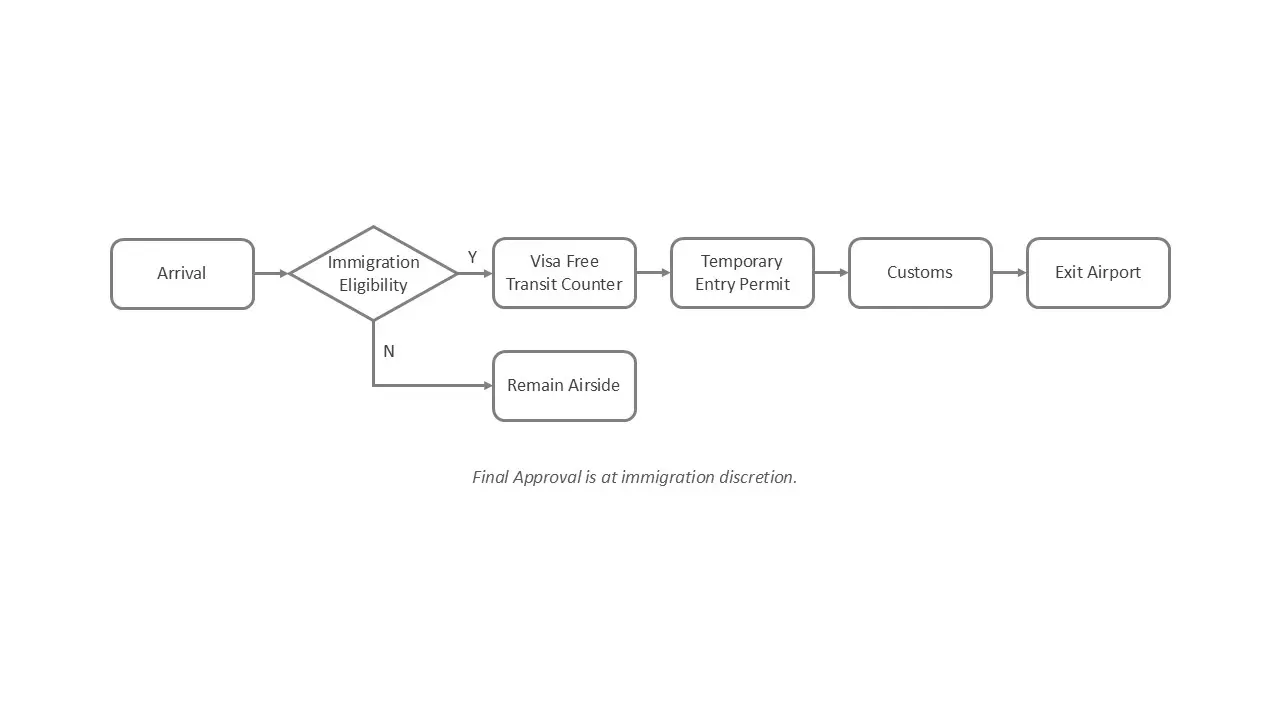
If these conditions are met, you may apply for a temporary entry permit on arrival and exit the airport. You must still receive approval from immigration on arrival.
This page explains eligibility and process. For general time feasibility by duration, see the Beijing Layover Guide.
When You Are Allowed to Leave the Airport
You may leave Beijing airport during a layover if you meet one of the following: you hold a valid Chinese visa or you qualify for visa-free transit.
Visa-free transit options at Beijing (PEK and PKX) include the 24-hour transit without visa and the 240-hour (nine-day) visa-free transit. Eligibility depends on nationality; US, UK and most EU passport holders typically qualify for at least the 24-hour option and many for the 240-hour transit. Check current rules for your passport before travel.
A key requirement for visa-free transit is that you are transiting to a third country. Hong Kong and Macau count as third countries. You must have a confirmed onward ticket. Final entry approval is at the discretion of immigration officers. For 240-hour rules in detail, see our 240-Hour Visa-Free Transit in Beijing page.
How the Process Actually Works at PEK and PKX
After you land, follow signs for international transfer or arrival. If you are leaving the airport, you will go through immigration.
Visa-Free Transit Entry Process at Beijing Airports
Head to the 24-hour or 240-hour temporary entry / visa-free transit counter. Have your passport and confirmation of your onward flight ready. Fill in the arrival card, present your passport and onward ticket; the officer will verify eligibility and stamp your passport. If you have checked luggage and need it, collect it after immigration and pass through customs.
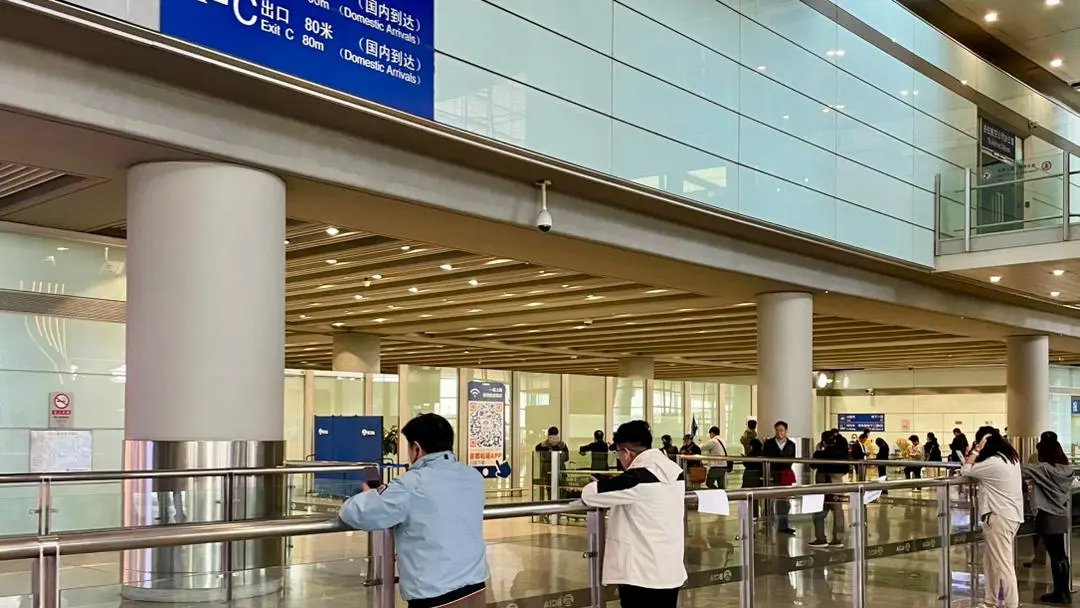
Beijing Capital International Airport Exit Area (PEK)
Be aware of your airline's check-in and bag-drop times for your onward flight. Factor that into your return time.
How Much Time You Actually Have
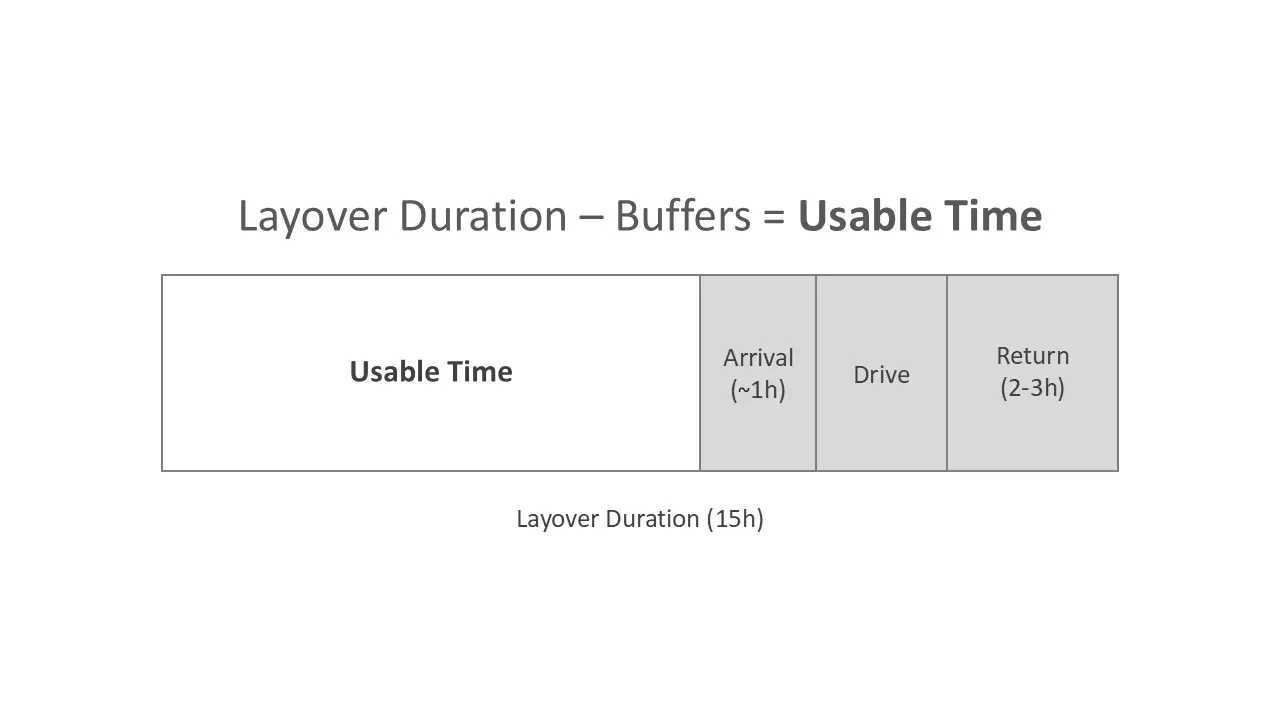
Usable Time = Layover Duration − (1h arrival + drive time + 2–3h return buffer)
Layover Duration Minus Buffers Equals Usable Time
Immigration can take roughly 30–60 minutes; allow at least 1 hour from wheels-down. For return, allow a minimum of 2 hours before departure (3 hours or more for international).
6 Hours: Not Feasible
Immigration: ~1 hour
Return buffer: minimum 2 hours
Usable time: <3 hours
Bottom line: Do not leave the airport.
8–10 Hours: One Stop Only
Great Wall (Mutianyu) or one city site is feasible but the window is compact. See 10 Hour Layover in Beijing.
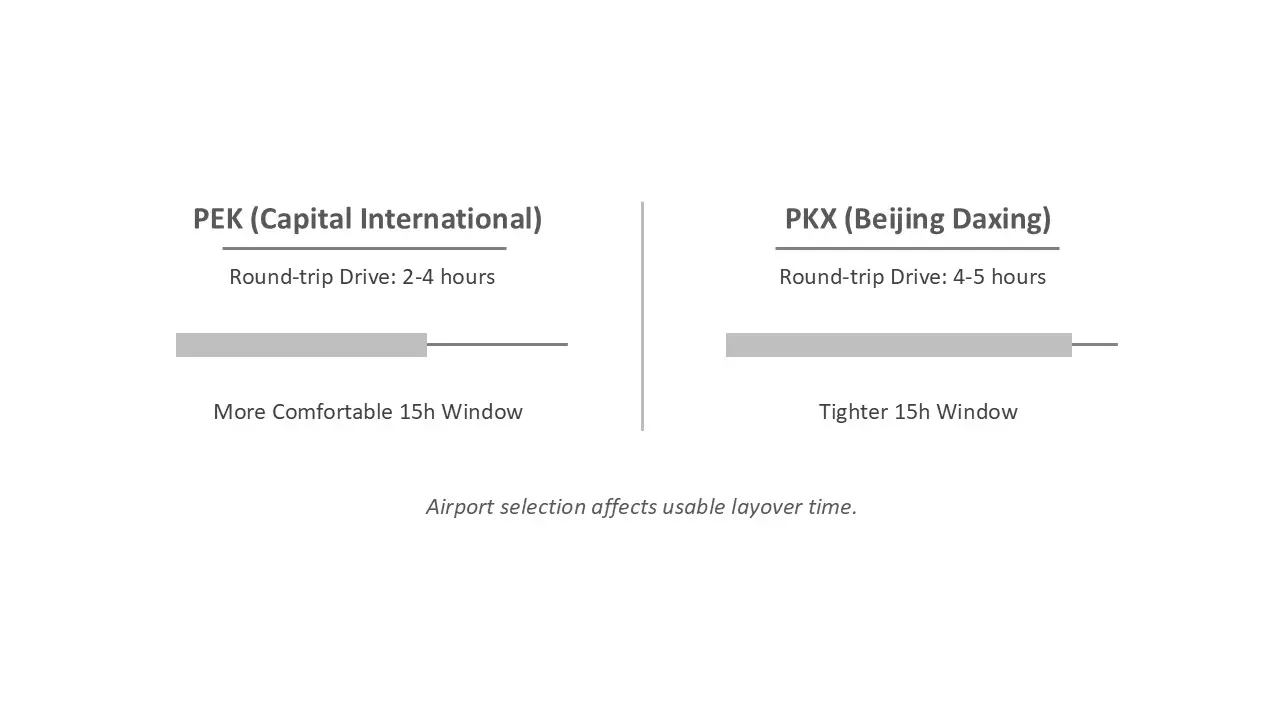
You can combine Mutianyu with a major city site. When in doubt, keep the return buffer larger. PKX typically adds 30–60 minutes of road travel vs PEK.
PEK vs PKX Drive Time Impact on Layover Feasibility
When It Is Not Worth Leaving
Overnight arrival with an early morning flight: stay airside or use an airport hotel.
Major Chinese holidays: traffic and crowds can cause long delays.
Tight re-check or baggage window: verify airline rules before committing.
Severe traffic or weather.
No confirmed onward ticket: you may not get the transit permit.
Frequently Asked Questions
Yes. Hong Kong and Macau are treated as third countries for visa-free transit purposes. Your itinerary must show a genuine transit, e.g. Country A to Beijing to Hong Kong or Hong Kong to Beijing to Country B.
No. For 24-hour or 240-hour visa-free transit you do not need a hotel booking. You must have a confirmed onward flight (and for 240-hour, proof of destination in a third country).
Yes. Airline staff may deny boarding if they believe eligibility is unclear. Carry proof of your onward ticket and, if applicable, visa or transit eligibility so check-in staff can verify.
Yes. You can return to the airport well before your flight. Allow enough time for security and any check-in requirements; arriving 3–4 hours before an international departure is a safe buffer.
Yes. Both PEK and PKX have left-luggage services. Confirm location and opening hours on the day; allow extra time to drop and collect bags if you use them.
Practical Planning Checklist
Confirm passport eligibility for 24h or 240h visa-free transit (or obtain a visa).
Have a confirmed onward flight; keep proof handy.
If your layover spans a night, book a hotel.
Note your exact layover duration.
Know which airport: PEK or PKX.
Build in buffer: at least 1h after landing and 2–3h before your next flight.
Structured Layover Option
The objective is not to maximize sightseeing, but to eliminate timing uncertainty. A fixed pickup, defined activity (e.g. Mutianyu) and guaranteed return buffer (2–3h before flight) lowers the chance of missing your flight. See layover time planning, 15 Hour Layover, and our Mutianyu layover tour.
Can you leave Beijing airport during a layover? | DragonTrail