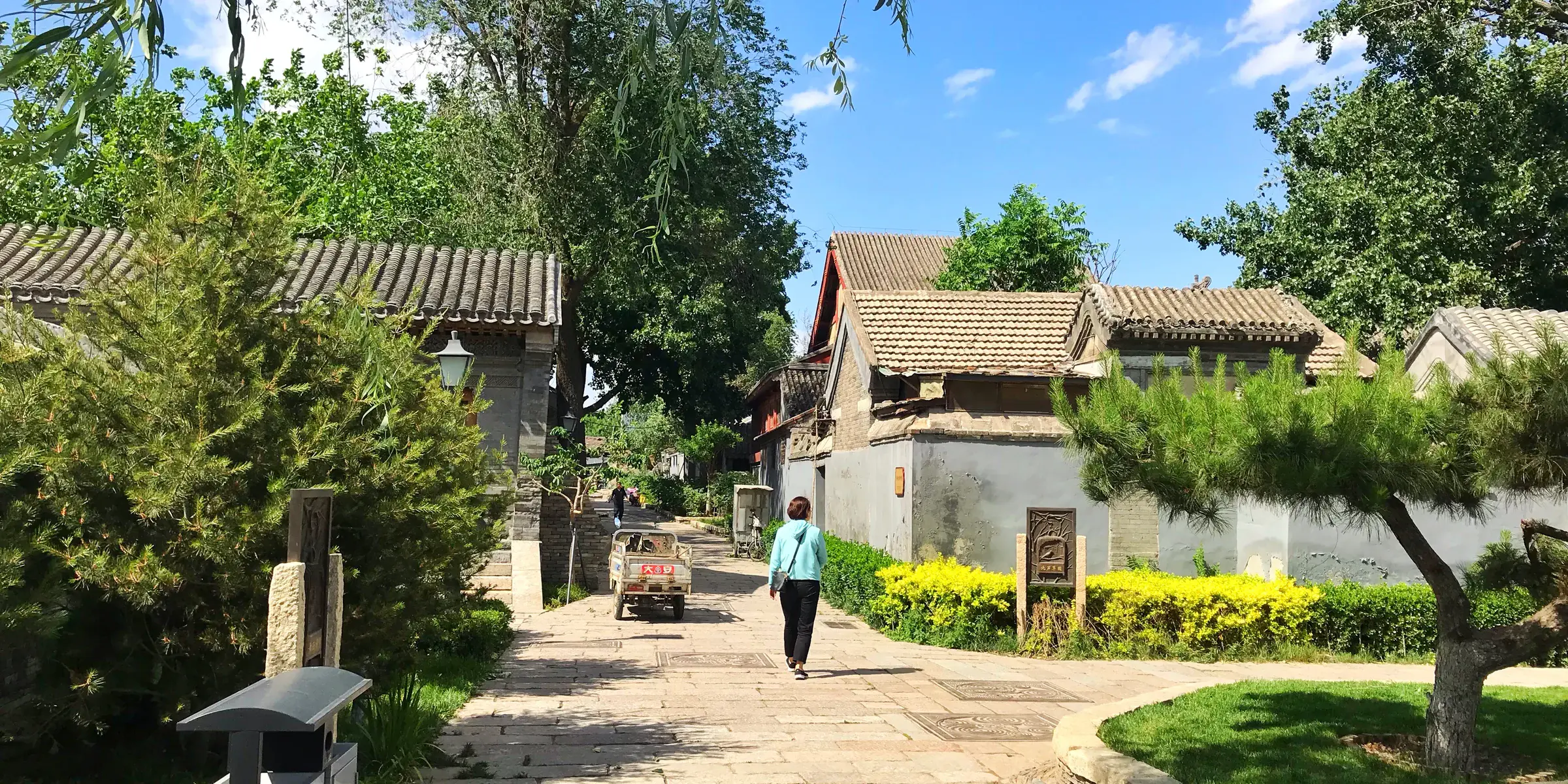
We meet at the edge of the district, not in the middle of the busiest souvenir street. The first twenty minutes are residential on purpose: courtyard gates, a grocery, a senior on a stool, a delivery cart that has the right of way. That opening tells you whether this is a living lane or a set. If it is a set, we turn.
The middle of the walk is where we talk about siheyuan layout, which doors are homes, and why some courtyards now hold cafés. We do not walk into a courtyard that has not agreed to visitors. If a host is booked, that stop has a person and a time. If not, the street elevation is the visit.
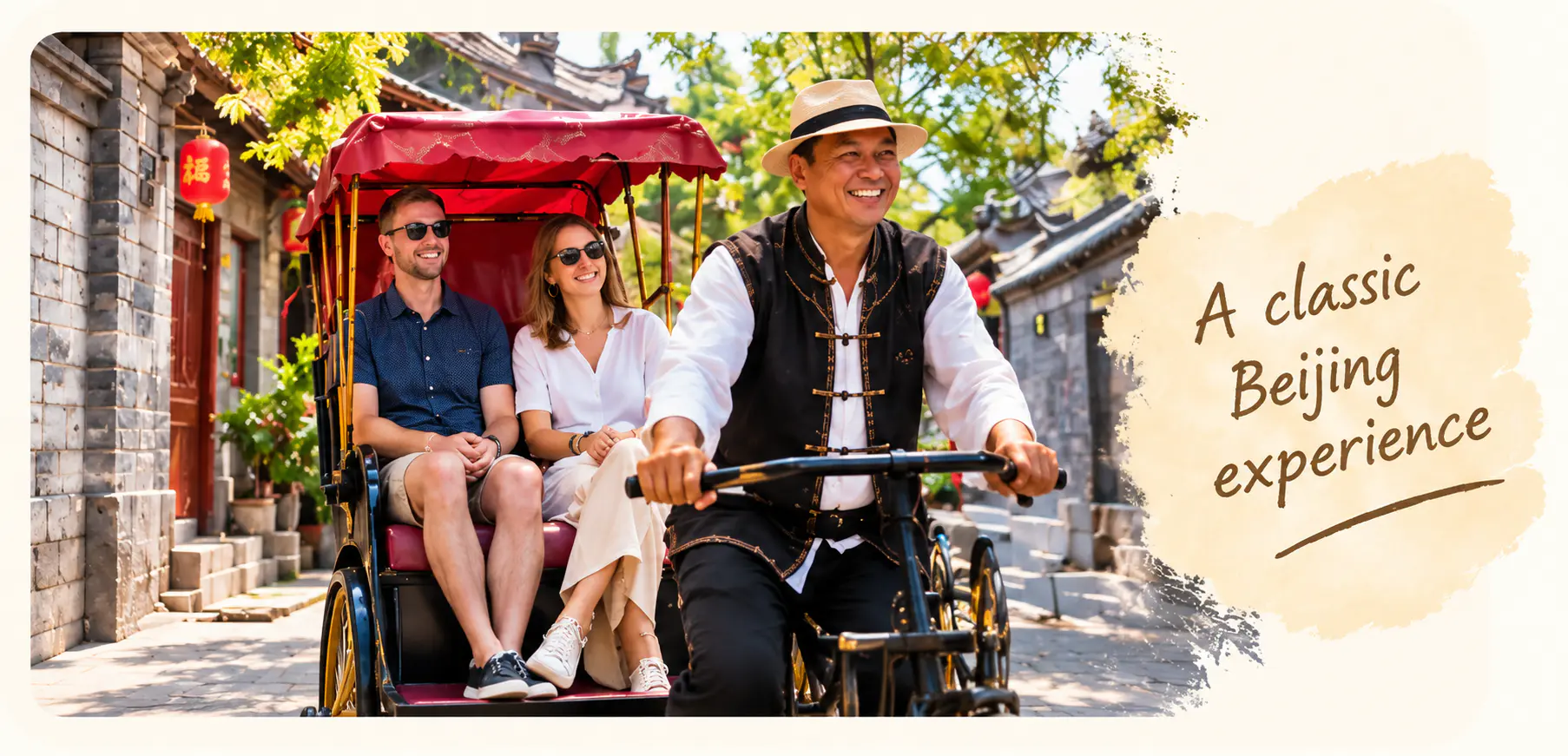
A rickshaw, when you want it, sits in the middle as a short bridge — not as the title of the morning. We use it when knees ask, or when you want the motion in a photograph, and we get off before the ride becomes a loop of the same shops.
Food is either a planned table or a planned snack. It is never a surprise menu. If you want dough in your hands, that is a different booking and we will say so rather than pretend a neighborhood walk is a workshop.
The last twenty minutes can take a livelier crossing if you want people-watching. Then we drop you at the hotel, a lake edge, or a subway mouth that actually helps the rest of your day. We do not end in a jade shop.
That is the product: one district, a guide who knows when to turn, and a clock that matches the hours you asked for. It is enough. It is not every hutong in Beijing, and we will not sell it as that.