Quick Introduction
Mutianyu is one of the most practical first Great Wall choices from Beijing: well-restored, scenic and supported by clear visitor infrastructure including cable car and, when open, chairlift and toboggan. It is still a real day out of the city. Drive time swings with traffic, uplifts can queue on peak days, and the wall has steep stairs and exposed segments. The day works best when you plan around uplift choice, on-wall time, and a realistic return buffer, not only the map distance from Beijing.
- Drive time from Beijing: Often about 1.5 to 2.5 hours each way by car from central Beijing; traffic is the main variable
- Typical visit style: Half-day or full-day trip; typical on-wall time about 2 to 3+ hours depending on pace
- Difficulty: Moderate for most visitors; uplifts reduce climbing but stairs and exposure remain
- Crowds: Popular year-round; weekends and Chinese holidays mean heavier crowds and uplift queues
- Best for: First-time Great Wall visitors; Families and mixed-age groups; Travelers who want facilities, clear access, and photo-friendly restored wall; Visitors who prefer a smoother logistics curve than hike-first sections
- Less ideal for: Travelers who want a long, rugged ridge traverse as the main goal; sections like Jinshanling or Gubeikou may fit better
History of Mutianyu Great Wall
Mutianyu sits on foundations laid in the Northern Qi dynasty (around 550–577 AD), then reused and rebuilt in the early Ming. The first Ming capital was at Nanjing under Hongwu (Zhu Yuanzhang), but in 1421 the Yongle Emperor (Zhu Di) moved the capital to Beijing, closer to his own power base as the former Prince of Yan and easier to defend the northern frontier against Mongol remnants. With the Forbidden City newly built and the Ming Tombs anchored just outside the capital, the Great Wall along this corridor was rebuilt as Beijing's first line of defense. General Xu Da ordered the early Mutianyu pass in the late 14th century. Nearly two centuries later, General Qi Jiguang (1568–1582) restored long stretches and added the densely spaced hollow watchtowers that still define the section you walk today.
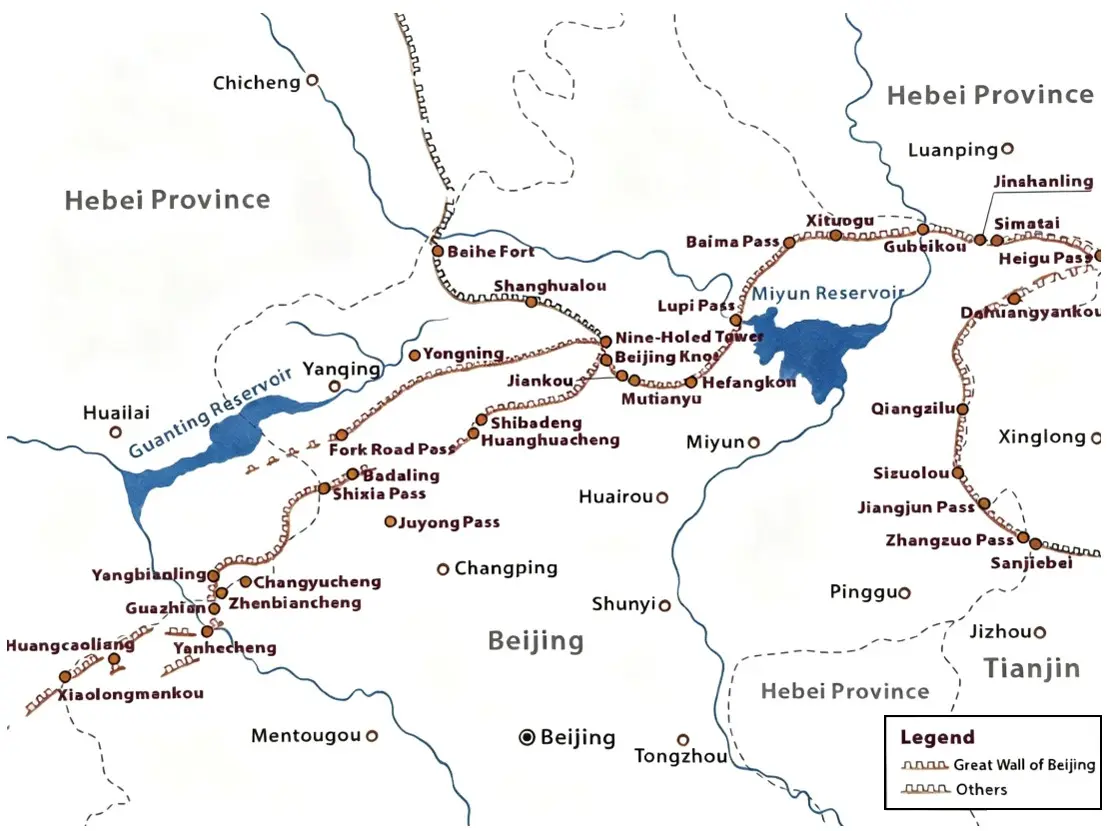
Regional map of the Great Wall defense belt around Beijing and neighboring Hebei: Mutianyu in the central mountain corridor, with Badaling and Juyongguan to the southwest and Jinshanling–Simatai–Gubeikou to the northeast — the frontier arc strengthened from earlier foundations and rebuilt in the Ming to protect the imperial capital.
What makes Mutianyu different
A lot of Great Wall sections look similar in photos. Mutianyu's edge is a specific combination of defensive design, watchtower density, and uplift access that is hard to match in one Beijing day.
Wall design that is genuinely rare
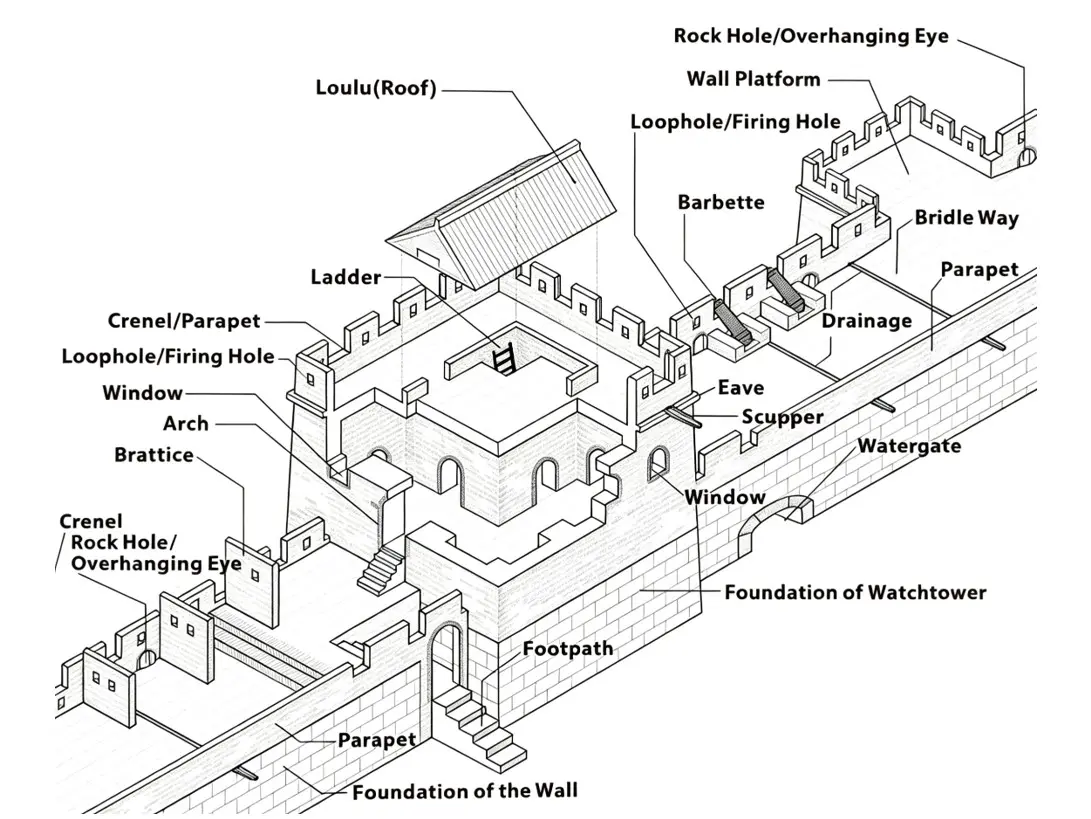
Unlike many sections with crenellations mostly on one side, Mutianyu has defensive parapets on both sides plus branch walls feeding from the main ridge. It is one of the clearest places to see why this corridor mattered militarily.
Dense watchtowers in short walking distance
Mutianyu packs roughly 23 towers into about 2.25 km, so you get architectural variety quickly without long dead stretches.
- Tower 14 (cable-car arrival) — Natural starting point for most first-time visitors.
- Zhengguan Terrace (Tower 4) — Rare three-tower platform and one of the strongest architecture stops.
- Tower 20 — High open-section panorama via the steep Hero Slope.
Uplift options that shape the day
Cable car, chairlift, and toboggan are not just transport here; they materially change effort, queue risk, and how family/mixed-pace groups can share one route.
Scenery with real seasonal payoff
High vegetation coverage gives spring blossom and autumn foliage value, but those same windows need earlier arrivals to avoid crowd and uplift bottlenecks.
These differences are why Mutianyu is often the strongest first-wall choice from Beijing, but they only pay off when route choice, cutoff times, and return buffer are planned together.
Is Mutianyu right for you?
Choose Mutianyu if you want:
- a restored, visitor-friendly wall with uplifts and services
- a strong default for a first Great Wall visit from Beijing
- easier vertical access than climbing a long approach on foot
- a balance of scenery and logistics that works for many group types
It may not be the best fit if you want:
- the absolute shortest drive from central Beijing (Badaling can be closer, and tradeoffs apply)
- a wilderness-heavy or mostly unrestored wall day
- to avoid tourist infrastructure entirely
- layover-style timing; use our layover hub instead of guessing hours here
If you want more hiking depth and ridge time and accept a longer drive, Jinshanling is often the next step. If you want wilder, rougher wall, Gubeikou is a different category, usually for fit hikers only.
Mutianyu vs Badaling vs Jinshanling
Mutianyu
Best when you want restored wall, strong visitor services, and uplifts that make access easier. Often the best first Great Wall day for mixed groups if you accept drive time and peak-season crowds.
Badaling
Best known and closer to central Beijing for many itineraries, but often extremely crowded. Makes sense when fame or proximity is the priority and you are prepared for density.
Jinshanling
Best when hiking depth, ridge scale, and a more hiking-forward day matter more than maximum facilities. Longer drive and more physical demand than Mutianyu for most visitors.
A simple rule:
- choose Mutianyu for the smoothest “classic first wall day” tradeoff for many travelers
- choose Badaling when proximity or the famous name matters most and crowds are acceptable
- choose Jinshanling when you want a fuller hike and are willing to trade convenience
| Mutianyu | Badaling | Jinshanling | |
|---|---|---|---|
| Vibe | Restored, scenic, strong services | Famous; often very crowded | Hike-forward; restored + wilder mix |
| Access | Uplifts; moderate drive north | Often shorter city-side access | Longer drive; ridge logic matters |
| Best for | First visits, families, photo walks | Maximum convenience / iconic name | Hikers, longer ridge time |
On-wall options at Mutianyu
Mutianyu works best when you choose a route deliberately, not only an uplift product. The wall is now most practical as four route choices: west, east, middle, and full. Freshness update: Towers 21–23 on the west side are now open. Many older guides still stop at Tower 20; current restored visitor coverage runs Tower 1 through Tower 23.
West route (Towers 14–23)
- On-wall time
- about 2.5 to 4 hours depending on turnaround point
- Effort
- Moderate to hard
- Best for
- Travelers who want the strongest panoramic west-side walk; Fit visitors comfortable with sustained stairs; Visitors prioritizing the newly opened Tower 21–23 extension
- Entry → exit
- Cable car to Tower 14 → walk west toward Towers 20–23 → return to Tower 14 for cable car down
The west side is no longer only a Tower 14–20 story. With Towers 21–23 now open, this route carries farther and rewards strong walkers with a more complete high-ridge west experience.
Why choose it
- Best fit for visitors who want a serious wall walk with clear payoff
- Cable-car logistics stay predictable for mixed-age groups
- Newly opened west-end towers make this route materially better than older guidebook versions
Not ideal for
- Visitors mainly seeking the toboggan experience
- Low-stamina groups on tight return deadlines
- Days with severe heat, wind, or ice and no margin
Key features
- Tower range: 14–23 (updated current coverage)
- Steeper sections increase as you push west
- Typically less dense than the most photo-heavy central clusters
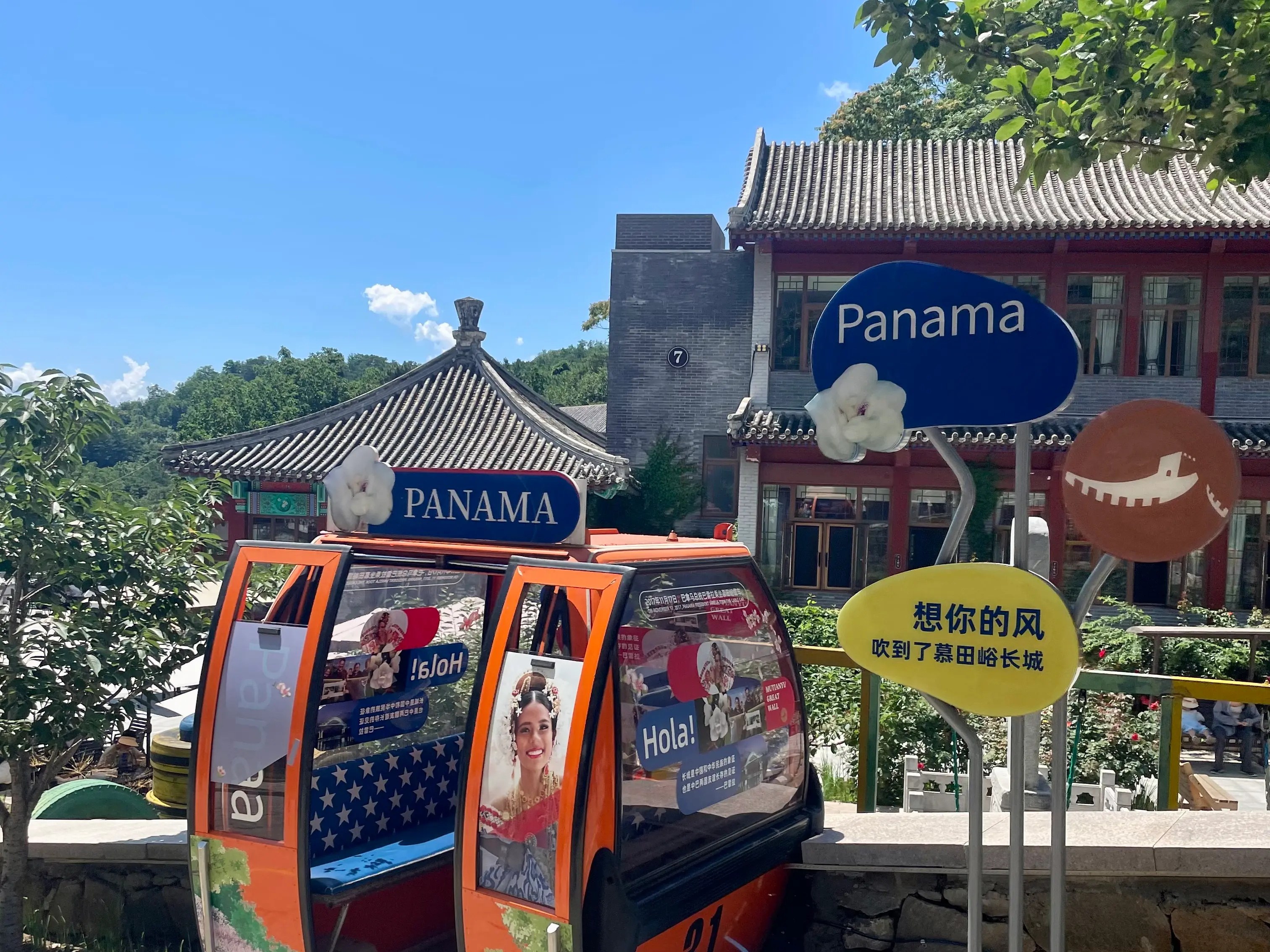
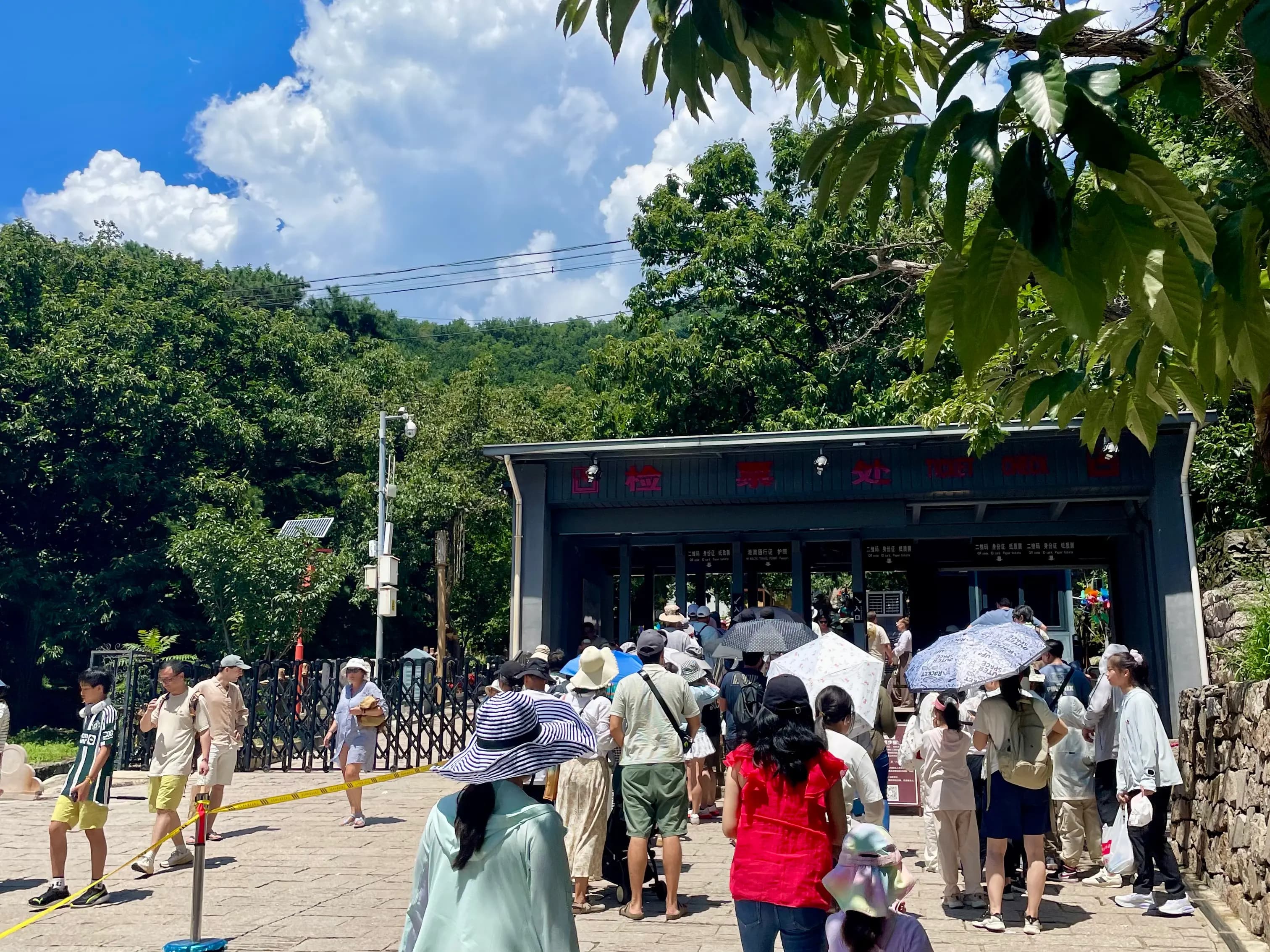
West route access: cableway side ticket checkpoint
These photos follow the approach on Mutianyu's west-route side (cableway area): the pedestrian lane past shops toward the west-route ticket checkpoint, and the gated checkpoint where staff verify tickets before you continue uphill.
East route (Towers 1–6)
- On-wall time
- about 1.5 to 2.5 hours
- Effort
- Moderate (steeper segments near the east end)
- Best for
- Travelers who want chairlift + toboggan memory value; Families with energy who still want a contained route; Visitors prioritizing a fun descent over longest distance
- Entry → exit
- Chairlift side to Tower 6 → walk toward Tower 1 and back → chairlift or toboggan down (when open)
East works when experience matters as much as distance. It can be the most memorable route, but operations and queue behavior matter more here than on simple cable-car loops.
Why choose it
- Best route for toboggan-focused days
- Clear route logic for first-time visitors
- Strong “fun + wall” balance when operations are normal
Not ideal for
- Guests uncomfortable with chairlifts or toboggan rules
- Travelers who cannot absorb queue volatility
- Anyone assuming this route is always the fastest
Key features
- Tower range: 1–6
- Chairlift / toboggan operating status can change by date and weather
- Good choice when novelty is part of the trip goal
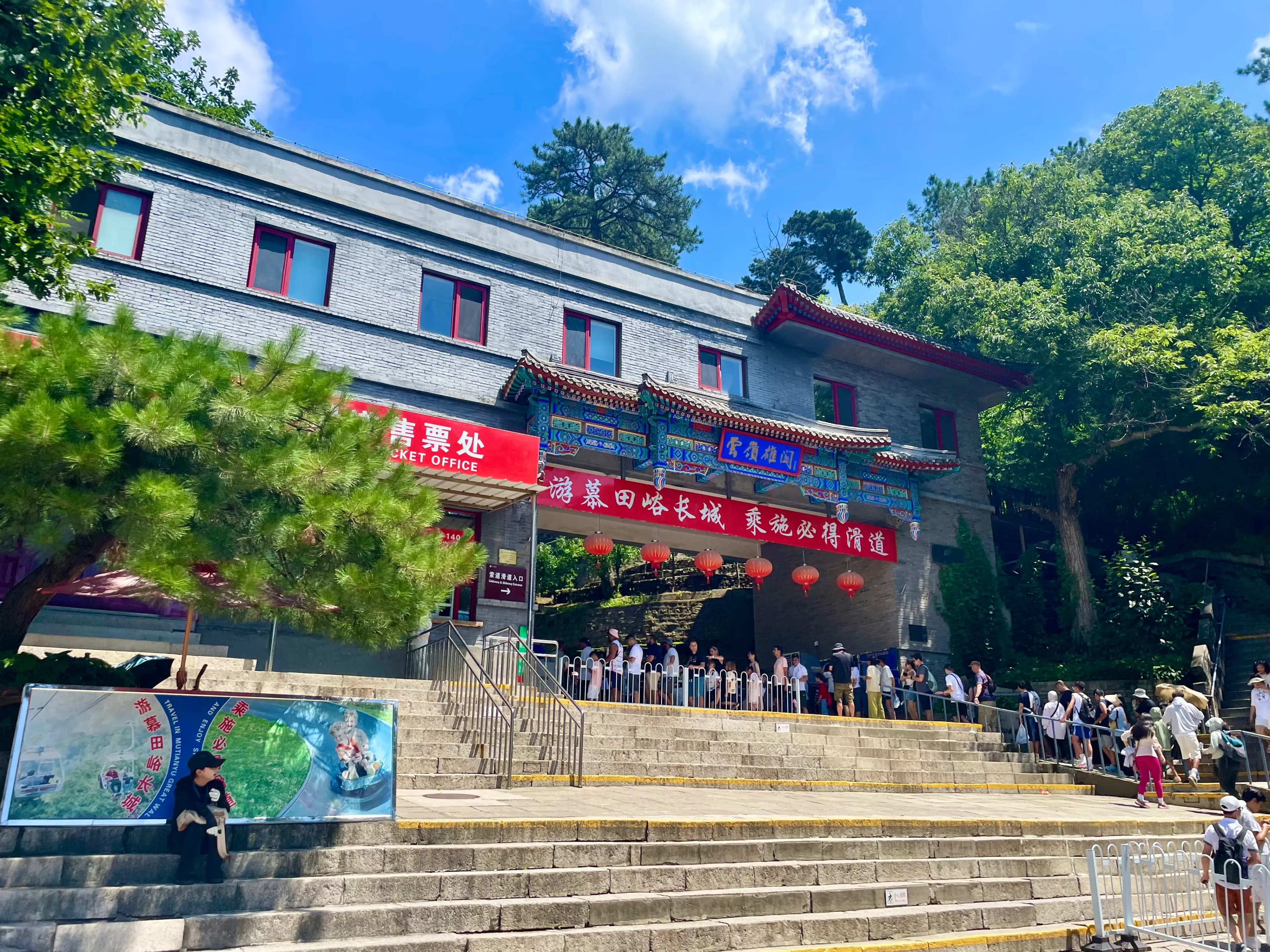
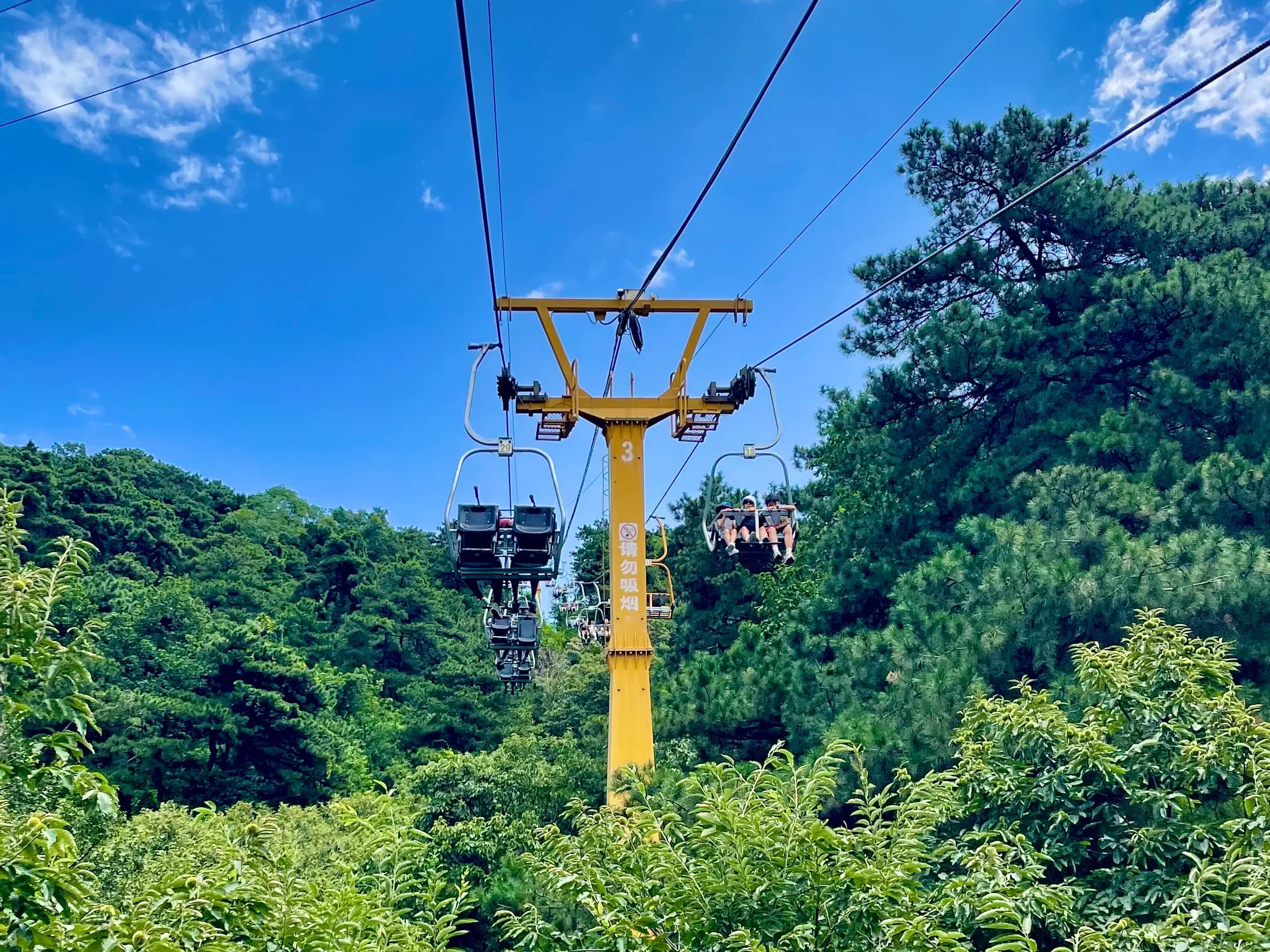
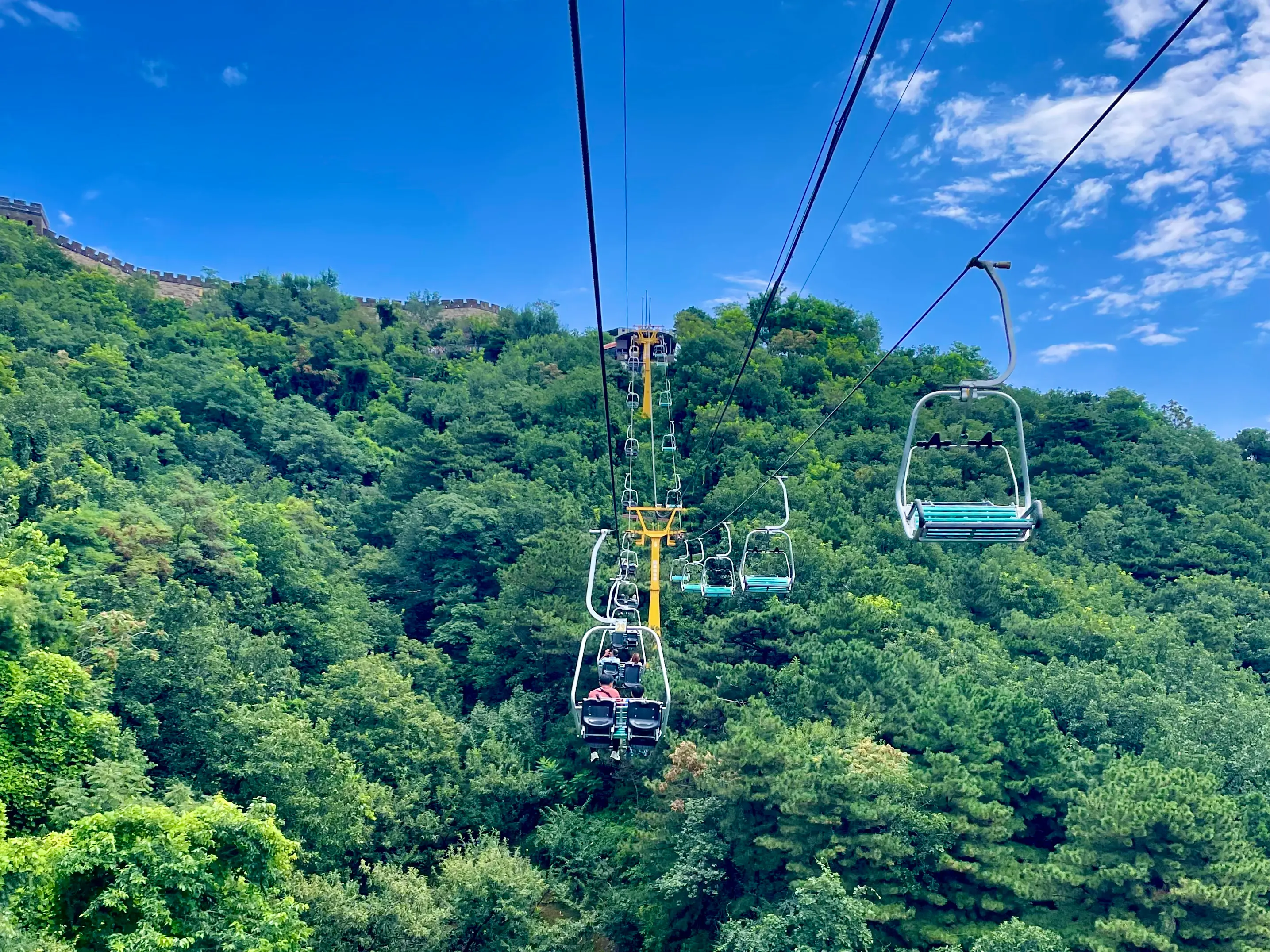
East route access: ticket office, chairlift, and toboggan side
These images show the east-route side of Mutianyu: the ticket-office entrance area and the open chairlift that carries visitors toward the lower-numbered watchtowers. This is the side most often associated with chairlift up and toboggan down, when operations and weather allow.
Middle / central route (Towers 7–13)
- On-wall time
- about 1.5 to 2.5 hours
- Effort
- Easier to moderate
- Best for
- Visitors who want scenic value without max stair stress; Mixed-age groups needing smoother pacing; Photography-focused first visits
- Entry → exit
- Walk focus between Towers 7–13, adapting start/end from either uplift side based on queue conditions
Middle is often the smartest “less friction, high scenic yield” option. It avoids forcing either extreme while still delivering classic restored-wall views and tower rhythm.
Why choose it
- Best balance of effort, views, and flexibility
- Lower risk of overcommitting stamina early
- Easy to shorten or extend in real time
Not ideal for
- Visitors specifically targeting Tower 23 or Hero Slope-style challenges
- Travelers who only want toboggan novelty
- Strong hikers seeking maximal distance
Key features
- Tower range: 7–13
- Generally steadier pacing than extreme east/west pushes
- Efficient for private tours that must protect return buffers
Full route (Towers 1–23)
- On-wall time
- about 5 to 7+ hours
- Effort
- Hard
- Best for
- Fit hikers who want complete restored Mutianyu coverage; Repeat visitors chasing a full-route benchmark; Travelers with a full-day wall priority and early start
- Entry → exit
- Traverse from the east end toward the west extension (or reverse), with descent planned before fatigue sets in
Now that Towers 21–23 are open, the full route is genuinely larger than older “1–20” plans. It is an achievement route, not the default sightseeing pattern for most first-time visitors.
Why choose it
- Most complete Mutianyu wall experience currently open to visitors
- Covers east, middle, and west character in one day
- Makes full use of the newly opened west-end extension
Not ideal for
- Families with young children or limited-stamina members
- Tight city return schedules
- Weather-risk days without fallback flexibility
Key features
- Tower range: 1–23 (current full visitor coverage)
- Requires deliberate hydration, pace, and turnaround planning
- Best attempted with active route management, not improv only
How to choose the right route
A practical way to choose is to start from constraints, not from the most exciting-sounding uplift.
- Choose the cable car core visit if you want the simplest, most predictable structure, especially with family or mixed pacing.
- Choose chairlift and toboggan only if everyone is comfortable with the mechanics and you can accept queue and operations risk.
- Choose a longer ridge walk only if you have time, stamina, and weather cover, and you are not cutting return traffic too close.
Many frustrating Mutianyu days come from one mistake: chasing a novelty uplift on a peak-traffic date without buffer, then losing the middle of the day to queues instead of the wall.
Mutianyu tickets & route packages
On DragonTrail-managed Mutianyu days we normally purchase bundled route packages that match how we route the wall (west vs east and which uplifts you use). The table below reflects typical package pricing we use, adult / child tiers and free under six, before any seasonal or ticket-window adjustments. Independent visitors often see line-item fares instead (gate ticket, shuttle, then single or round-trip uplifts). Use the expandable reference further down if you want the common day-tour fare breakdown.
| Package | Adult | Child | Under 6 |
|---|---|---|---|
West route package (includes postcard-entry style ticket) Cable-centric west-side routing when that matches the plan. | CNY 200 | CNY 180 | Free |
East route package (includes postcard-entry style ticket) Chairlift / toboggan side when that uplift story fits the group. | CNY 200 | CNY 180 | Free |
Mixed route package West up by cable car, east down by open chairlift or toboggan (when operations allow). | CNY 260 | CNY 240 | Free |
Cable car, chairlift, and toboggan are run as separate uplifts. If you ascend on one product and descend on another, expect two one-way purchases rather than one automatically combined voucher.
Independent visitor ticket reference (day-tour style breakdown)ShowHide
| Entrance ticket — adult | CNY 40 |
| Entrance ticket — ages 6–17 & 60+ | CNY 20 |
| Entrance ticket — under 6 | Free |
| Shuttle bus (round trip) | CNY 15 |
| Cable car / chairlift / toboggan (single-way) | CNY 100 |
| Cable car or chairlift (round trip), or chairlift (one-way) + toboggan (one-way) | CNY 140 |
| Cable car (one-way) + toboggan or chairlift (one-way) | CNY 200 |
- Cable car / chairlift / toboggan: often free for children under about 1.2 m; confirm height rules at purchase.
- Postcard souvenir tickets typically add ~CNY 5; pick up at a staffed window or self-service kiosk if you choose that option.
- When cable car goes up and chairlift or toboggan comes down, you are crossing different operators, buy matching one-way legs, not assumed bundles.
- The scenic-area entrance is ~6 km from the gate/ticket checkpoint. Public-transfer visitors usually ride a mandatory shuttle; tour vehicles that reach the checkpoint may skip that transfer leg.
Opening hours & last entry
Mutianyu's wall, cable car, chairlift, and toboggan all follow the same daily operating window. Plan around last-entry and uplift cutoffs, not just the posted close time.
| Season | Open | Close | Notes |
|---|---|---|---|
| Mar 16 - Nov 15 | 07:30 | 18:00 | Extended to 18:30 on Saturdays and Sundays |
| Nov 16 - Mar 15 | 08:00 | 17:30 | — |
Ticket sales stop one hour before closing, and entry stops 30 minutes before closing. Cable cars, chairlifts, and toboggan follow the same service window as the wall.
Night opening (seasonal)
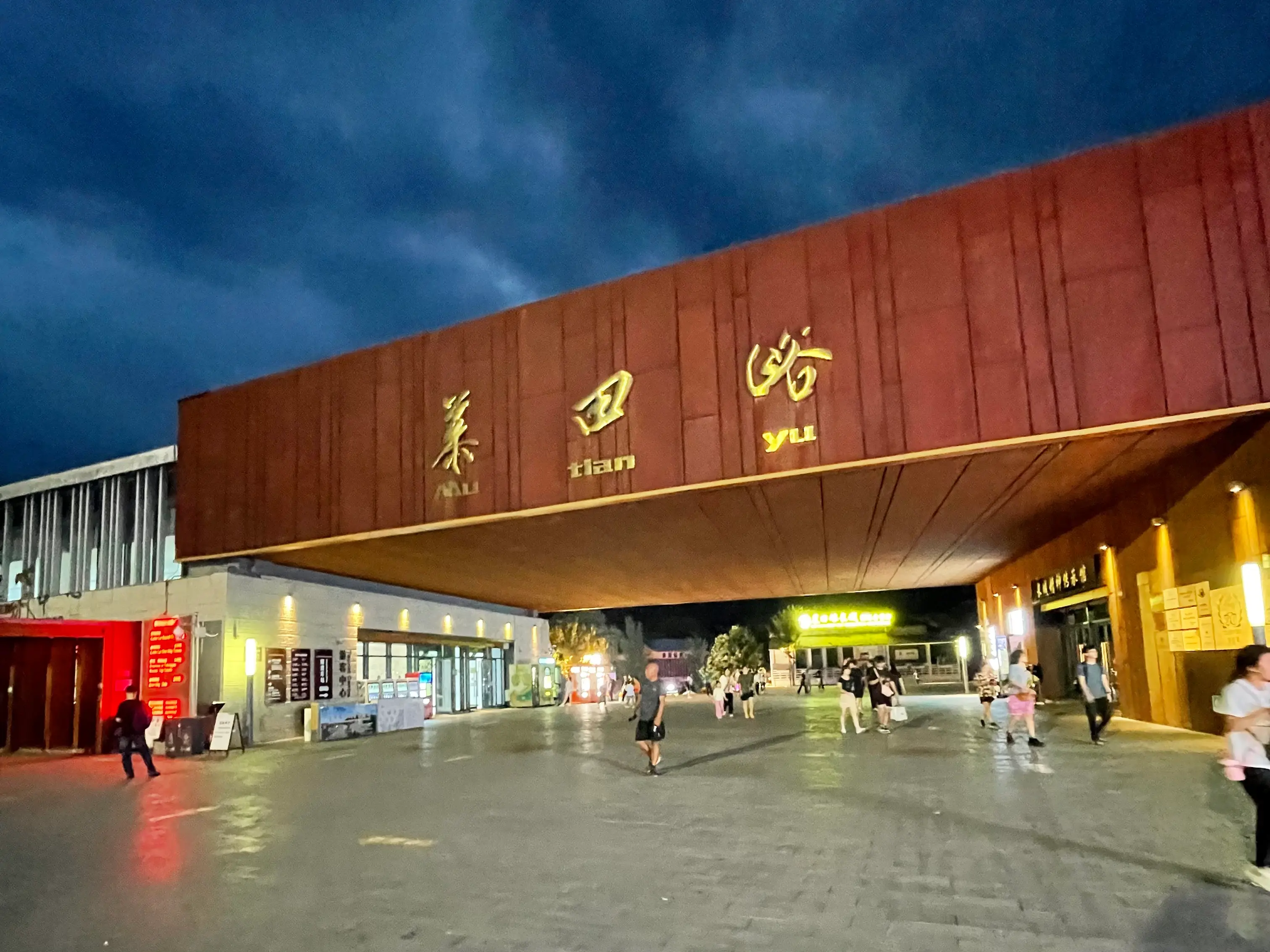
- Hours: 17:00 - 21:00
- Last admission: 20:30
- Lighting: 18:00 - 21:00
Night sessions usually run in July-August and selected holidays; exact dates vary by year and are typically announced close to the season.
Most timing problems come from cutoff windows, not from on-wall walking speed. Keep a return buffer so you are not forced into a rushed final descent.
Getting there from Beijing
Most visitors use private transport, a booked tour or transfer, or public-style bus options. The right choice depends on how much control you want over timing and comfort.
Private driver
Complexity: Low
Best for: Visitors who want predictable pickup, door-to-door service, and flexible return timing, especially families and first-time China travelers
This is often the cleanest fit when you want the day to run on a clear schedule and you do not want to manage multiple transfers after a long flight or a packed itinerary.
Guided day with driver
Complexity: Low in execution
Best for: Visitors who want help with tickets and uplifts, on-wall orientation, and pacing when crowds or weather shift the plan
This is the better fit when you want the wall portion to feel guided and calm rather than self-managed on-site, without turning the day into a rigid package tour.
Public bus, tour bus, or self-arranged combinations
Complexity: Higher
Best for: Budget-first trips or travelers comfortable with schedules, walking from stops, and variable timing
This can work on a relaxed day, but it stacks coordination cost onto a section that already has queues and seasonal operations. It is usually harder when you have a fixed return deadline.
Example day structure from Beijing
Mutianyu works well as either a focused half-day from Beijing or a relaxed full-day trip.
Focused half-day structure
- Morning departure from Beijing
- Drive to Mutianyu
- Uplift to the wall
- About 2 to 3 hours on the wall with photos and short breaks
- Return uplift and drive back to Beijing with buffer
Half-day can work, but traffic and queues still deserve respect. A half-day plan is not the same as a short city outing.
Full-day structure
- Relaxed morning departure
- Arrival with time before peak heat or worst queues when possible
- 3+ hours on the wall if you want a longer ridge walk or slower pace
- Meal or rest buffer before the return leg
- Drive back to Beijing without a rushed finish
For many visitors, full-day pacing matches Mutianyu better; it absorbs traffic variance and lets you enjoy the wall without constantly watching the clock.
How we manage a Mutianyu day
Mutianyu rewards calm execution: the wall is enjoyable when uplift choice, pacing, and return timing stay aligned. Driver-plus-guide setups help most when queues, weather, or group energy shift the plan mid-day.
Pacing control
We pace Mutianyu as a day trip, not a single-ticket attraction. That means realistic time on the wall, breaks that match stairs and sun, and not assuming everyone moves at the same speed through crowded pinch points. The goal is steady progress and comfort, not a rushed checklist.
Route control
We choose uplift patterns based on same-day conditions when possible: where queues are forming, what fits the group, and what keeps the core wall time intact. If the original uplift plan stops making sense, we shift early rather than burning the middle of the day standing in line.
Time buffer control
Return buffer matters on every Beijing wall day. At Mutianyu, it matters twice: once for uplift timing and once for highway traffic back to the city. We plan pickup and departure windows so a normal delay does not turn the end of the day into stress.
Exit strategy
A good Mutianyu plan includes a clear stop rule: when to turn back along the wall, when to skip an extra spur, and when weather or fatigue means shortening the walk. That protects the experience more than pushing for “one more tower” at the cost of a calm return.
Where to eat & drink at Mutianyu
Most visitors do not choose Mutianyu primarily for the food, but mealtimes still shape the day — especially when lunch queues collide with shuttles and uplifts. Quick-service and café-style options concentrate around the entrance arcades; Mutianyu village just outside the gate and Beigou add sit-down meals when your timeline allows. On a private tour day, meal stops are timed so they do not steal ridge time; independent visitors can use the same logic below.
Inside the scenic area (entrance / arcade)
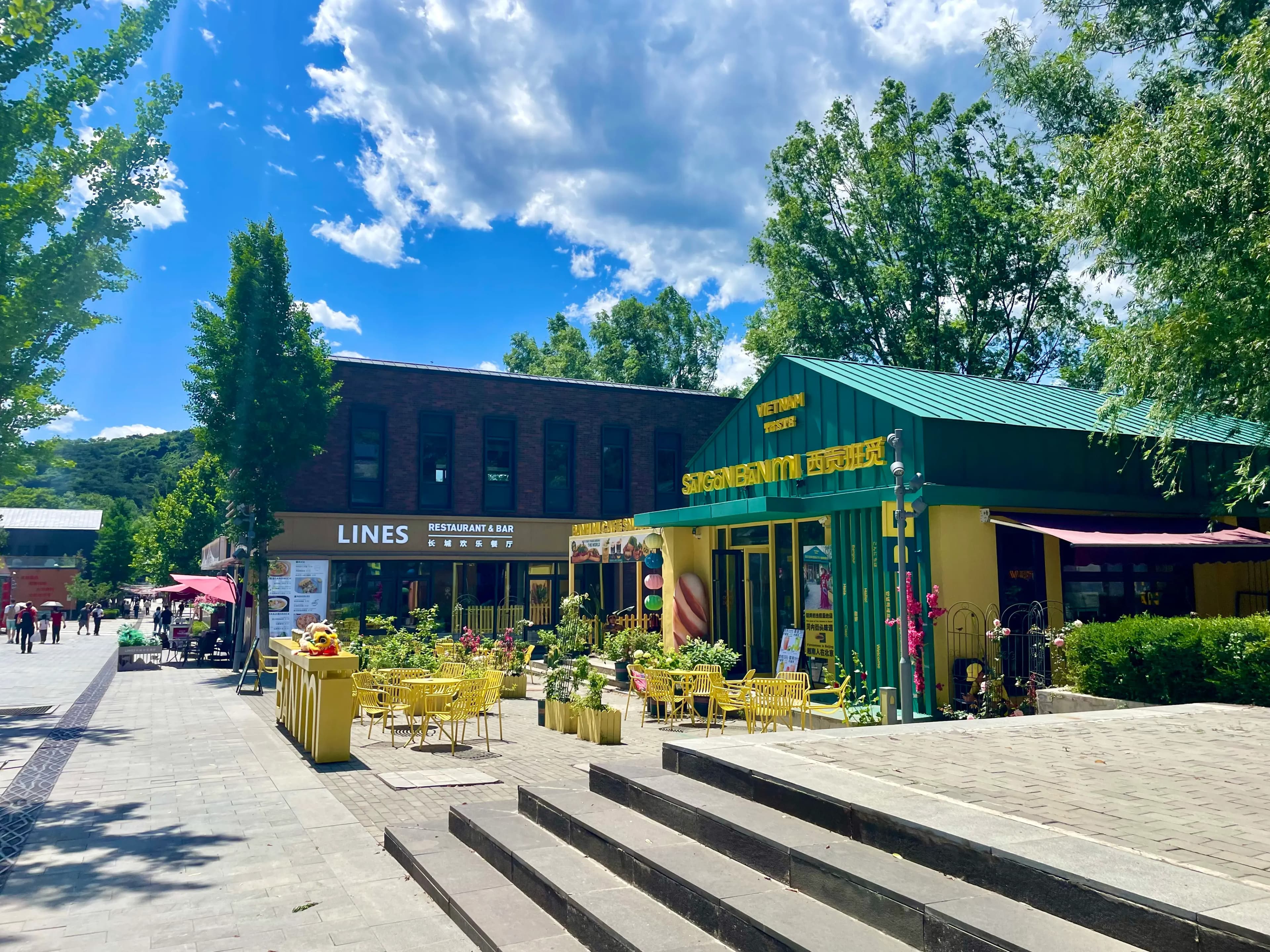
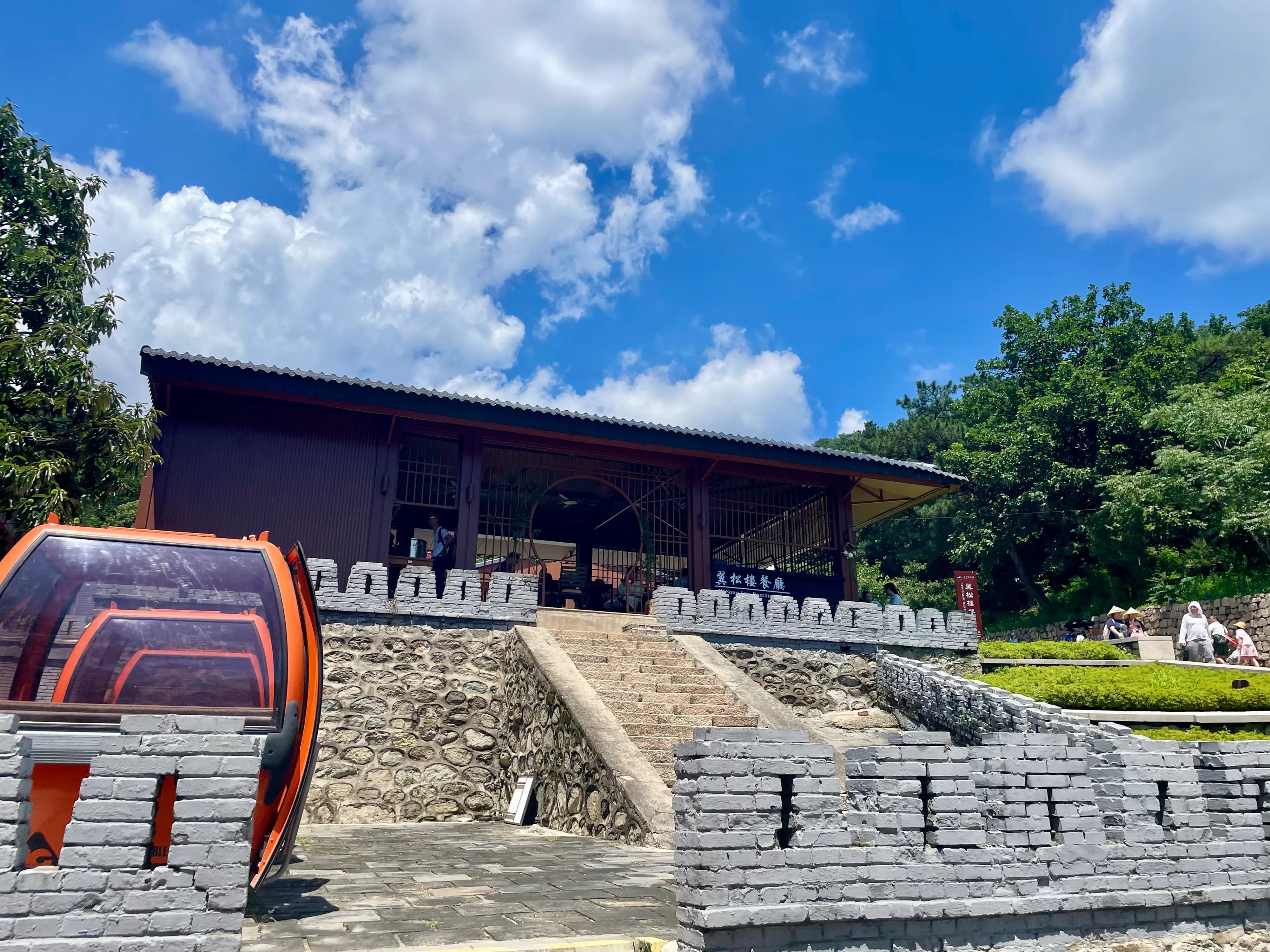
Casual options near the visitor gate, including international fast food and Chinese-style cafés. Signage you may pass includes LINES Restaurant & Bar and Saigon Venture / Vietnam Taste — names appear here for wayfinding only, not as endorsements. Typical per-person spend is light. Convenient when you do not want to lose ridge time, but expect crowding during peak lunch hours.
Mutianyu village (just outside the gate)
Sit-down Chinese restaurants serving home-style northern dishes, dumplings, and hot pot. Village lanes feel slightly quieter than the main arcade; a better pace if you have a relaxed full-day plan, less practical when you are tight on a return window.
Beigou and surrounding villages
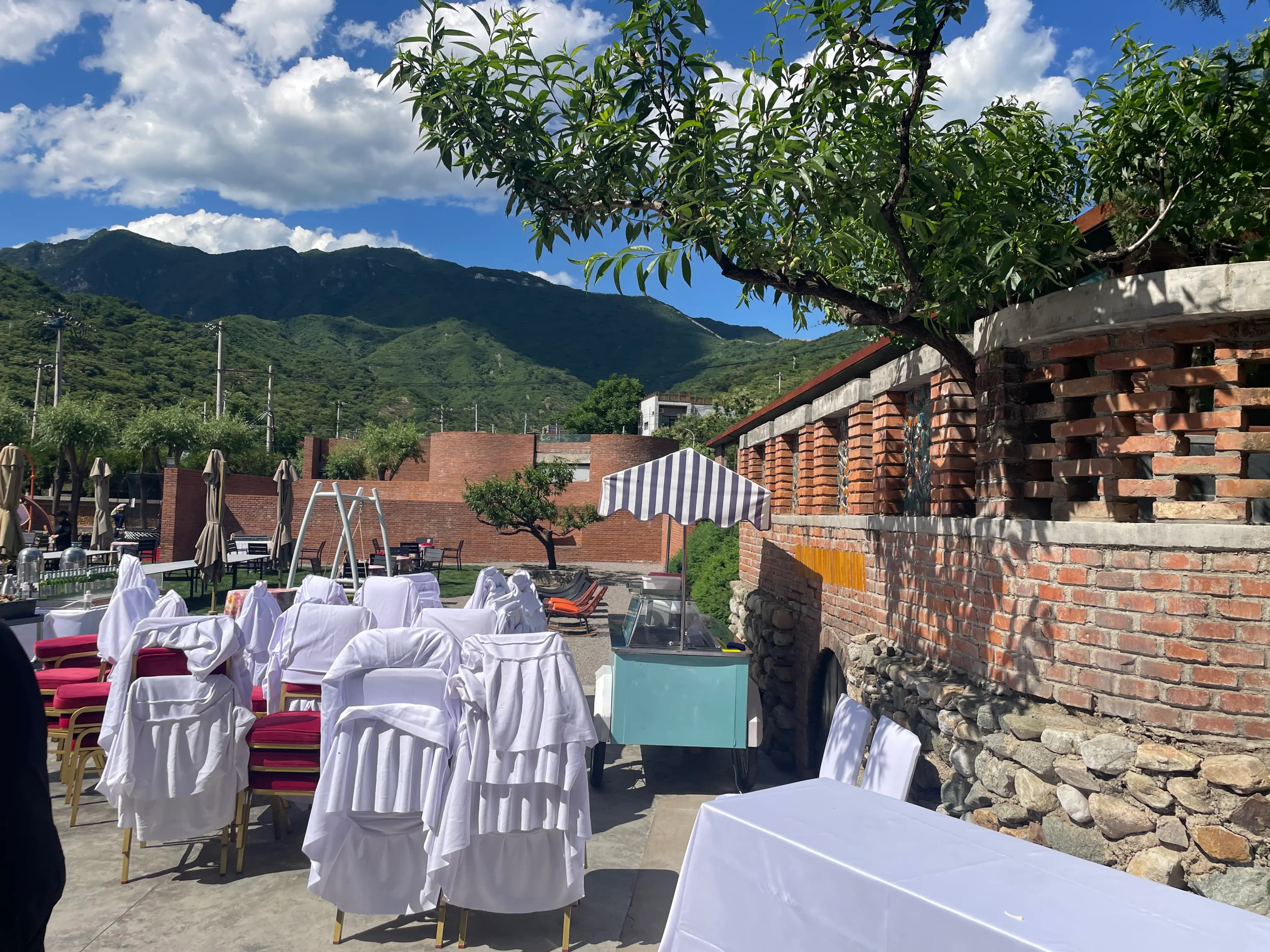
Boutique-style stays often have their own kitchens, and a handful of country-style restaurants serve local produce — sometimes on outdoor terraces with ridge views. Makes most sense when you are already overnighting locally or arriving early.
Coffee, tea & drinks (inside the scenic area)
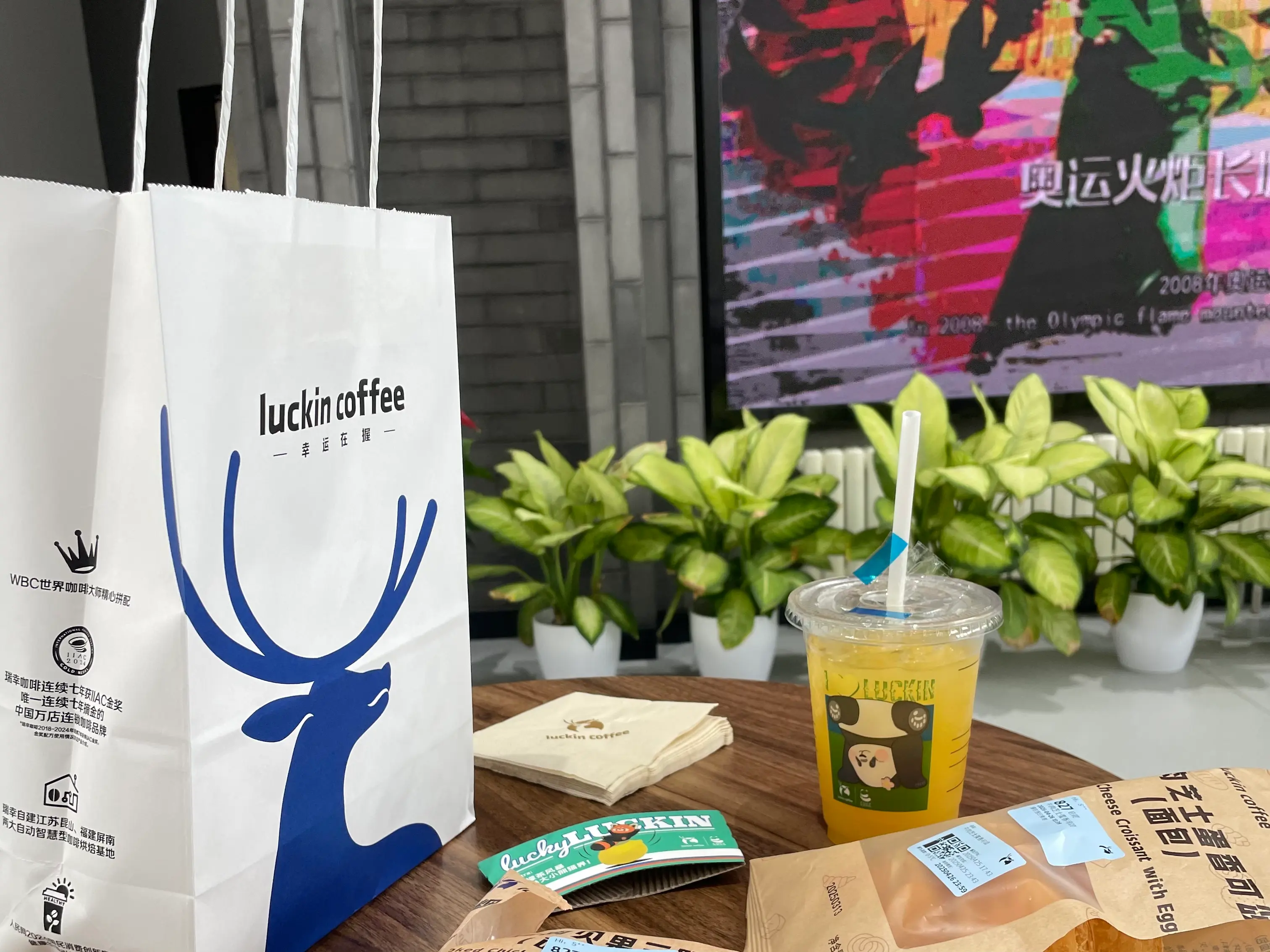
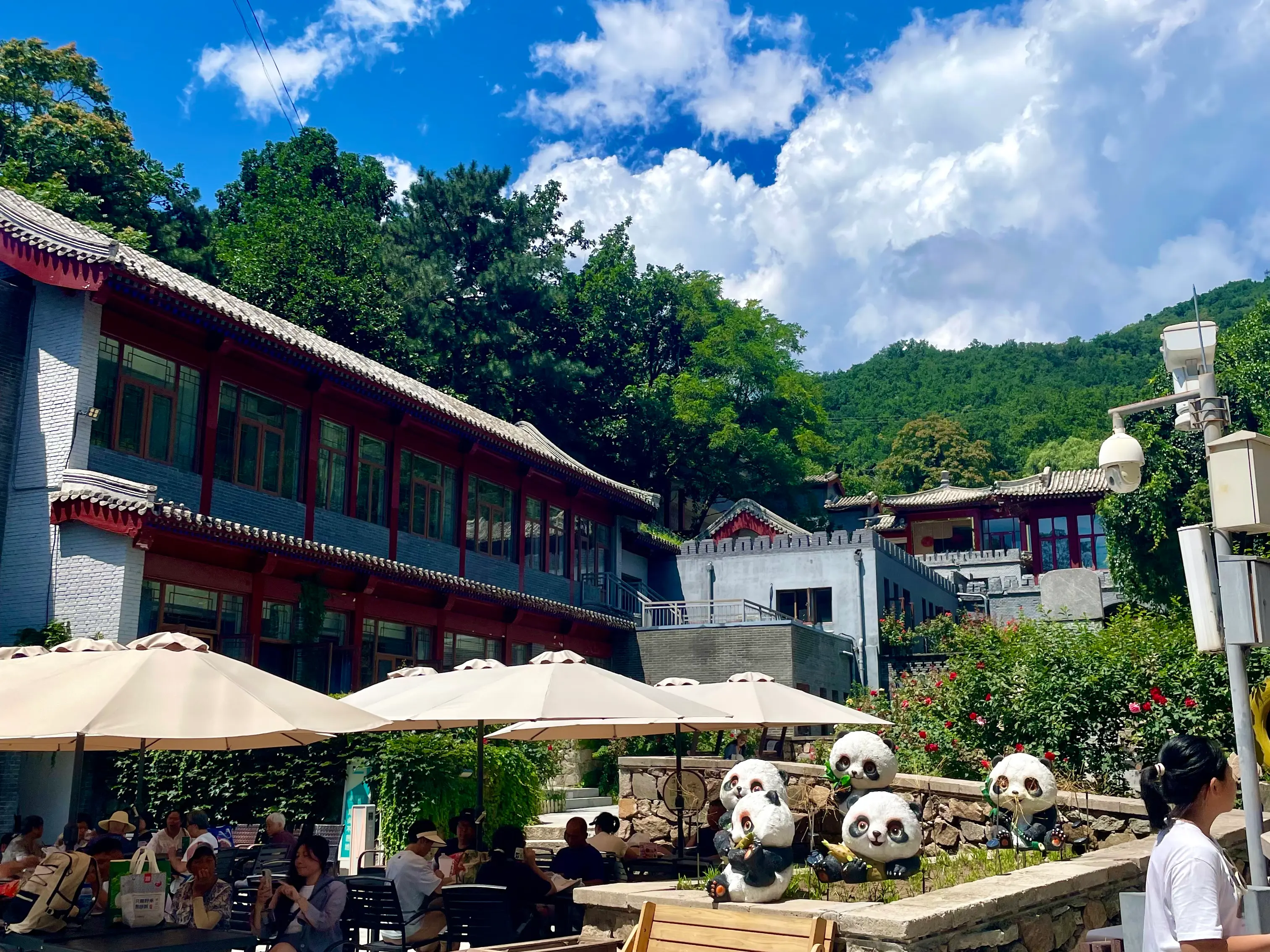
Takeaway coffee counters (Luckin Coffee, Cotti Coffee, and similar chains) and smaller café fronts sit along the visitor lanes — handy when you want caffeine or cold drinks without a full meal. Branded cups are common in peak season; outdoor terrace seating appears near some café fronts when weather allows. Names are for orientation only.
Pack and bring
Many guided day groups eat a portable lunch on the wall or at a viewpoint; quick, flexible, and avoids the lunchtime peak entirely. Bring water in any case — refill points are limited above the gate.
Regional specialties
Braised Pork with Chestnuts
lǐzi shāo ròu · 板栗红烧肉
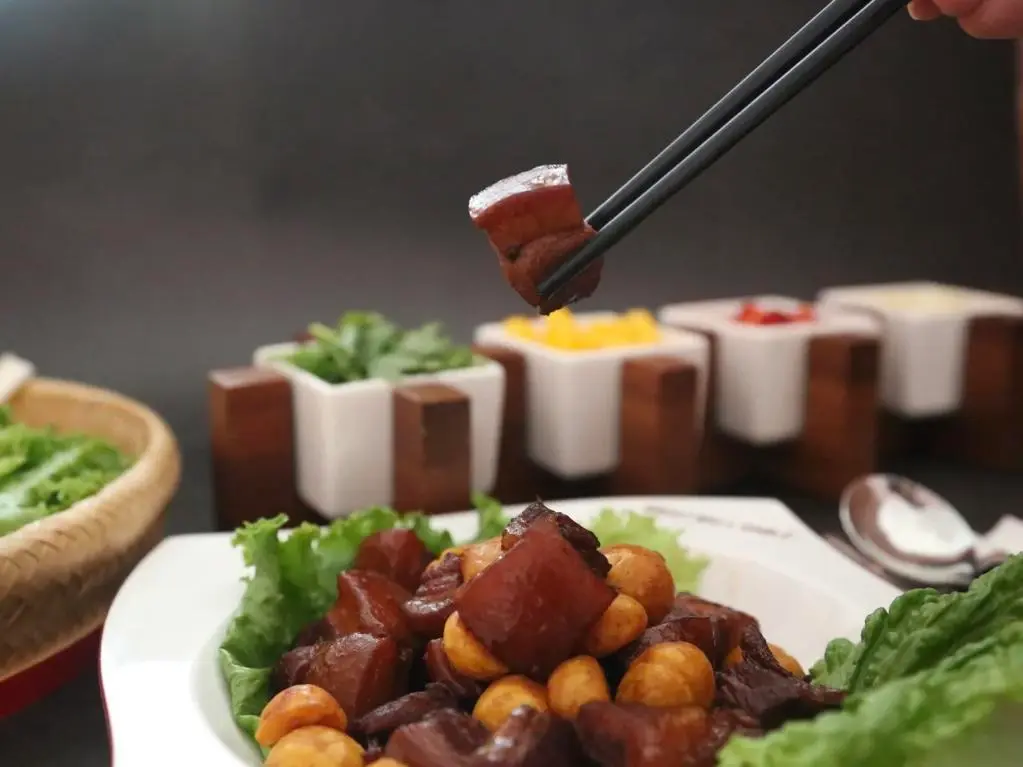
Braised pork belly with Huairou chestnuts — sticky, savoury pairing of two regional ingredients (chestnuts are a Huairou specialty). A typical sit-down lunch dish for groups already planning a longer mid-tour meal. Huairou chestnuts paired with slow-braised pork — a hearty northern plate when you want a filling sit-down meal after ridge time.
Roast/Braised Rainbow Trout
hóng zūn yú · 碳烤虹鳟鱼
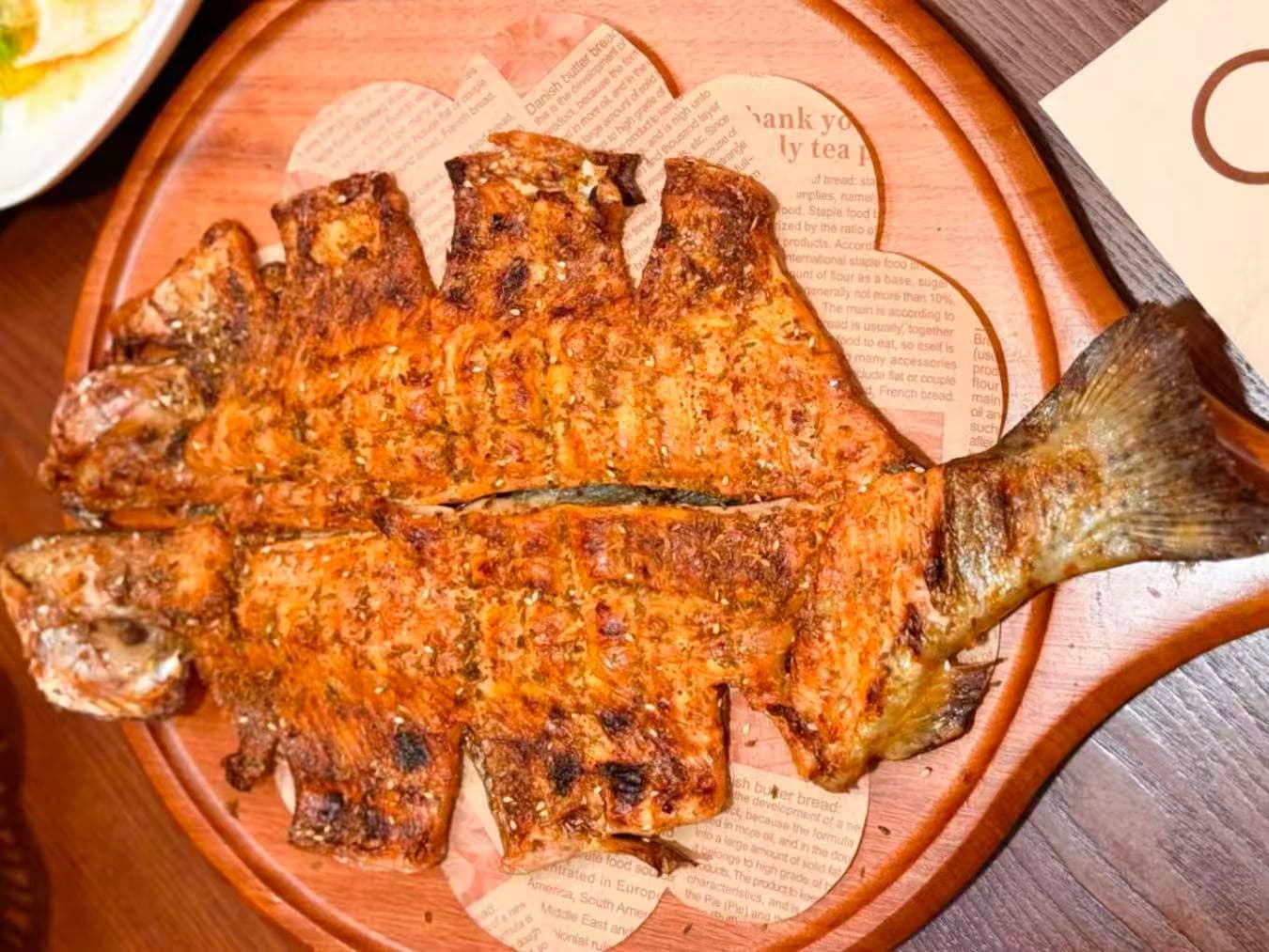
Rainbow trout from Huairou district — a cold-water river fish raised in low-turbidity flowing water — is a regional specialty often plated whole at scenic-area sit-down restaurants near Mutianyu. Typical lunch dish for groups taking a longer mid-day pause. Cold-water trout raised in Huairou's clear streams; often steamed whole to highlight freshness — a regional signature that appears on sit-down menus near Mutianyu.
Other common dishes
Steamed buns, dumplings, noodle soups, skewers, stir-fried noodles or rice, and seasonal snacks appear across Beijing and northern China — everyday choices here when you want something familiar without hunting for a "signature" dish.
Timing tips
- Lunchtime (about 12:00–14:00) is the busiest window in both the scenic area and nearby villages — eat earlier or later when you can, especially on weekends and holidays.
- A packed lunch (sandwich, bakery items, or convenience-store buys from Beijing) keeps ridge time flexible when café lines look long.
- If your day is built around the cable car and a tight return drive, budget a realistic 45–60 minute meal stop, not only the menu time.
- A light early lunch before peak crowds pairs best with a longer ridge walk; a later, slower meal works for full-day pacing.
- Dishes can be richer, saltier, or spicier than you may be used to — ask staff about ingredients for allergies or dietary needs.
- Mobile payment (Alipay / WeChat Pay) is common at chains and larger counters; keep small cash for tiny stalls or intermittent acceptance issues.
- Drinking water on the wall is limited — bring extra and refill at the gate.
We do not endorse specific venues here — pricing and quality shift with the season, and the tourist village has both reliable spots and inconsistent ones. The bigger lever for most visits is timing the meal around uplift queues and your return window, not finding the "best" restaurant on the wall.
Shopping at Mutianyu
Most shopping at Mutianyu sits in the entrance arcades and near the cable-car/chairlift base. It is a practical add-on after your wall walk: Great Wall-themed gifts, fans, silk products, and curated cultural-creative items are common.
Shopping at Mutianyu works best as the final 20-40 minutes of the visit, not the opener. The largest concentration is by the entrance and shuttle area, with smaller clusters around uplift boarding points.
Expect quality variation: souvenir stalls are broad but uneven, while the Mutianyu Great Wall Cultural and Creative Store tends to carry better-finished gift options. Keep transactions in CNY, and use mobile pay where possible.
Where to shop
Entrance shopping street
Biggest concentration of souvenir stalls and snack shops; widest variety, easiest place to compare before buying.
Cable car / chairlift station area
Smaller but convenient cluster near uplift logistics; useful for a final purchase without walking back through the full arcade.
Mutianyu Great Wall Cultural and Creative Store
Curated store with better-finished, design-forward gifts that combine Great Wall culture with practical keepsakes.
Souvenirs you’ll actually see
Decorative plates
Painted plates with Great Wall scenes, mountain ridges, and Chinese calligraphy are common signature items; check finish quality and packaging for travel.
Chinese fans
Paper and fabric fans with watchtower and ridgeline artwork are widely available, lightweight, and easy to carry.
Silk products
Scarves, shawls, and small textiles with wall-themed or traditional motifs are popular; texture and edge finishing are the quickest quality signals.
Small keepsakes
Magnets, keychains, badges, and postcard-style gifts are easy add-ons for families and group travelers.
Buying tips
- Shop after your wall route, not before; hands-free movement on steps and towers matters.
- Mobile pay (Alipay/WeChat Pay) is common, but carry small CNY notes for stalls that still prefer cash.
- Inspect fragile pieces (plates, ceramics) before payment and ask for padded wrapping if flying.
- At the cultural-creative store, pricing is usually fixed; bargaining norms are stronger in stall clusters.
Timing tips
- Reserve 20-40 minutes near exit flow to avoid rushing shuttles or uplift cutoffs.
- Holiday afternoons can bottleneck near the entrance arcade; buy earlier if crowd pressure is rising.
- If weather turns, prioritize transport timing first, shopping second.
Treat shopping at Mutianyu as a closing ritual: one practical window, clear budget, and quality checks. You will leave with better keepsakes and avoid logistics stress.
Culture & exhibits at Mutianyu
Mutianyu is mostly known as a wall walk, but the scenic area also has indoor cultural venues that work well as a paced add-on in heavy heat, light rain, or when part of the group needs a break from stairs. They pair with the wall; they do not replace it. Assign published images in the CMS for each subsection below.
Great Wall Spirit Exhibition Hall
Opened in July 2023 with the theme “Great Wall Spirit, Peaceful Link, World Bridge,” this two-floor hall combines Great Wall history exhibits with patriotic and Party education functions. Floor 1 focuses on Great Wall artifacts, maps, restoration imagery, and coverage of Tan Lun and Qi Jiguang’s role in Mutianyu’s Ming-era construction. Floor 2 is a Party building and education area focused on the history of the Communist Party of China; international visitors who mainly want wall history can prioritize Floor 1.
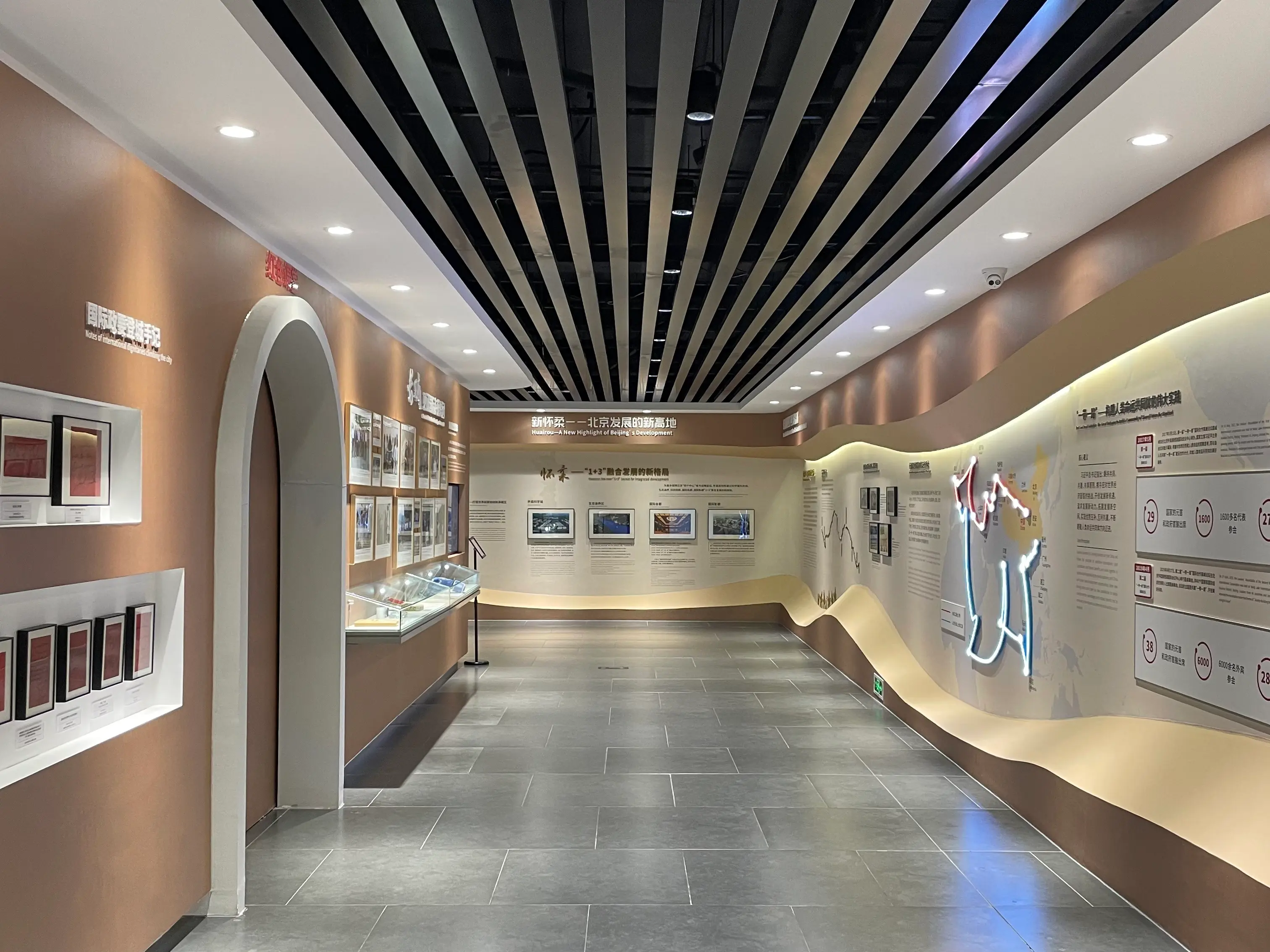
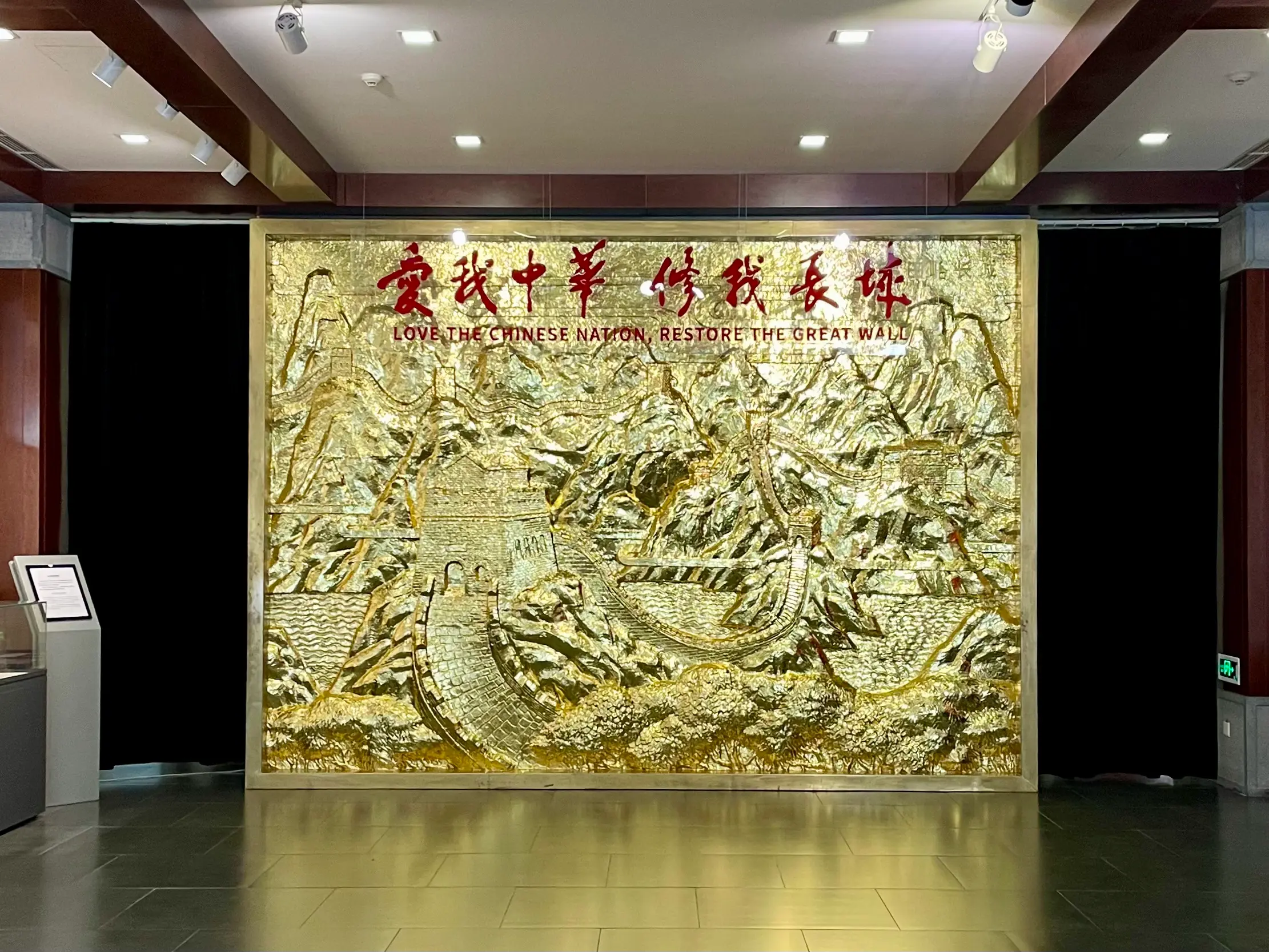
The Epic Great Wall XR Experience Space
The Mutianyu visitor area includes two related indoor spaces that grew out of the earlier Mutianyu Digital Museum footprint. One building continues to host temporary exhibitions (including photography-led shows) that rotate by season, useful when you want context indoors without committing to a long museum visit. The adjacent building is now The Epic Great Wall XR Experience Center, which uses XR to present Great Wall landscape, defensive logic, and historical scale in a more immersive format. Together they work best as a 30–45 minute combined add-on before or after the wall, or when weather makes ridge time less comfortable.
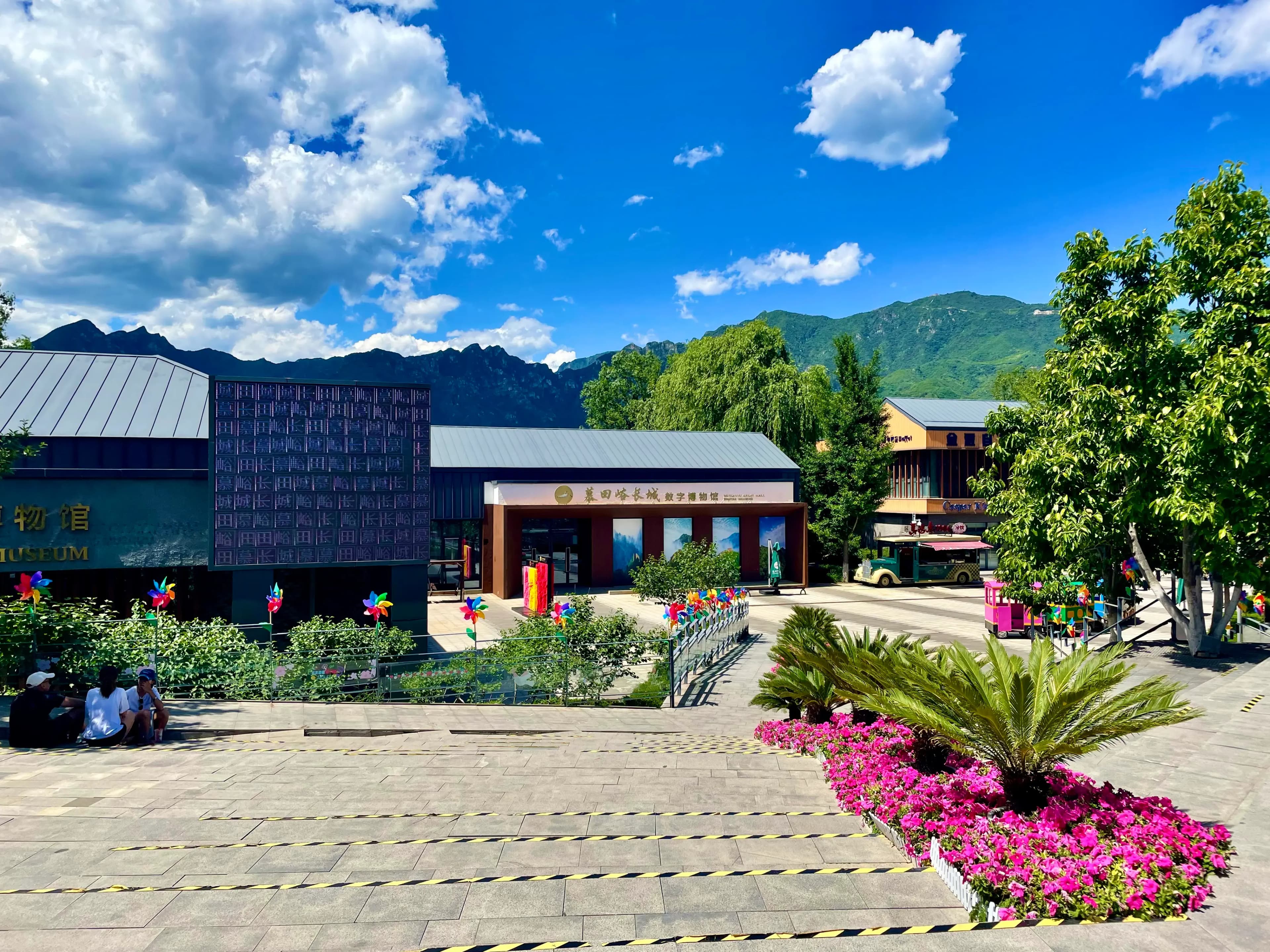
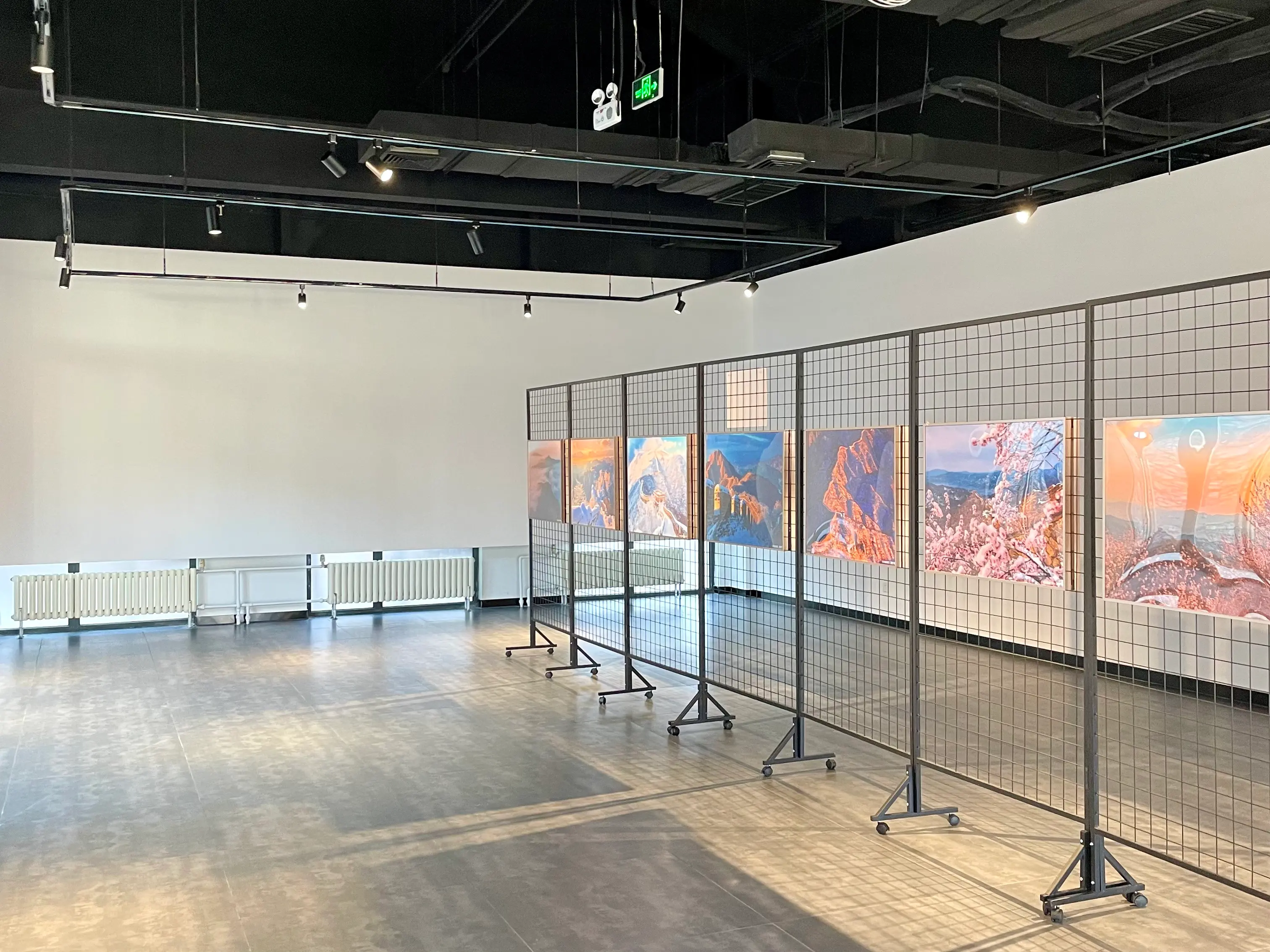
Money & payments at Mutianyu
All payments are in Chinese yuan (CNY / RMB). Mobile pay (Alipay / WeChat Pay) covers most ticket counters, shuttles, cafés, and shops; small stalls and informal taxis still prefer cash. Bring a modest CNY float, exchange at a Beijing bank or ATM for better rates than the airport alone, and keep Alipay or WeChat Pay linked as your primary tool. On a private tour, most Mutianyu costs are pre-paid, you mainly need pocket money for snacks, water, and souvenirs.
The Mutianyu scenic area has no currency exchange and no bank branch. Once you're past the entrance, you're working with what you brought. Beijing in 2026 is far more cashless than older guidebooks imply, mobile pay wins most transactions for foreigners who set up Alipay or WeChat Pay before departure. Cash is backup, not the default. The trap is discovering what you need at the cable-car queue: set up apps before you fly and keep small notes for stalls that never adopted QR codes.
Where mobile pay works
| Place | Mode | What to expect |
|---|---|---|
| Ticket window & package counter | Mobile pay (strong) | QR scan common; many counters accept international cards in addition, queues reward short sentences. |
| Shuttle bus (round-trip ¥15) | Mobile pay (strong) | QR payments typical; cash also widely accepted. |
| Cable car / chairlift / toboggan ticketing | Mobile pay (strong) | Bundles are normally bought at the ticket zone, not at loading, match your package before you queue. |
| Scenic-area arcade shops & cafés | Mobile pay (strong) | Mobile pay standard; Visa/Mastercard hit-or-miss at snack bars. |
| Village restaurants near the gate | Mobile pay (OK) | QR common; smallest family kitchens may lean cash, pictures or translation apps fill gaps. |
| Wall-side stalls (water, postcards, snacks) | Cash preferred | Small notes (¥10 / ¥20), sellers struggle with ¥100-only wallets. |
| Taxis or informal drivers after exit | Cash preferred | Pre-booked transfers sidestep negotiation; otherwise carry CNY and a Chinese hotel pin. |
| Pre-booked private / small-group tour | Pre-paid (tour) | DragonTrail-led trips settle tickets, shuttle, uplifts ahead, carry ~¥200/day pocket money. |
Recommended cash float (independent visitors)
CNY 200–400 per adult mostly in ¥10, ¥20, and ¥50 notes, enough for stalls, taxis, or a dead phone battery.
- Avoid carrying only ¥100 bills, small vendors hate breaking them.
- Keep one ¥100 aside as a tucked emergency note separate from day spend.
- You will still use mobile pay for the big-ticket items, this float is for friction points.
Where to exchange or withdraw — ranked
- RecommendedATM (Visa / Mastercard / UnionPay where supported) or Bank of China / ICBC branch in central BeijingBest effective rate; bring passport for counter exchange. Withdraw or convert before leaving the city for Mutianyu.
- ConvenientBeijing Capital / Daxing airports on arrivalConvenient small float on landing; top up downtown for the rest of the trip.
- AvoidHotel concierge counters or street hawkersPoor rates or outright risk, use only if you are truly stuck, then move to a bank or ATM.
Setting up Alipay & WeChat Pay
Alipay (international cards)
Link Visa / Mastercard via Tour Pass (or the flows your bank supports). Run a ¥1–5 test purchase in Beijing before the wall day.
WeChat Pay
International cards can work; small spends authorise more easily than large ones. Keep a second card if your bank auto-blocks first China charges.
Bank heads-up
Tell your issuer you are in China, first CNY mobile charge often trips fraud filters.
Offline backup
Screenshots of ticket QR codes and hotel addresses in Chinese characters load faster than translation apps in glare, cold, or thin signal on the ridge.
Tipping at Mutianyu (and in China)
- Tipping is not customary in China, counters, shuttles, cafés, and restaurants do not expect one.
- Private guides and drivers sometimes receive a discretionary thank-you (roughly CNY 100–300 per guided day range) for an excellent day; it is appreciation, not a fee, and never required.
- Do not leave coins on restaurant tables, staff may chase you to return "forgotten" money.
What changes on a private / small-group tour day
- Entrance, shuttle, uplifts, and driver are prepaid before you arrive, you skip window algebra entirely.
- Pocket money only (~CNY 200) covers snacks, souvenirs, or a spontaneous cold drink.
- If you dislike fintech setup, a guided day removes the need to master Alipay under time pressure.
- Peak holidays are where prepaid logistics matter: less time in payment lines, more time on the wall.
Practical tips
- There are no ATMs or exchanges inside Mutianyu scenic area, finalise cash the night before in Beijing.
- Carry digital + small cash together: mobile pay fails if your phone dies; cash fails if you only have ¥100 notes at a corn stall.
- Download offline Chinese language packs for translate/dictionary apps, signal is patchy on some towers.
- Passport may be required for SIM purchase, bank counter exchange, and some wallet registrations, keep it accessible but secure.
Money at Mutianyu is less about carrying a brick of cash and more about not discovering your payment stack at the uplift line. Set up mobile pay early, keep a light CNY float for the exceptions, and if you want the day to feel effortless, the prepaid private format exists exactly so "how do I pay for this?" is never the memory you take home.
Tickets, weather & gear
Tickets / access: Ticket and uplift products vary by season and operator, so confirm what is included for your date and keep ID handy for purchase and entry.
Weather: Mountain-adjacent conditions can be windier and brighter than the city. Check temperature swings and bring layers.
What to bring
- comfortable shoes with grip for stone steps
- water
- sun protection in clear weather
- a light wind layer for exposed sections
- cash or mobile pay readiness if your plan requires on-site purchases
Best time to visit Mutianyu
The best windows are mid-April to late May and mid-September to mid-October, mild temperatures, the cleanest air bands of the year, and the strongest scenery (blossom in spring, foliage in autumn). Avoid May 1–5, October 1–7, and mid-July to mid-August unless you are willing to start before 08:00.
Mutianyu is open year-round, and most days are usable; the question is how much friction you accept. Spring and autumn give the strongest combination of mild temperatures, photo-grade scenery, and predictable uplift operations. Summer is doable but hotter and more crowded; winter is quieter and visually striking but adds wind, cold, and occasional weather closures. A private tour day mainly de-risks peak weeks: pre-purchased tickets, a planned uplift order, and a clear return buffer beat trying to outrun crowds on the day. Independent visitors can use the same logic.
Season by season
Spring
April–MayTemperature / weather: ~12–22°C, dry to mild
Scenery: Apricot, peach, and plum blossom on slopes; ridge greening through May; clearest air windows of the year
Crowds: Moderate on weekdays; heavy on late-April / Labour Day weekends
Uplifts: All typically open; chairlift may pause in wind/thunderstorms
Best for
- First-wall day from Beijing
- Photo-led visits
- Mixed-pace groups
Cautions
- Wind on exposed sections
- Pollen sensitivity in early May
Summer
June–August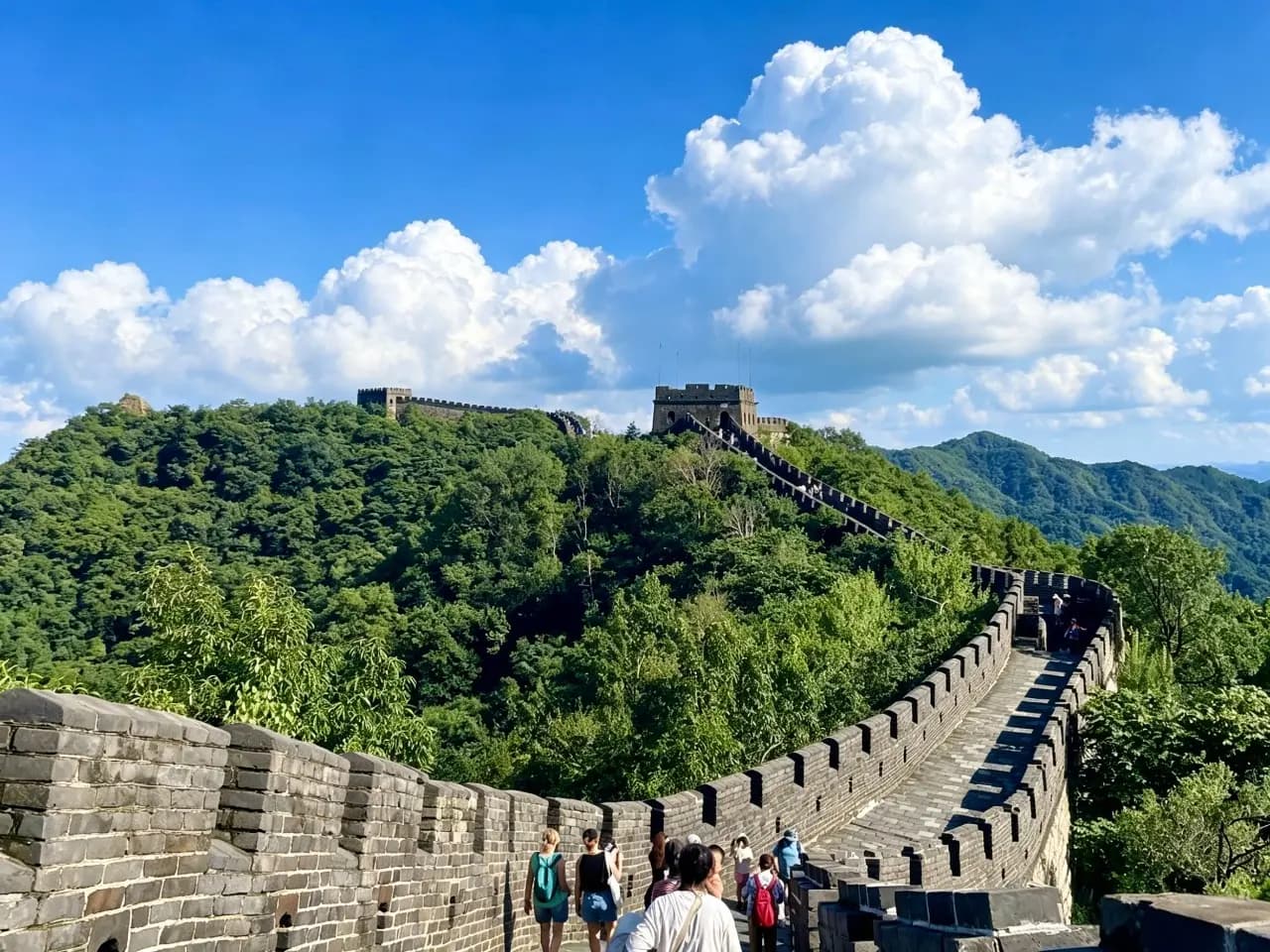
Temperature / weather: ~25–35°C, humid; thunderstorm risk in July
Scenery: Dense green ridge cover; haze likely after still nights
Crowds: Heavy throughout the school break (mid-July–late August); peaks on weekends
Uplifts: All open; storm-day chairlift/toboggan suspensions are normal, cable car remains the resilient option
Best for
- Travellers who only have summer dates
- Early-morning starts
Cautions
- Heat on stairs and exposed sections
- Afternoon showers
- Sunscreen and water non-negotiable
Autumn
September–OctoberTemperature / weather: ~10–22°C, dry, often the year's clearest skies
Scenery: Foliage builds through October; peak colour usually mid-October to early November depending on the year
Crowds: National Day (Oct 1–7) is the year's heaviest week, avoid if you can
Uplifts: All open; queues spike Oct 1–7 and on the Mid-Autumn weekend
Best for
- Foliage photography
- Mid-week visits
- Mixed-fitness groups
Cautions
- Mornings can be cold by late October, bring a layer
- Oct 1–7 logistics can fail without a pre-bought plan
Winter
November–FebruaryTemperature / weather: ~ -8 to +5°C; sub-zero with wind chill on the ridge
Scenery: Bare ridge silhouette; snow scenes most likely December–January; bluebird-sky days are striking
Crowds: Lowest crowds of the year, except Spring Festival week
Uplifts: Cable car typically operates; chairlift / toboggan close more often in cold/wet weather, confirm same-day
Best for
- Photographers
- Visitors wanting solitude
- Second-time wall visits
Cautions
- Cold-weather gear (hat, gloves, traction-friendly soles)
- Shorter daylight
- Some F&B near the gate runs reduced hours
Month-by-month picks
| Month | Notes |
|---|---|
| January | Coldest month; clear blue-sky days are striking. Avoid Spring Festival week. |
| February | Late-month thaw begins. Spring Festival crowds spike for ~7 days. |
| March | Cold start, warming end-of-month. Apricot blossom begins late March. |
| April | Peak blossom on slopes; among the best photo months. Watch for Qingming holiday weekend. |
| May | Mild and clear early in the month; avoid May 1–5 (Labour Day). |
| June | Warm, occasional storms. Quieter weekdays before school holidays start. |
| July | Hot and humid; thunderstorm risk. Plan early starts and shaded breaks. |
| August | Continues hot; school-holiday crowds heavy until late month. |
| September | Often the year's most stable weather; light foliage begins late month. |
| October | Foliage peak ~mid-month. Avoid Oct 1–7 (Golden Week). |
| November | Late foliage early in the month; quieter; cold mornings set in. |
| December | Cold, low crowds, snow scenes when conditions allow. |
Dates to avoid or plan around
Spring Festival / Chinese New Year (Lunar Jan)
~7-day national holiday
Crowd surge and partial F&B closures around the village.
Qingming Festival
Early April (3-day weekend)
Heavier weekend crowds.
Labour Day / May Day
May 1–5
Heavy crowds; uplift queues 1h+ likely.
Dragon Boat Festival
June (dates vary)
3-day weekend bump.
School summer holiday
~mid-July–late August
Sustained crowd elevation.
Mid-Autumn Festival
Sept/Oct (dates vary)
Weekend bump; pairs poorly with National Day in some years.
National Day / Golden Week
Oct 1–7
The single heaviest week of the year for the Great Wall corridor.
Decision rules
- If you have only spring or autumn dates, prefer mid-week in late April / early May or mid-October.
- If you have only summer dates, plan an 08:30 uplift line and a return drive before 16:30.
- If photographers are involved, late October for foliage, early April for blossom, pre-book the uplift order.
- If visiting on a public-holiday weekend you cannot move, use a private tour with pre-bought tickets and an early start; do not wing it.
Arrival timing
- Weekdays
- Aim to be in the uplift line by ~09:30.
- Weekends
- By ~08:30, earlier in April / October.
- Public-holiday weeks
- By ~08:00, with tickets pre-bought and a clear plan to skip the toboggan if queues exceed 30 min.
Best time is not a single date, it is the date you can actually execute well. Mid-week shoulder-season visits are easiest, but a well-planned summer or winter day can still beat a poorly timed peak-week one.
Accessibility & mobility considerations
Mutianyu is one of the more facilities-friendly Great Wall sections …
Comfortable for most adults with average fitness
Cable car or chairlift removes the steep approach. …
Workable with planning — seniors, post-injury, limited mobility
Take the cable car to Tower 14 as the easiest entry. …
Wheelchair users
Mutianyu is not fully wheelchair-accessible. …
GOGO Speed exoskeleton
Vest-style smart support that reduces leg load on stairs.
- 2.3 kg vest-style carrier
- Two modes — flat / mountain
- Five assistance levels
- 5–8 hour battery
- First block price
- CNY 100
- First block duration
- 3 hours
- Additional hour
- CNY 20 / hour
- Units available
- 10
Reserve via the official Mutianyu WeChat account (慕田峪长城). Confirm same-day availability — we cannot book it for you.
Units are limited and demand spikes on weekends and holidays.
Mobility needs vary widely — if anyone in your group has hip, knee, vertigo, or post-surgery considerations, tell us before booking …
Language at Mutianyu
Most day-to-day communication in the tourist area is Mandarin (Putonghua), the official language of China. Ticket windows, visitor centres, and many shops use basic English, enough for tickets, simple food orders, shopping, and standard route questions. Bilingual signs (Chinese + English) are common on the wall and at key decision points. For in-depth history and route judgement, book a licensed guide in your language in advance.
You do not need fluent Chinese to have a good Mutianyu day. Staff interaction at the gate and uplifts is mostly transactional: tickets, directions, loading instructions. Where nuance matters, pacing the ridge, judging crowds at forks, or adapting when uplifts close, is exactly where a pre-booked guide pays off. Phrase-level Mandarin helps when lines move fast or you step outside the main visitor lanes (village restaurants, private transfers). Offline phrasebooks or screenshot translations beat staring at a loading screen at the ticket booth.
Where English helps most
| Place | English | What to expect |
|---|---|---|
| Entrance & ticket window | OK | Standard transactional English for fares, packages, and postcards; queues reward short, clear sentences. |
| Cable car / chairlift / toboggan loading | OK | Loading directions, group flow, and safety lines; expect gesture-assisted English more than long explanations. |
| Bilingual wall signage & tower labels | Strong | Many route and safety labels are in Chinese and English, which helps you self-navigate between towers. |
| Scenic-area shops & cafés | OK | Usually enough to order, pay, and ask for water or simple food; mobile pay is common. |
| Village restaurants near the gate | Limited | Picture menus and pointing work; complex dietary needs are easier with a guide or translation app. |
| Taxis or informal drivers at the exit | Rare | Fares and hotels are much easier with a pre-booked car, hotel name in Chinese, or map pin. |
| Pre-booked private / small-group tour | Strong | DragonTrail-led days are planned in your language; on-the-fly problem solving is the point of the guide. |
Guided tour languages
Detailed explanations in your language — history, route judgement, on-the-day decisions — usually require a booked guide. Book ahead; same-day availability is unreliable for less-common languages.
English
The default for most international private tours; book the specific style (history depth, pace) you want.
French, German, Spanish, Italian, Russian, Korean, Japanese, Arabic, and others
Available through licensed agencies in major cities; not something to count on for same-day, on-site hire at the wall.
Survival phrases
| English | Pinyin | Chinese |
|---|---|---|
| Two tickets, please | liǎng zhāng piào | 两张票 |
| Is this the line for the cable car? | zhè shì lǎnchē de duì ma | 这是缆车的队吗? |
| We are meeting our driver at… | wǒmen de sījī zài… | 我们的司机在… |
| Toilet | cèsuǒ | 厕所 |
| How much is this? | duōshao qián | 多少钱? |
| Card / WeChat / Alipay | kǎ / wēixìn / zhīfùbǎo | 卡 / 微信 / 支付宝 |
| A little spicy / no spicy | wēi là / bú là | 微辣 / 不辣 |
Useful apps
- Pleco or equivalent dictionary
Offline Chinese–English dictionary for fast lookups when menus are only in hanzi.
- Google Translate / Apple Translate
Camera mode helps with signage and menus; download Chinese offline packs before you leave Wi-Fi.
- Apple Maps / Google Maps + a Chinese map app (Amap/百度 if you read Chinese)
Keep a hotel or meeting point as a named pin in Chinese characters for drivers.
- DiDi (ride-hailing)
Useful if you already have an account and Chinese payment; otherwise rely on a pre-booked transfer.
Practical tips
- Assume staff English will be phrase-level, not a guided museum lecture, plan narrative depth with your tour booking, not at the ticket window.
- Keep screenshots of your ticket QR, hotel address in Chinese, and any car meeting instructions, they load faster than live translation in bright sun or cold wind.
- On peak days, hand gestures and a smile still beat perfect tones; a few words of polite Mandarin often get better attention than English alone.
Mutianyu is one of the more visitor-friendly wall sections: English shows up where you need to transact, and signs help you stay oriented on the wall. For the rest, storytelling, trade-offs, and a smooth day out of Beijing, a booked guide in your own language is the reliable path, not hoping for deep English on site.
Stay overnight near Mutianyu
Most visitors treat Mutianyu as a day trip from Beijing. Staying locally makes sense when you want a slower morning, an earlier start before traffic builds, or a calmer finish after a long ridge walk, without racing back to the city the same evening.
Mutianyu village (near the scenic entrance)
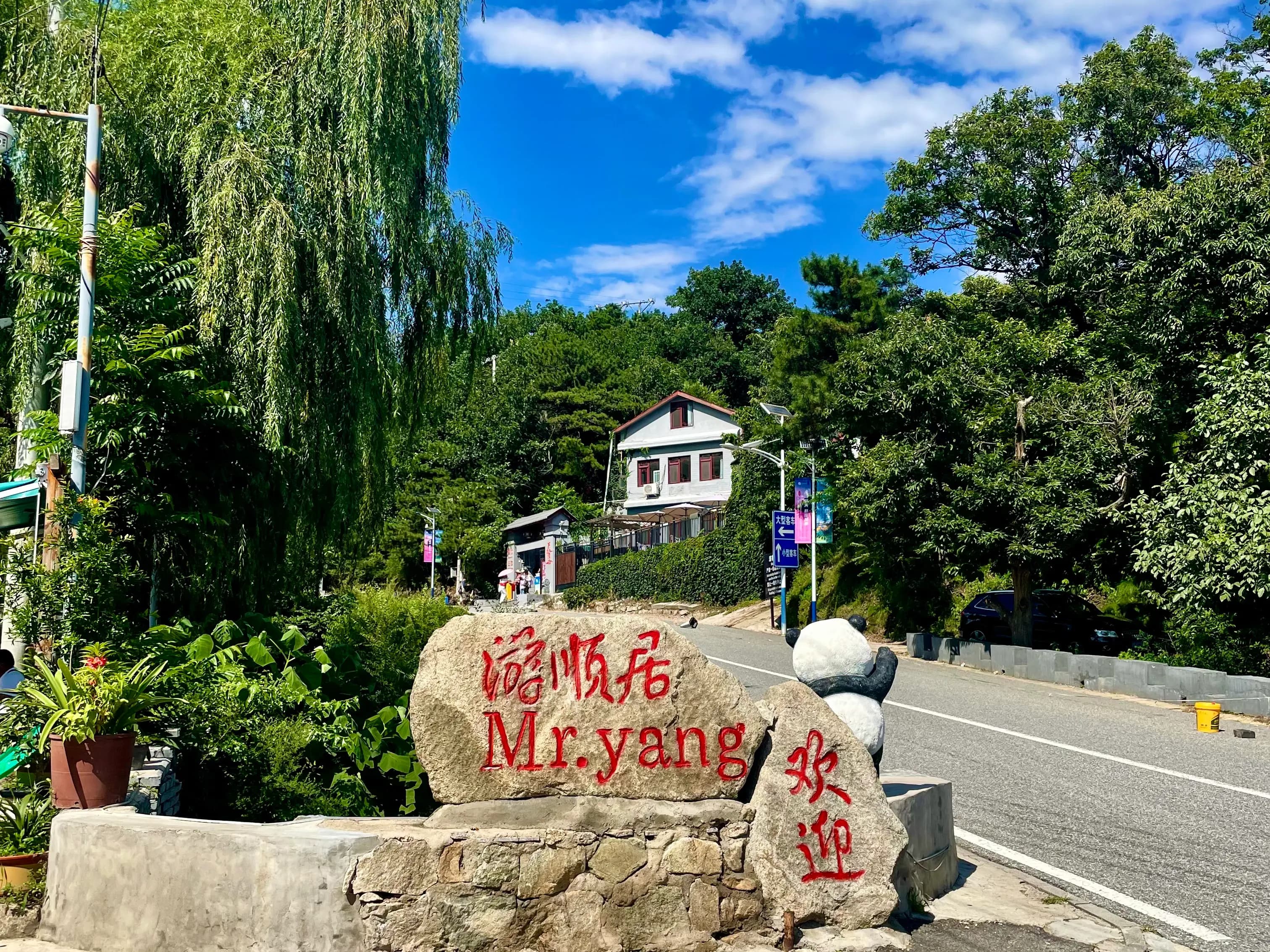
Lodging concentrated closest to the visitor area, convenient for first-in / last-out timing and short transfers to the ticket zone. Expect a tourist-village feel with seasonal demand; book ahead on weekends and holidays.
Beigou Village
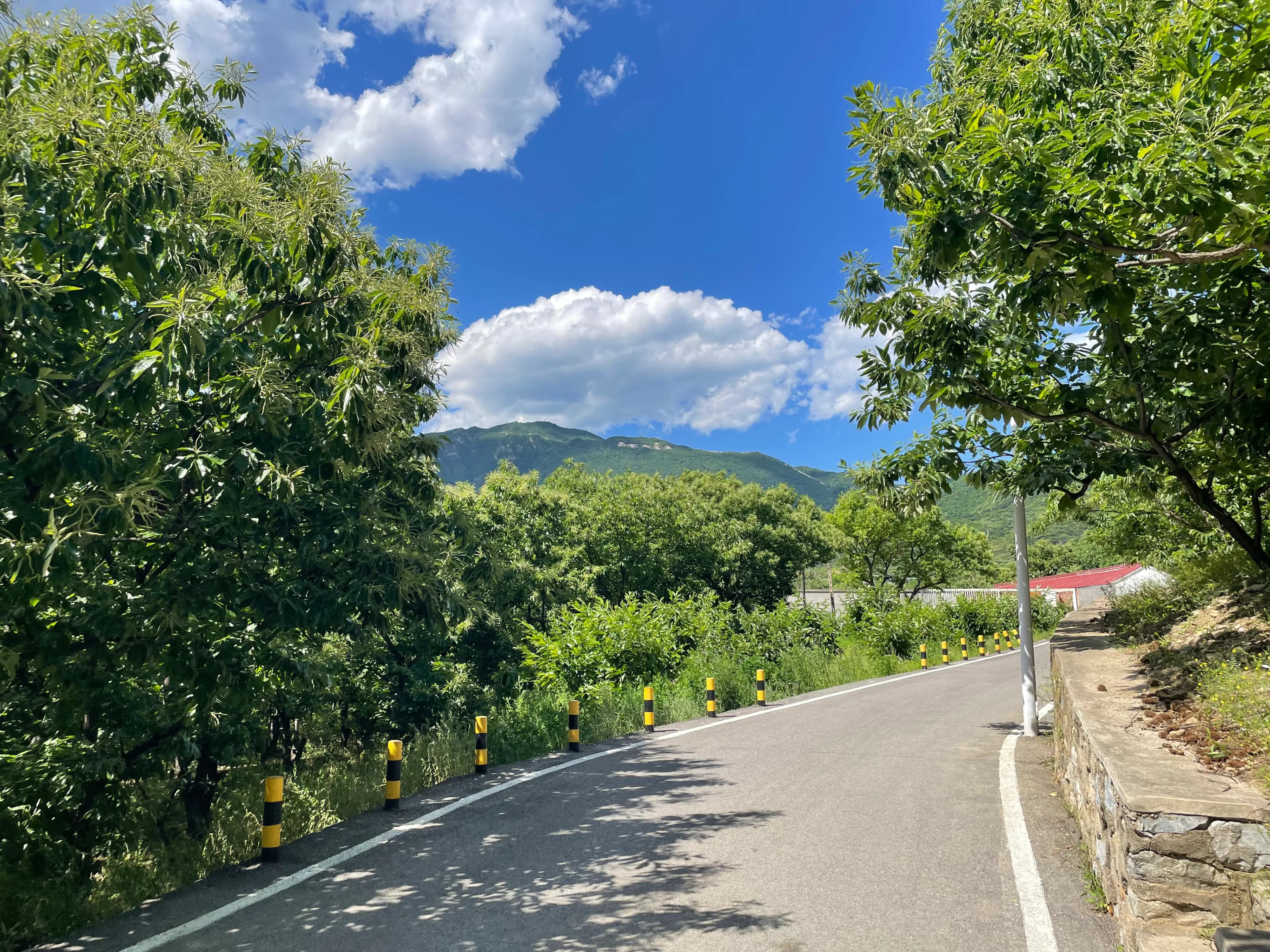
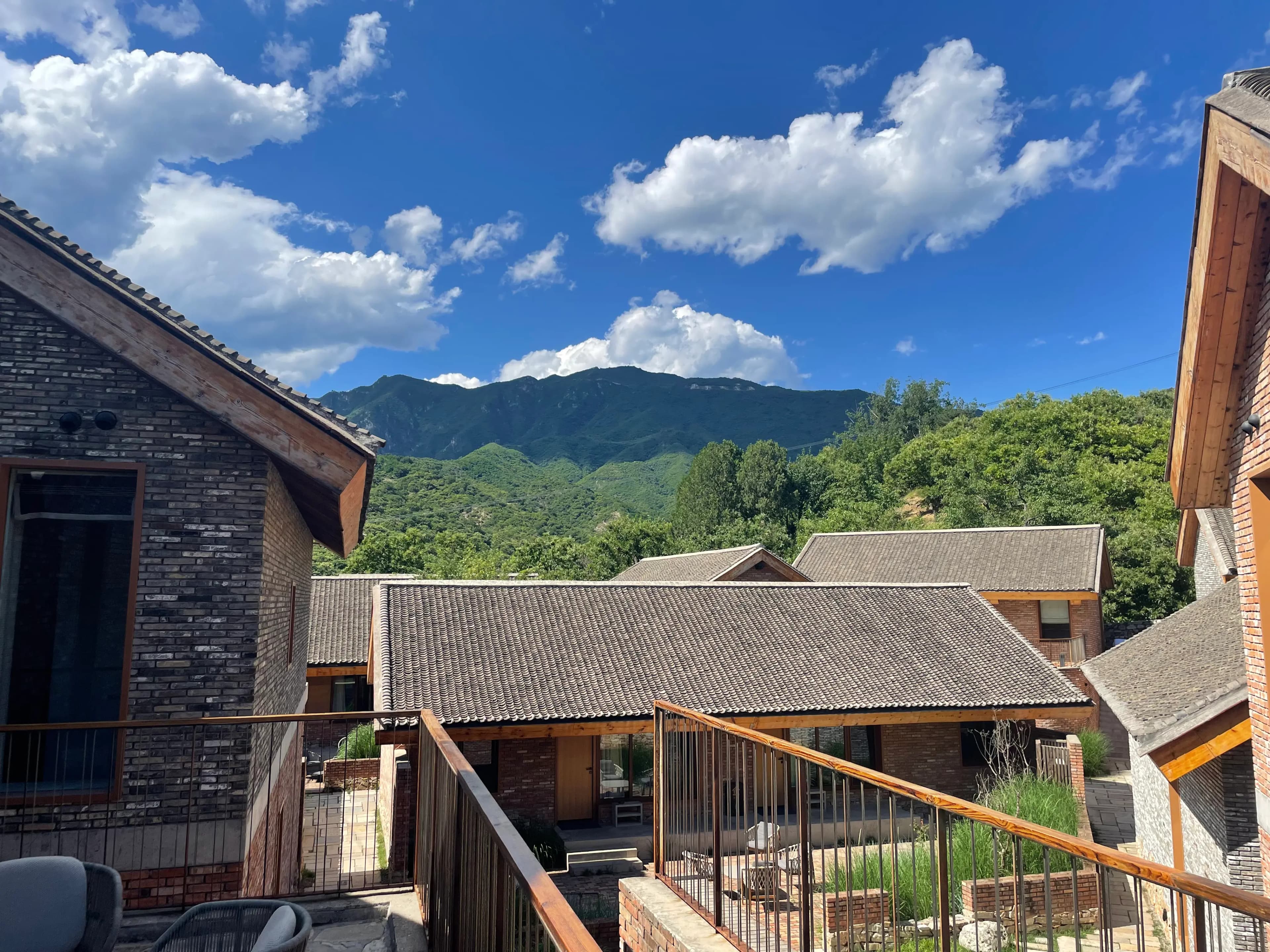
A short drive from the gate, known for boutique-style stays and a quieter lane atmosphere. You trade a few minutes of transfer time for calmer evenings, still plan how you will reach the checkpoint on the morning of your wall day. From parts of Beigou you look straight at the upper Mutianyu wall near watchtowers 21–23; the hillside slogan “Be loyal to Chairman Mao” remains faintly visible below the ridge—a landmark photographers recognize, not current visitor signage.
Xinying village
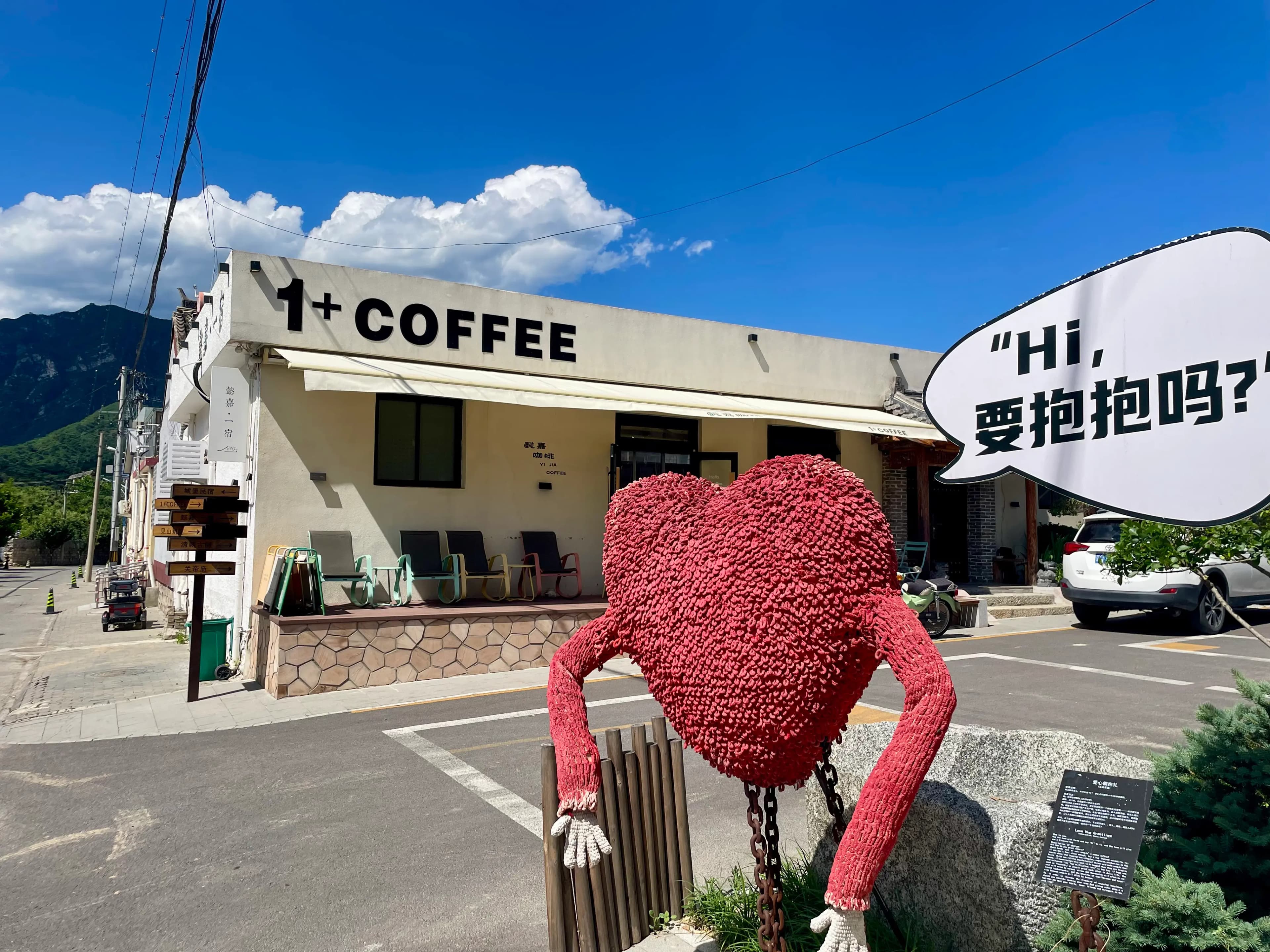
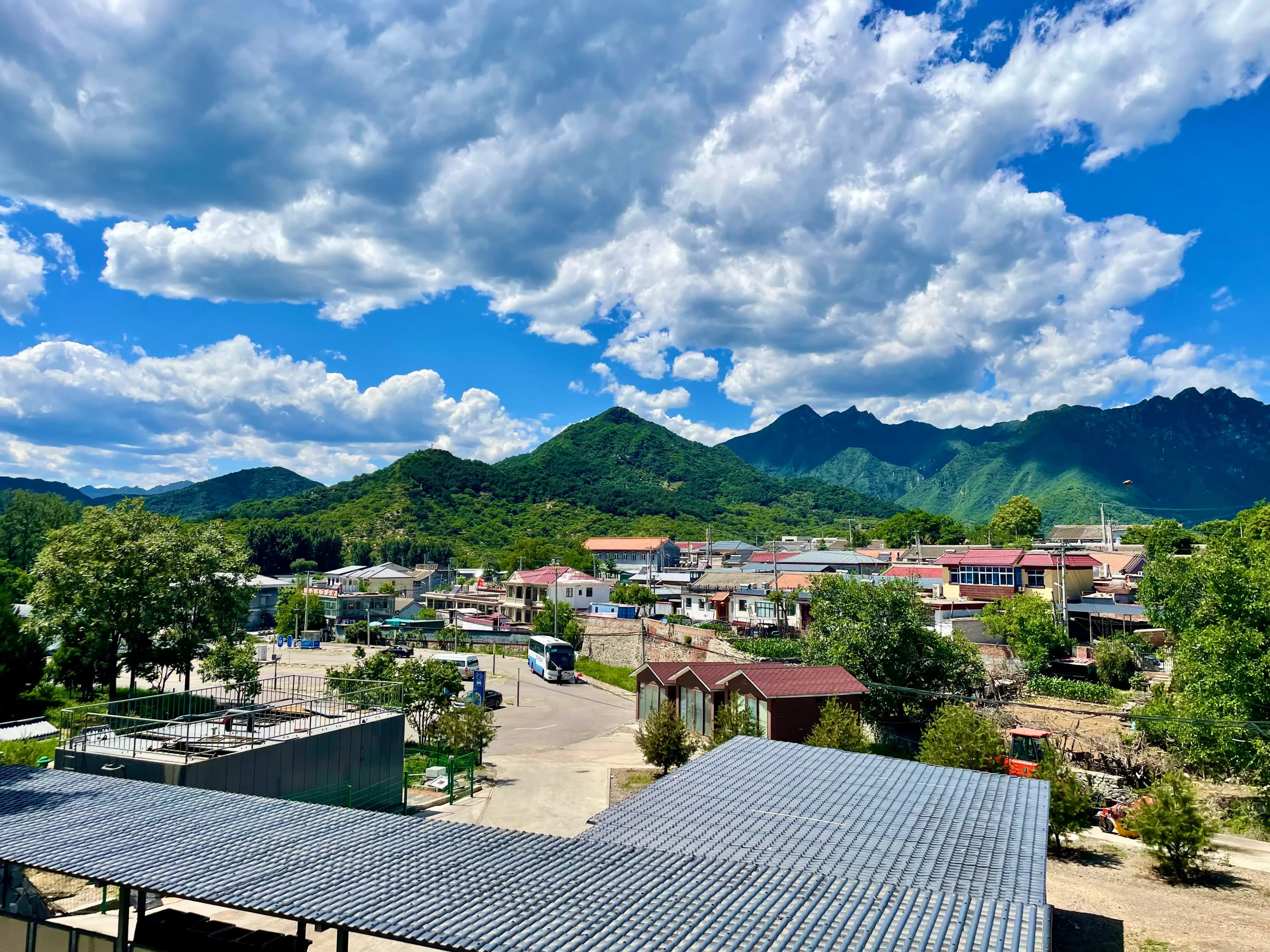
A calm village area near the Mutianyu Great Wall, known for courtyard-style stays, chestnut groves, and a slower evening pace. It is close enough for practical Mutianyu day access while feeling more local than the entrance zone. Guests trade immediate gate proximity for a quieter valley setting and should confirm transfer timing before wall-day
- We do not endorse specific properties, compare reviews, cancellation terms, and exactly how far the stay is from the shuttle or ticket checkpoint.
- Confirm whether your driver arrangement covers next-day pickup; some groups overnight then return to Beijing after a second partial morning.
- Winter nights are colder than the city; spring and autumn evenings can be crisp on the mountain side of the valley.
For many first-time itineraries, a well-paced day trip with a realistic return buffer remains the default. Choose an overnight when the schedule benefit is clear, usually fewer hours in the car across two calendar days, or a deliberate slow start, not simply to add another hotel night without a routing reason.
Common mistakes at Mutianyu
Ignoring return traffic
Beijing ring-road reality does not disappear because the wall was beautiful. Underestimating the drive back is one of the fastest ways to turn a great morning into a stressful evening.
Assuming the toboggan is always fast
Queues and closures happen. Treat chairlift and toboggan as conditional parts of the plan, not guaranteed shortcuts.
Under-preparing for sun, wind, and stairs
Even with uplifts, you will still climb steps and stand on exposed ridges. Water, layers, and sensible shoes still matter.
Trying to compress a layover into this page’s advice
Layover timing is a different problem with different constraints. If you are on a clock at the airport, use the layover guide and purpose-built layover tours instead of a relaxed Mutianyu day model.
FAQ
How far is Mutianyu Great Wall from Beijing?
Mutianyu Great Wall is roughly 70-80 km northeast of central Beijing, depending on where you start. By car, the drive often takes about 1.5 to 2.5 hours each way. Traffic around Beijing is the biggest variable, so plan a return buffer rather than judging the day only by distance.
How do I get from Beijing to Mutianyu Great Wall?
The easiest options are a private driver, booked transfer, or guided day tour with transport. Public bus routes exist but usually mean more schedule planning and less control over your return time. If timing, comfort, or group pacing matters, private road transport is usually the simplest choice.
Can I get to Mutianyu Great Wall by train?
There is no simple direct train from central Beijing to Mutianyu Great Wall. Most visitors go by car, private transfer, tour vehicle, or bus. If you want the smoothest day, especially with children, luggage, or a fixed return time, plan around road transport rather than train connections.
How do I get to Mutianyu Great Wall by bus?
Bus and tourist-bus services can reach the Mutianyu area, but departure points, stops, shuttles, and schedules change. This can work on a flexible day; confirm the latest route, where you board, whether a scenic-area shuttle is included, and your return time before you go.
How long should I spend at Mutianyu Great Wall?
Most visitors spend about 2 to 3 hours on the wall itself. Including transport from Beijing, ticketing, uplifts, and breaks, Mutianyu usually works as a half-day to full-day trip. Choose full-day pacing if you want a slower visit, a longer ridge walk, or more buffer for traffic and crowds.
How long do you need at Mutianyu if you use the cable car or toboggan?
Even with the cable car, chairlift, or toboggan, allow several hours on site. Uplifts reduce the climb to the wall but not queues, stairs, weather exposure, or walking along the ridge. A practical plan is 2 to 3 hours on the wall, plus time for tickets, uplifts, and return transport.
How much is admission to Mutianyu Great Wall?
Pricing changes by season and product mix; entrance, shuttle bus, cable car, chairlift, and toboggan may be sold separately. Check what is included for your date before you go. If you book a tour or transfer, confirm exactly which tickets and uplifts are covered.
What is there to do at Mutianyu Great Wall?
Walk the restored Great Wall ridge, visit watchtowers, take photos, and choose how far to continue on foot. Mutianyu has visitor facilities and uplifts such as the cable car and, when open, chairlift and toboggan. The best day balances wall time, views, queues, and a realistic return plan.
Should I choose the cable car or the chairlift and toboggan?
Choose the cable car for the simplest, most predictable option. Choose chairlift up and toboggan down if your group is comfortable with both and you want that experience. The toboggan can be a highlight but queues, weather, and operations vary. Do not assume it is always the fastest way down.
Is Mutianyu better than Badaling?
Mutianyu is often a better fit if you want a scenic restored section with strong facilities and typically less crush than Badaling at peak times. Badaling is more famous and can be closer from parts of Beijing but is often extremely crowded. Pick based on crowds versus proximity versus how you want the day to feel.
Which Great Wall section should I visit from Beijing: Mutianyu, Badaling, or Jinshanling?
Choose Mutianyu for a balanced first Great Wall visit with uplifts and visitor services. Choose Badaling if the famous name or shortest city-side access matters most and you accept density. Choose Jinshanling if hiking depth and a longer ridge day matter more than maximum convenience.
What city is Mutianyu Great Wall in?
Mutianyu Great Wall is in Huairou District, within the Beijing municipality. It is outside central Beijing and is usually planned as a day trip by road, not as a short in-city stop.
How do I get from Beijing airport to Mutianyu Great Wall?
From Beijing Capital (PEK) or Daxing (PKX), a private transfer or guided vehicle is usually the most practical option. Total time depends heavily on airport, traffic, and pickup timing. If you are on a layover, use layover-specific guides and tours with strict buffers instead of a relaxed day-trip model.
Who built the toboggan ride at Mutianyu Great Wall?
The Mutianyu slideway is a commercial visitor facility installed as part of the scenic area; it is operated alongside other uplifts for tourists. For trip planning, what matters is seasonal hours, weather sensitivity, queues, and whether it fits your group. Operator branding can change; confirm on-site rules for your visit date.
Next steps
If you already know you want a relaxed, facilities-friendly Great Wall day from Beijing, Mutianyu is one of the strongest default choices.
If you are still comparing sections, start here:
Not sure how to structure your Mutianyu day?
Tell us:
- your preferred date
- half-day vs full-day preference
- your group size and mobility notes
- whether you want driver only or driver + guide